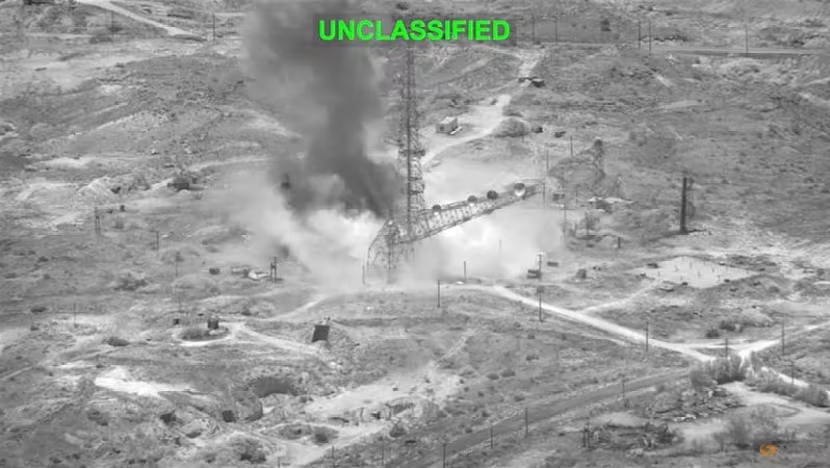
The United States military carried out a sixth consecutive night of airstrikes against Iran on Thursday, July 17, 2026, targeting what the Pentagon described as efforts to further degrade Iranian military capabilities. Among the sites hit were an airport, bridges, and a railway station, marking a significant expansion in the range of infrastructure being struck.
The strikes represent a notable shift in targeting strategy. Earlier rounds in this campaign focused on military installations and weapons infrastructure. Hitting transport nodes like bridges, a railway station, and an airport signals that the US is now going after Iran's logistical backbone, the network that moves troops, equipment, and supplies across the country.
Airports and railway stations double as military logistics hubs in wartime. Bridges are force multipliers: destroy enough of them and you sever supply lines, slow troop movements, and complicate any coordinated military response. By attacking these nodes, the US appears to be trying to isolate Iranian military units from each other and from their resupply chains.
What the escalation means
Six consecutive nights of strikes is an unusually sustained tempo for a US military campaign outside of a declared war. Each successive night suggests that either target sets are being added as new intelligence arrives, or that previous strikes did not achieve the desired effect on the first pass, or both. The inclusion of civilian-use infrastructure such as airports and rail stations also raises the diplomatic and legal stakes, as such targets carry heavier scrutiny under international humanitarian law.
For global markets, a prolonged US military campaign against Iran carries direct consequences. Iran sits astride the Strait of Hormuz, through which roughly 20 percent of the world's oil supply passes. Any disruption to shipping through that corridor, whether from Iranian countermeasures, mining, or direct attacks on tankers, would push energy prices sharply higher. Oil markets have been sensitive to every development in this conflict, and six nights of escalating strikes keep that risk premium elevated.
What to watch next
The key questions now are whether Iran retaliates and in what form. Tehran has several options: proxy attacks on US bases in the region, strikes on Gulf state infrastructure, attempts to close or threaten the Strait of Hormuz, or missile and drone attacks on US assets. Each carries a different level of escalation risk and a different market response.
Diplomatically, the strikes are likely to complicate any back-channel negotiations that may have been underway. Targeting transport infrastructure, especially airports, which can serve both civilian and military purposes, will draw scrutiny from allies and international bodies. Whether the US has sought allied coordination or is acting unilaterally in this phase of the campaign is a key detail that will shape the geopolitical response.
The scope of sites struck, ranging from military facilities in earlier rounds to airports, bridges, and rail lines now, suggests a campaign with broadening objectives. Readers tracking energy prices, regional security, and US foreign policy commitments in the Middle East should expect continued volatility until a ceasefire framework or diplomatic off-ramp emerges.