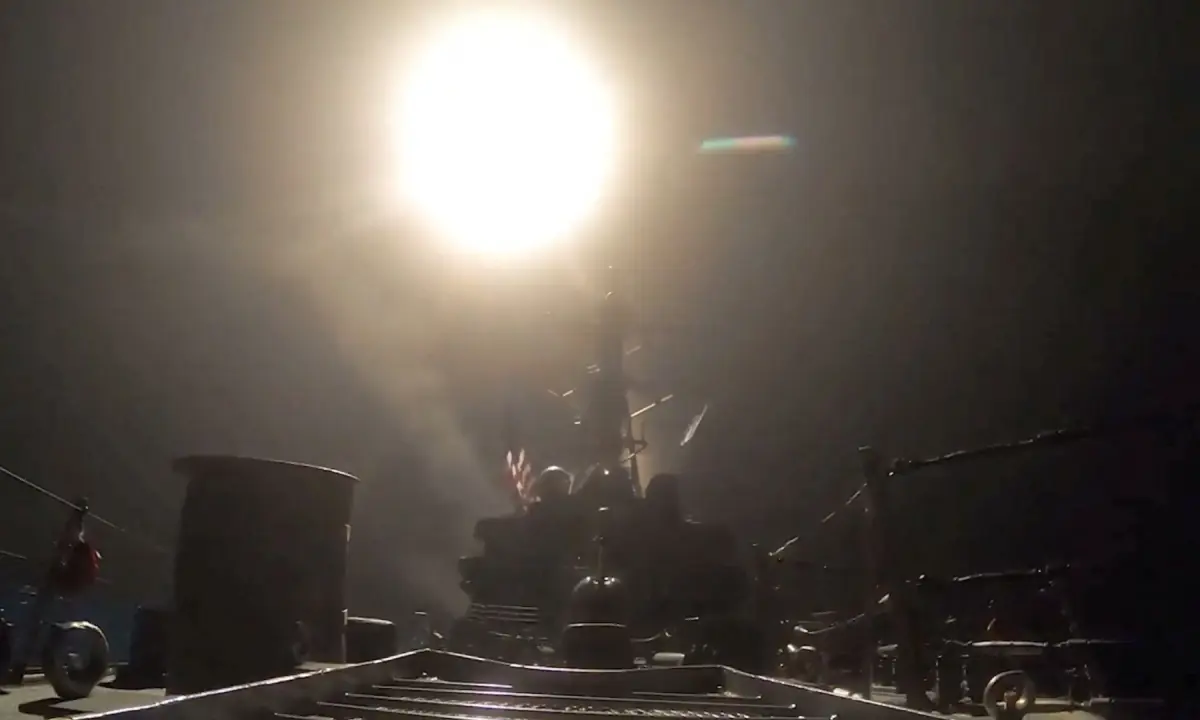
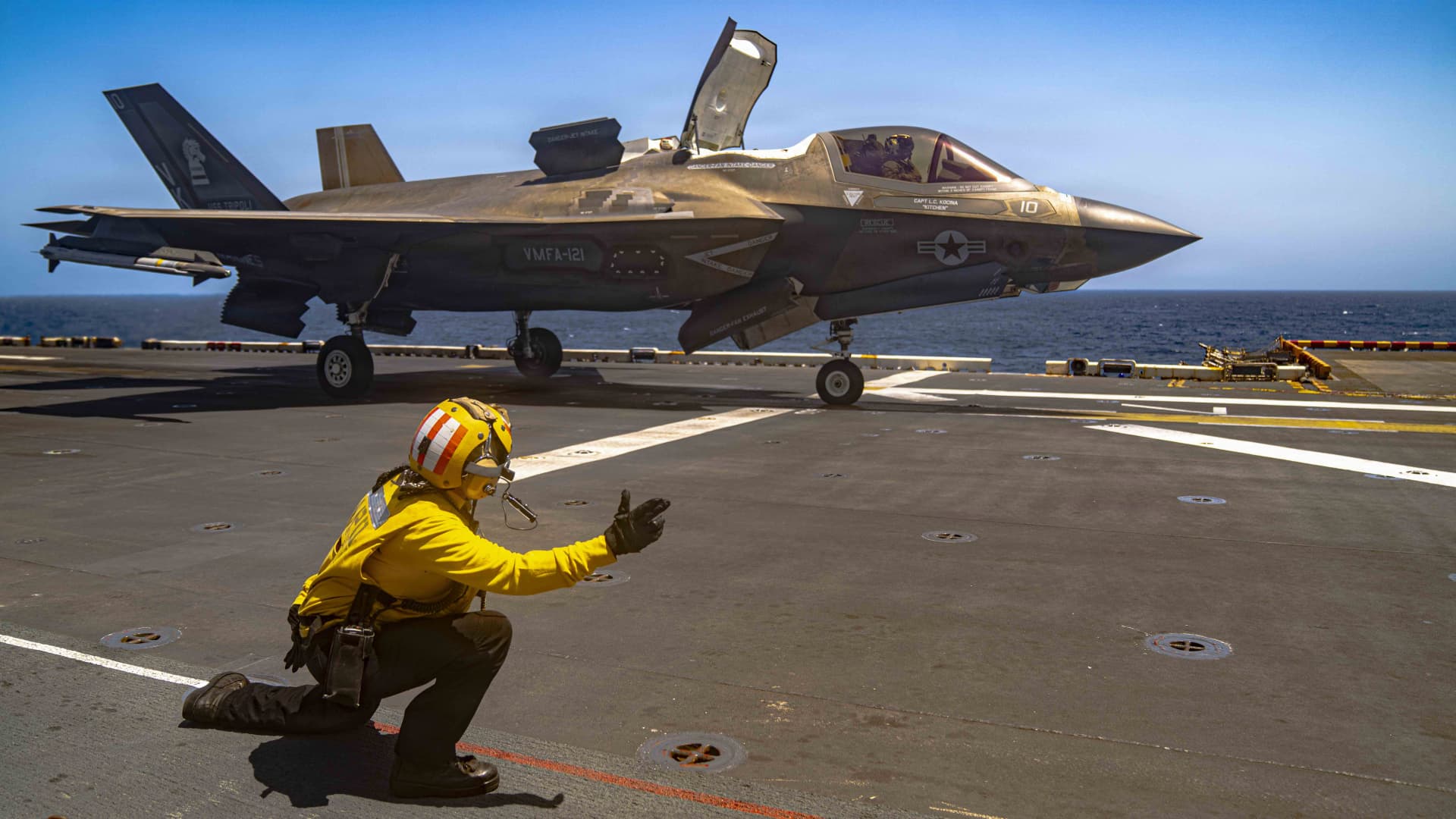
The United States launched a second wave of strikes on Iran's coastal defences and missile sites early Thursday, less than 24 hours after reimposing a naval blockade of Iranian ports. Iran responded by striking US military installations across three Gulf states. The exchange marks a sharp escalation after a fragile truce collapsed days earlier, with both sides signalling they are prepared to continue.
US Central Command said American forces struck Iranian command centres, air defence sites, missile and drone capabilities, and coastal surveillance facilities across multiple locations. The first wave targeted coastal defence and cruise missile sites on Iran's Greater Tunb Island in a 90-minute operation starting around 6am EDT. A second wave followed nine hours later, hitting targets in several Iranian cities.
Bandar Abbas, Iran's largest port city and home to key navy and Islamic Revolutionary Guard Corps facilities on the Strait of Hormuz, was among the locations hit. US forces also struck targets near Ahvaz, and explosions were reported in Konarak, Sirik, Qeshm, and the central city of Khondab, roughly 250 kilometres southwest of Tehran. Iranian state broadcaster IRIB reported that strikes hit near a hospital in Ahvaz housing a pediatric cancer centre, forcing a temporary evacuation. Iran's air defences in Tehran were activated to counter what state media called "hostile threats."
At sea, the US military said it disabled an unladen oil tanker attempting to sail toward Iran's Kharg Island after it ignored multiple warnings. American forces fired Hellfire missiles into the ship's smokestack. Since reimposing the naval blockade on Tuesday, the US has redirected two ships and disabled a third.
Iran hits back across the Gulf
The Islamic Revolutionary Guard Corps said it struck US military targets in Bahrain, Kuwait, and Jordan in response. In Jordan, the IRGC said it targeted communication systems and fuel storage facilities. In Kuwait, it said it struck radar systems, a Patriot air defence system, and fuel storage facilities at Ali Al Salem Air Base. In Bahrain, it targeted US military facilities at Sheikh Isa Air Base. The strikes spread the conflict's footprint beyond Iran's borders and directly into key US basing infrastructure in the region.
The Strait of Hormuz remains closed. Iran said late Saturday it had shut the waterway, and military operations continue to prevent ships from transiting it. Before the closure, the strait carried roughly one fifth of global oil and gas shipments. Brent crude closed at a one-month high of $84.95 a barrel on Wednesday, a direct reflection of how tightly energy markets are tracking the conflict. Any further disruption to regional shipping, especially around Kharg Island, Iran's primary oil export terminal, would push supply fears higher.
Diplomacy in the background
Despite the escalation, both sides appear to be leaving a door open. President Donald Trump, speaking at the Pennsylvania Defence and Innovation Summit, said the Iranians "want to settle so badly" and that US negotiators had been in touch with Iranian counterparts. "We'll find out whether or not we settle with them, or we just finish it off," Trump said. Iran's military spokesperson said the only path to reopening the strait was US compliance with a 14-point memorandum of understanding signed in June and acceptance of Iranian regulations on ship traffic.
Tehran's top negotiator Mohammad Baqer Ghalibaf framed the conflict in stark terms after the first wave of strikes: "We are in an essential and existential war with America," he said, adding that Iranian security depended on maintaining what he called "Iranian arrangements" in the strait.
One concrete sign of contact between the two governments emerged Thursday. Trump said Iran had allowed an American citizen, identified by human rights attorney Jared Genser as Dena Karari, to leave the country. Karari had been prevented from leaving Iran since December 2024. Trump called it a "gesture of goodwill" and acknowledged it publicly on Truth Social, an unusual diplomatic signal during active hostilities.
The broader conflict, which the US and Israel began on February 28, has now killed thousands and displaced millions, largely in Iran and Lebanon, where fighting between Israel and Hezbollah also resumed. With the Strait of Hormuz closed, oil markets volatile, and US bases in three Gulf countries now under fire, the next 48 to 72 hours will test whether back-channel contacts can slow the escalation or whether the military tempo overtakes any diplomatic opening.