Oil prices edged higher on Friday as US-Iran hostilities intensified across the Gulf, pushing both Brent crude and West Texas Intermediate toward their strongest weekly gains in months. Brent futures rose to $84.30 a barrel and WTI climbed to $79.11, capping a week in which both benchmarks surged nearly 12 percent.
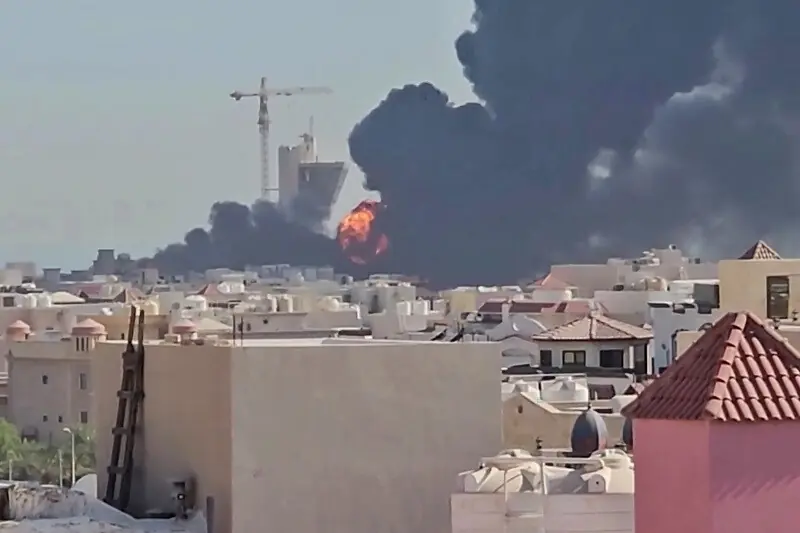
The immediate trigger was a significant escalation in the direct military exchange between Washington and Tehran. US Central Command confirmed American forces launched a new wave of strikes against Iran for the sixth consecutive night, beginning Wednesday with two major waves of air strikes in a single day, mostly targeting sites near Iran's southern coast. The US continued strikes on Thursday and into the weekend.
Iran has responded with missiles and drones aimed at US military bases in neighboring states, including a barrage at a recently expanded air base in Jordan. Qatar's defence ministry said its armed forces intercepted an Iranian missile attack early Friday, and the interior ministry reported a child was injured by shrapnel from interception operations. The exchange marks the first direct US strikes since a memorandum of understanding paused fighting last month, and it signals that ceasefire is now effectively over.
Two choke points, one crisis
What is making oil markets especially nervous is the threat to not one but two critical global shipping routes simultaneously. The Strait of Hormuz, the narrow waterway through which roughly 20 percent of the world's traded oil passes, is already under pressure from the breakdown in the US-Iran truce. Now Tehran has reportedly told the Houthis to be prepared to shut the Red Sea route as well if US forces strike Iranian power infrastructure, according to three sources. The Red Sea corridor connects the Suez Canal to global markets and is a primary artery for energy exports flowing west.
Tim Waterer, chief market analyst at KCM Trade, described this as a "dual-risk scenario" that is keeping a geopolitical premium embedded in oil prices. "The potential threat of the Red Sea becoming another major supply disruption point is further complicating the global oil outlook," Waterer said. The concern is not just about flows being disrupted today but about the credible threat of coordinated closure of both routes, which would force tankers onto far longer alternative paths around the Cape of Good Hope, raising freight costs and delivery times for buyers in Europe and Asia.
Why energy officials are sounding the alarm
International Energy Agency Executive Director Fatih Birol addressed the situation directly at a Council on Foreign Relations event in Washington on Thursday. "Oil security is still a critical issue," Birol said. "We should be worried, and I am worried, if the situation does not improve in the next few weeks." The IEA head's public comments are unusual in their directness and reflect how seriously energy officials are taking the risk of a sustained supply shock.
Brent is on track for its third consecutive weekly gain, and WTI is set for its second. The 12 percent rise in a single week is a sharp repricing of geopolitical risk. For context, markets had partially priced out Gulf conflict risk during the truce period, and the fresh escalation is now reversing those assumptions quickly.
Analysts at IG noted that technically, WTI could test the mid-$80s if it holds above key support in the mid-$70s. That would represent another roughly 5 to 6 percent upside from current levels, though that depends heavily on whether the Red Sea threat materializes or the conflict finds a new pause.
For markets and businesses, the key transmission channel is simple: higher oil prices feed directly into fuel costs, freight rates, and ultimately consumer prices. Airlines, shipping companies, and energy-intensive manufacturers are the most exposed in the near term. Central banks watching inflation trends will also be tracking this closely, since an oil shock of this scale can complicate rate decisions at a time when many economies are navigating fragile growth.
The next critical variable is whether Iran's power infrastructure becomes a US target. If it does, the Houthi threat to close the Red Sea moves from a contingency to an active risk, and the market will likely price in a far larger supply disruption premium than what is currently embedded in Brent and WTI.