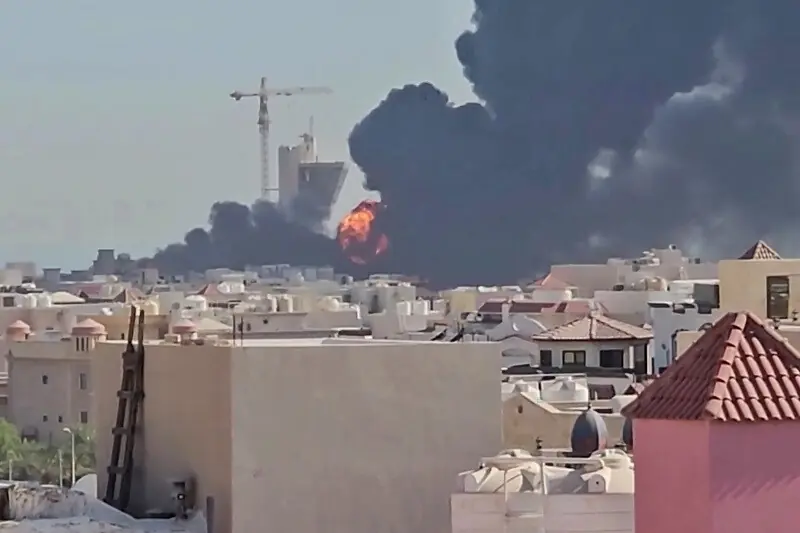
Iran struck Kuwait, Bahrain, Saudi Arabia, and Jordan on Saturday, widening the conflict into its second week after a ceasefire with the United States collapsed. It was the seventh straight night of US strikes on Iranian military targets, and the first time in roughly three months that Iran had hit Saudi Arabia directly.
The damage in Kuwait was the most concrete and disruptive. Iran's Islamic Revolutionary Guard Corps said it struck a US military support centre at Camp Arifjan and destroyed a radar facility at Ali Al Salem Air Base. Kuwait Petroleum Corporation confirmed that one of its oil facilities had taken significant damage in what it described as repeated Iranian attacks, with some workers injured. A power generation and water desalination plant was also hit, the second such attack on Kuwaiti water infrastructure in two days. Kuwait International Airport suspended operations due to repeated missile and drone threats. Kuwait's armed forces said they had intercepted Iranian ballistic missiles and drones, and that firefighters and oil sector workers had been hurt responding to fires.
Kuwait's Foreign Ministry said Iran's targeting of civilian infrastructure violated international law and held Tehran fully responsible.
What Iran Is Targeting and Why
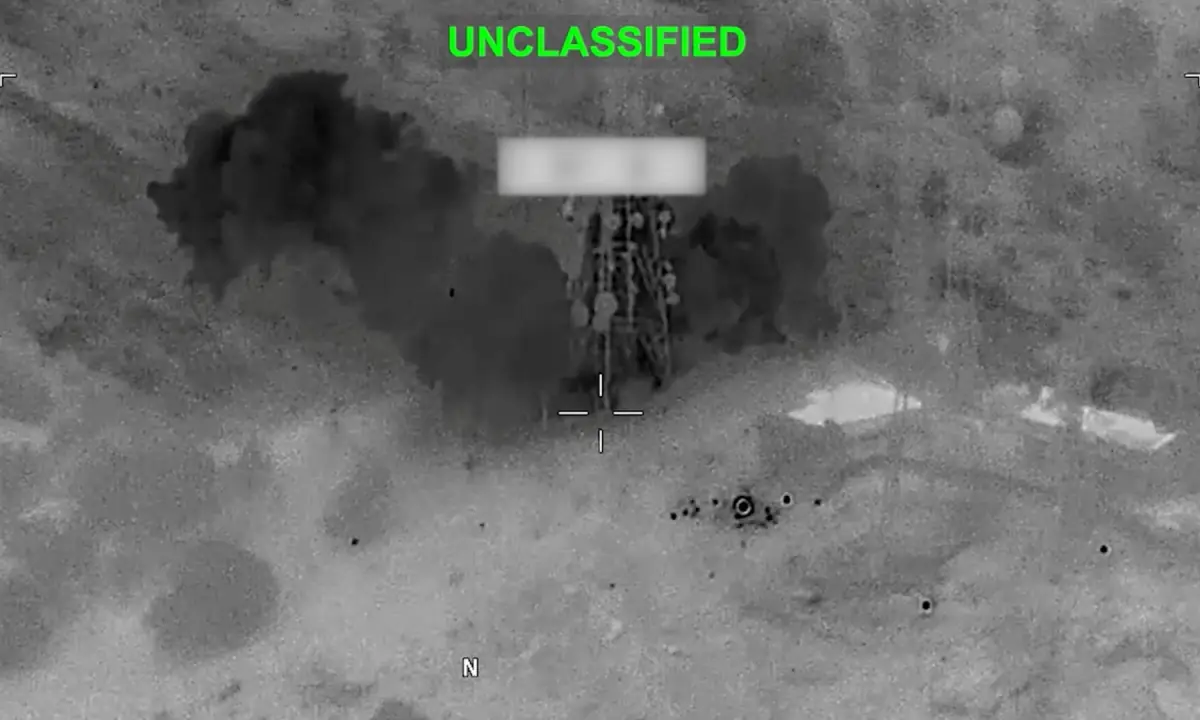
The IRGC framed its strikes as direct retaliation, citing the Quran to justify hitting US allies in proportion to how the US has hit Iran. US Central Command confirmed completing its seventh consecutive day of strikes, including hits on Iranian surveillance sites, military logistics infrastructure, underground weapons storage, and maritime capabilities. US officials have said the strikes on southern Iran are partly designed to keep military options open for President Donald Trump, who has not ruled out a ground assault on Iran's coast or islands.
Iran's Health Ministry said 50 people had been killed and more than 500 injured inside Iran from US strikes over the past three weeks. Iranian media separately reported that strikes in Hormozgan Province killed three people and wounded eight, damaging two bridges and a road tunnel. Seven more people were reported killed in earlier bridge strikes at the port of Bandar Khamir, where a train station was also hit. In Jask, missiles struck power facilities and desalination pumps, leaving around 10,000 people in 20 villages without water, though emergency deliveries began shortly after.
In Bahrain, the IRGC said it struck Sheikh Isa Air Base, where US combat aircraft were gathered, and hit an intelligence data centre. In Jordan, Iranian state television reported that at least two US fighter aircraft and three other aircraft were destroyed in a missile and drone attack on the US base at Al Azraq. In Saudi Arabia, early warning alarms were triggered in Al-Kharj, east of Riyadh, and at Yanbu on the Red Sea coast. Two people familiar with the matter said one attack targeted Prince Sultan Air Base in Al-Kharj, which hosts US forces. The IRGC made no mention of the Saudi strikes, and Saudi state media did not elaborate on what triggered the warnings.
Markets and the Strait of Hormuz
Oil prices rose more than 4 percent on Friday to their highest level in more than a month. The move adds political pressure on Trump as his Republican Party tries to hold congressional seats in November elections. Higher energy prices feed directly into inflation and fuel costs for consumers and businesses globally.
The broader risk centres on the Strait of Hormuz, the narrow waterway through which roughly one-fifth of the world's oil supply passes. On Friday, both sides targeted shipping traffic. The US said it was enforcing a naval blockade, while Iran said it was striking vessels that violated its navigation rules in the strait. Any sustained disruption there would send oil prices sharply higher and squeeze supply chains across Asia and Europe.
Iran's allies in Yemen have previously targeted Red Sea shipping, and US officials have flagged the risk that renewed escalation could trigger fresh Houthi attacks on vessels in that corridor as well.
The conflict has now moved well past a contained exchange. A week after the ceasefire broke down, both sides are hitting civilian infrastructure, energy assets, and each other's military partners across a wide geography. The next pressure points are whether Saudi Arabia responds publicly, whether the Strait of Hormuz sees direct interference with tanker traffic, and whether Trump moves toward any ground option on Iran's coast or islands.