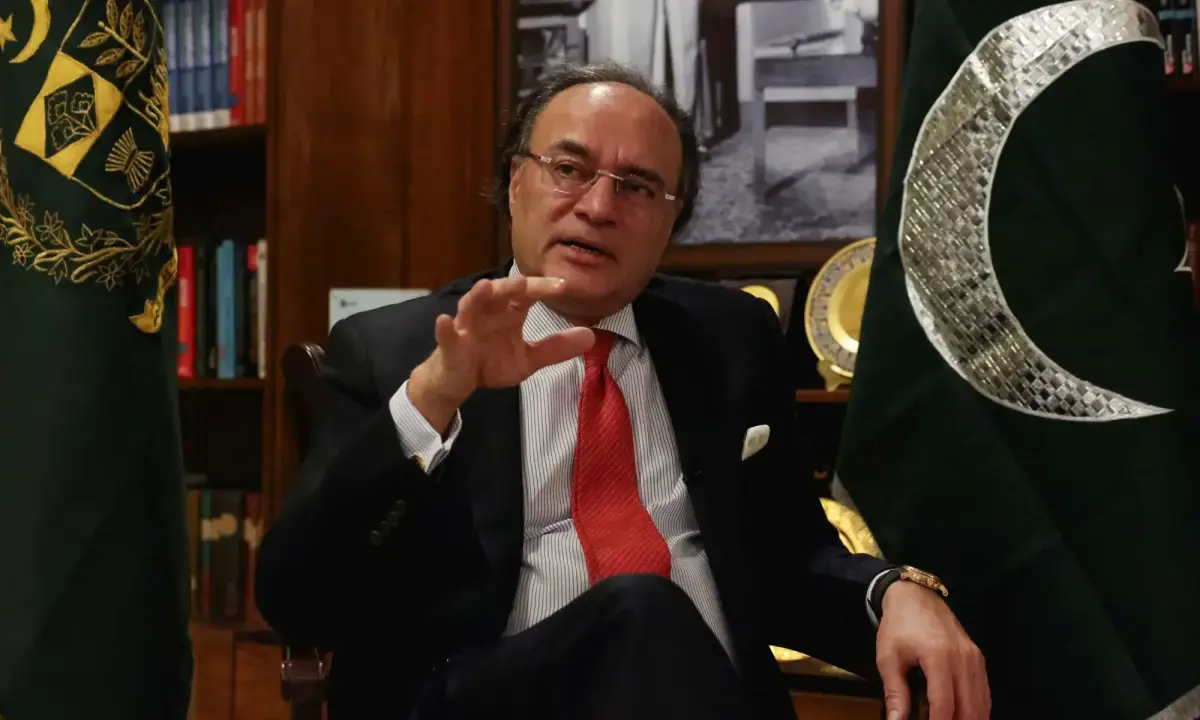
Pakistan's Finance Minister Muhammad Aurangzeb arrives in Washington on Saturday for a three-day visit focused on trade, tariffs, and investment talks with US officials, as the two countries push toward a formal bilateral economic partnership.
According to diplomatic sources, Aurangzeb is scheduled to meet officials from the Office of the United States Trade Representative (USTR), the US Export-Import Bank, the US International Development Finance Corporation (DFC), and the International Monetary Fund. The agenda covers tariff levels, market access, investment opportunities, and the framework for a potential bilateral trade agreement.
How Pakistan's tariff situation has shifted
The visit follows a sequence of rapid policy changes that have left Pakistan's trade status with the US in flux. US President Donald Trump imposed a 29 percent tariff on Pakistani exports on April 2, 2025, using the International Emergency Economic Powers Act (IEEPA). A Pakistani delegation that visited Washington earlier this month secured a reduction of that rate to 19 percent.
Since then, the tariff ground has shifted again. A US Supreme Court ruling this year struck down the IEEPA-based tariffs as invalid. The Trump administration responded by invoking Section 122 of the Trade Act, which allows a temporary global tariff. That 10 percent tariff is set to expire on July 24, the end of its 150-day statutory window, creating an immediate deadline that looms over this week's talks.
Pakistan also faces a separate pressure point: it is among nearly 60 countries under USTR investigation through a Section 301 process over alleged forced labour and related trade practices. Under current proposals from that process, Pakistan faces an additional 10 percent tariff. India and 53 other countries face a proposed 12.5 percent rate under the same process. Islamabad submitted additional materials to the USTR this week ahead of the negotiations. Public hearings before the USTR are ongoing, meaning the outcome is not yet final.
What the DFC and Exim Bank meetings could mean
The meetings with the US Export-Import Bank and the DFC go beyond tariffs. Both institutions finance overseas projects, and Pakistan is expected to use these sessions to explore funding for infrastructure, energy, and private-sector investment. For Pakistan, which has spent the past two years stabilising its economy under an IMF programme, access to US development finance would diversify its capital sources and signal investor confidence.
Aurangzeb last visited Washington in April for the IMF and World Bank Spring Meetings, where he held more than 50 meetings with international investors, financial institutions, and credit rating agencies. He briefed investors on Pakistan's plans to issue Panda Bonds and Eurobonds after a multi-year absence from international capital markets. He also discussed the economic fallout from regional tensions and energy market volatility linked to the conflict involving Iran.
This visit carries a more operational character. The two governments are now in active negotiations over the structure of a trade deal, not just Pakistan's macroeconomic outlook. A formal bilateral trade framework, if reached, would be a significant step for a relationship that has historically been more security-focused than commercially driven.
The July 24 expiry of the Section 122 tariff adds real urgency. If that 10 percent global rate lapses without a replacement or an agreed bilateral arrangement, the tariff status governing Pakistani exports to the US becomes temporarily unclear. Pakistan's textile and apparel sectors, which depend heavily on US market access, are most directly exposed to any change in rate.
What to watch: whether Aurangzeb's talks produce even a preliminary framework agreement, how the USTR's Section 301 review resolves for Pakistan versus peer countries, and whether the Section 122 deadline on July 24 prompts any unilateral US action before negotiations conclude.