
Qatar Signals Progress in US-Iran War Talks
Qatar's foreign ministry said mediators including Qatar, Pakistan, and Oman have reached "very progressive stages" in efforts to end the US-Iran war, pushing Brent crude down more than four percent.
Key Takeaways
May 2, 2026 · 2 min read · By Rishabh Bhardwaj
·
AI-assisted, human-reviewed · Our editorial standards
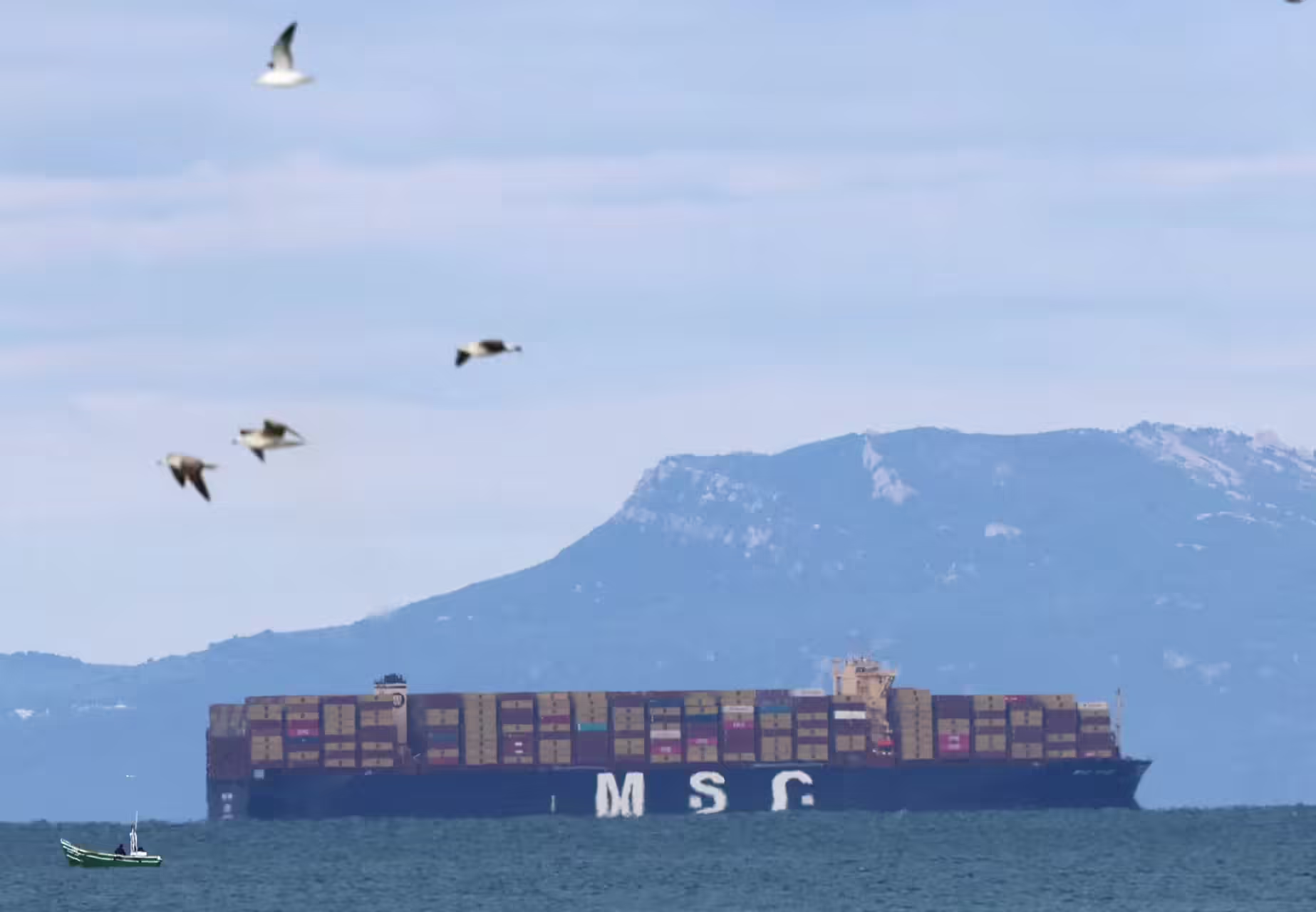
MSC Mediterranean Shipping Company, the world's largest container carrier, is setting up a new Europe, Middle East shipping service that deliberately bypasses the Strait of Hormuz, the narrow waterway through which roughly a fifth of global oil and a large share of container cargo normally flows.
The new service combines three transport modes: ocean vessels, road freight, and smaller feeder ships. Rather than routing cargo through Hormuz at the mouth of the Persian Gulf, MSC will move goods via an alternative corridor that links sea legs with overland road segments to reach Middle East destinations.
The Strait of Hormuz is one of the world's most critical chokepoints. It sits between Iran and Oman and is the only sea exit from the Persian Gulf. Any disruption there, whether from military conflict, sanctions enforcement, or political tension, can stall shipments to and from Gulf states, spike freight rates, and force carriers to take long detours around the Arabian Peninsula.
Tension in and around the strait has remained elevated in recent years, with incidents involving vessel seizures and drone attacks adding to uncertainty for commercial shipping. By building a route that does not depend on Hormuz passage, MSC is effectively hedging against that risk for its Europe, Middle East trade lane.
Multimodal services, mixing sea, road, and feeder vessels, are more complex and often carry higher handling costs than a single deep-sea voyage. The trade-off is resilience: if Hormuz becomes impassable or politically risky, cargo on this lane keeps moving without emergency rerouting.
For shippers moving goods between Europe and Gulf markets, the new MSC service offers a scheduled alternative that does not expose them to Hormuz disruption risk. Retailers, manufacturers, and traders with regular freight on this corridor now have a route option that sidesteps the chokepoint entirely.
The key question going forward is whether freight rates and transit times on the new service are competitive enough to attract volume beyond customers who specifically want to avoid Hormuz exposure. If demand proves strong, other major carriers may look at similar multimodal corridors for Gulf-bound cargo.
Qatar's foreign ministry said mediators including Qatar, Pakistan, and Oman have reached "very progressive stages" in efforts to end the US-Iran war, pushing Brent crude down more than four percent.
Qatar confirmed it is mediating between the US and Iran but said no direct talks are currently planned. The clarification follows conflicting statements from President Trump, who claimed talks are under way, and Tehran, which denied any dialogue is happening.
Saudi Aramco reported sharply higher second-quarter 2026 profits as the Iran war restricts global oil supply and pushes crude prices up. Other oil supermajors also posted outsized earnings, raising concerns about sustained fuel cost pressure for importing economies.
President Trump called current Iran negotiations the "last chance" to end five months of conflict, pushing oil prices higher. Tehran denied formal talks are taking place, raising the risk of a diplomatic breakdown with direct consequences for global energy markets.