Qatar said mediators have reached "very progressive stages" in diplomatic contacts aimed at ending the US-Iran war, sending Brent crude oil prices down more than four percent on Tuesday. The announcement from Qatar's foreign ministry spokesperson Majed al-Ansari offered the strongest public signal yet that back-channel efforts could produce a deal to reopen the Strait of Hormuz, the narrow waterway that normally carries about a fifth of global oil and liquefied natural gas shipments.
The diplomatic picture, however, remains sharply contested. Iran's government denies that direct negotiations with Washington are underway, saying its only active talks are with Oman about the strait. Tehran explicitly ruled out major meetings this week. The gap between what US and Qatari officials describe and what Iran acknowledges points to the fragility of any progress so far.
What the talks actually involve
Al-Ansari said Qatar, Pakistan, and Oman are coordinating closely as mediators, exchanging draft proposals between Washington and Tehran rather than hosting direct face-to-face negotiations. This indirect format matters: it allows both sides to engage without either government having to publicly acknowledge talks, giving each some political cover.
US Secretary of State Marco Rubio told reporters there had been "progress made in those talks, but not finality yet," adding that he hoped a resolution would come "very shortly." Treasury Secretary Scott Bessent went further, saying a deal on reopening Hormuz could be reached as early as Tuesday or Wednesday. Those timelines passed without a public announcement, suggesting the optimism was premature or strategic.
President Donald Trump said Monday that talks with Tehran had started and that Iran faced a "last chance" to reach a deal. The comments followed his weekend decision to cancel what he described as planned "massive attacks" on Iran, extending a now-familiar pattern: Trump threatens large-scale military action, then steps back and points to ongoing diplomacy.
The strait is still shut and still dangerous
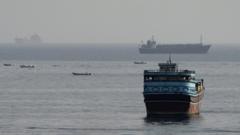
While officials talked, the Strait of Hormuz remained virtually closed to commercial shipping. On Tuesday, a dry bulk cargo vessel was struck by an unidentified projectile near the strait off Oman's coast, according to the United Kingdom Maritime Trade Operations agency. The crew abandoned ship and one seafarer was reported missing, underlining that the commercial risk to vessels attempting the crossing has not diminished.
Iran halted most traffic through Hormuz while the US maintains a blockade of Iran-related shipping and ports. Yemen's Houthi movement, aligned with Tehran, has also imposed a separate naval blockade on Saudi Arabia in the Red Sea, compressing oil export routes from multiple directions simultaneously.
At the core of the deadlock is Iran's demand for full control over inbound shipping through the strait, plus visibility over outbound traffic with the ability to intervene. Tehran last week rejected an Omani proposal that would have allowed shared oversight and voluntary fees from passing vessels. Giving Iran what it is asking for would represent a significant shift in regional power, and would make it harder for Washington to argue that Operation Epic Fury, the military campaign Trump launched alongside Israel in February, had meaningfully weakened Iran's position.
Iran's broader bet, according to Gulf officials and analysts, is that it can outlast Washington by steadily raising the economic cost of the conflict. Michael Knights of the Washington Institute put it plainly: "Their big advantage is that they can hurt the regional states and the global economy." By keeping Hormuz closed and activating Houthi pressure in the Red Sea, Iran is turning trade routes and energy infrastructure into leverage.
That leverage has a military dimension too. Three people familiar with US defense data told Reuters that the US Army has used up much of its stockpile of long-range precision missiles during the campaign, raising concerns about readiness for future conflicts. A prolonged standoff costs Washington more than just oil market disruption.
Trump has not yet achieved the goals he set when the war began: dismantling Iran's nuclear program, limiting Iran's ability to strike regional rivals, and creating conditions for Iranians to remove their clerical leadership. Iran walked away from a memorandum of understanding the two sides signed in a ceasefire attempt in early July, which collapsed shortly after. Any new deal would have to navigate the same core disagreements that sank the last one, now with higher military stakes on both sides.