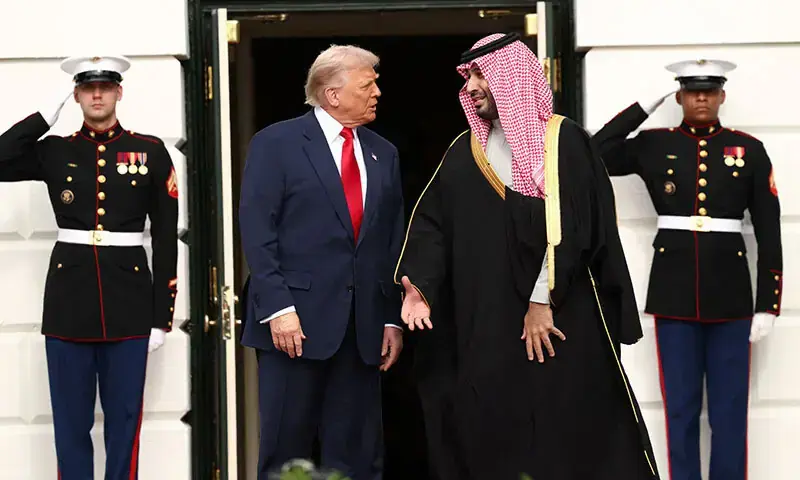
The United States is set to announce a civilian nuclear agreement with Saudi Arabia on Wednesday, a deal that would open the door for American companies to build nuclear infrastructure in the kingdom, including a potential uranium enrichment facility. The Trump administration confirmed the deal will channel billions of dollars into the US nuclear industry, but the agreement notably omits two key safeguards that arms control advocates and many lawmakers have demanded.
The legal backbone of the arrangement is what is known as a 123 Agreement, a reference to Section 123 of the US Atomic Energy Act of 1954. Any such agreement is required before American companies or the US government can cooperate with a foreign country on civil nuclear development. US Energy Secretary Chris Wright and Saudi energy minister Abdulaziz bin Salman are expected to sign the final document, building on a preliminary agreement the two signed in Riyadh earlier.
The deal spans 30 years and includes a provision for American firms to build a uranium enrichment facility in Saudi Arabia, contingent on a joint study determining it is warranted. Crucially, one source described the agreement as providing a legal pathway for cooperation on the nuclear fuel cycle, including enrichment, without obligating the United States to actually transfer enrichment technology or capabilities to Riyadh.
What Is Missing and Why It Matters
The agreement does not include the so-called "Gold Standard," the commitment that would bar Saudi Arabia from enriching uranium or reprocessing spent nuclear fuel. Both activities are potential routes to producing weapons-grade material. The United Arab Emirates accepted this restriction when it signed its own 123 Agreement with Washington in 2009, making the Saudi deal a weaker precedent.
Also absent is the "Additional Protocol," a framework that grants the International Atomic Energy Agency broader inspection powers, including the ability to conduct snap inspections at undeclared nuclear sites. Without it, international oversight of Saudi nuclear activities would be more limited than in many comparable agreements.
The omissions sit uncomfortably alongside longstanding public statements from Saudi Crown Prince Mohammed bin Salman. In a 2018 CBS interview, he said Saudi Arabia would pursue a nuclear weapon "as soon as possible" if Iran developed one. The kingdom has also repeatedly asserted its right to enrich uranium domestically. These positions have made arms control advocates and a cross-party bloc of US lawmakers nervous about any civil nuclear cooperation without firm guardrails.
Secretary of State Marco Rubio, when he served in the Senate, was among those who insisted any deal include such protections. Energy Secretary Wright has defended the framework, arguing the preliminary agreement contains all nonproliferation standards required under the Atomic Energy Act, which he described as among the strongest in the world.
What Happens Next in Congress
Once submitted to Congress, the agreement enters a review period of roughly 90 days of continuous congressional sessions. Lawmakers do not need to approve the deal for it to take effect. To block it, Congress would have to pass a joint resolution of disapproval and then secure a two-thirds majority to override a presidential veto. That is a high bar, and the deal is widely expected to move forward absent an unusual coalition forming to stop it.
The Trump administration plans to submit the agreement to Congress within days, according to multiple sources, with one indicating it could happen as soon as Wednesday and another suggesting within a week or so. The announcement comes against a backdrop of renewed fighting between Saudi Arabia and Houthi rebels in Yemen, adding a layer of regional tension to an already sensitive nuclear diplomacy moment.
For the US nuclear industry, the deal represents a significant commercial opportunity. American firms stand to win contracts for reactor construction, fuel supply, and potentially enrichment infrastructure across a multibillion-dollar programme. For Saudi Arabia, it marks a step toward building domestic nuclear capacity in a country that wants to diversify its energy base beyond oil. Whether the absence of stronger safeguards becomes a flashpoint in Congress or sets a softer template for future deals in the region is what the next 90 days will clarify.