Yemen's Houthi forces attacked two Saudi oil tankers in the Red Sea on Thursday, striking the Encelia with ballistic missiles, cruise missiles, and drones and setting it ablaze, while the United States carried out airstrikes on Iran for the 12th consecutive night. The twin escalations mark a sharp widening of conflict across two of the world's most critical maritime corridors.
Saudi Arabia's state news agency SPA, citing the General Transport Authority, confirmed a fire broke out on the bow of the Saudi-flagged tanker Encelia but said all crew members were safe. Authorities secured the vessel and condemned the attack as a violation of international law. The Houthis said they also hit a second tanker, the Layla, though that strike remained unconfirmed by independent sources as of Thursday.
The British maritime risk-management group Vanguard placed the Encelia attack at around 2000 GMT, roughly 130 km southwest of Saudi Arabia's Al Shuqaiq. The ship had already transmitted a distress call via VHF radio, reporting a missile strike while operating near the outer port limits of Saudi Arabia's Jizan. The UK Maritime Trade Operations agency (UKMTO) separately confirmed it received a report of a tanker struck by an unknown projectile in the same area, with the crew fighting a fire onboard. UKMTO said no casualties or environmental damage had been reported.
The Houthis framed the attack as enforcement of a naval blockade they have imposed on Saudi Arabia in the Red Sea, saying both tankers violated that blockade. The group also claimed to have forced around 10 other ships to retreat. Whether the Houthi blockade has any basis in international law is disputed, and Saudi Arabia's SPA explicitly called the strike an unlawful act.
US strikes Iran for twelfth straight night
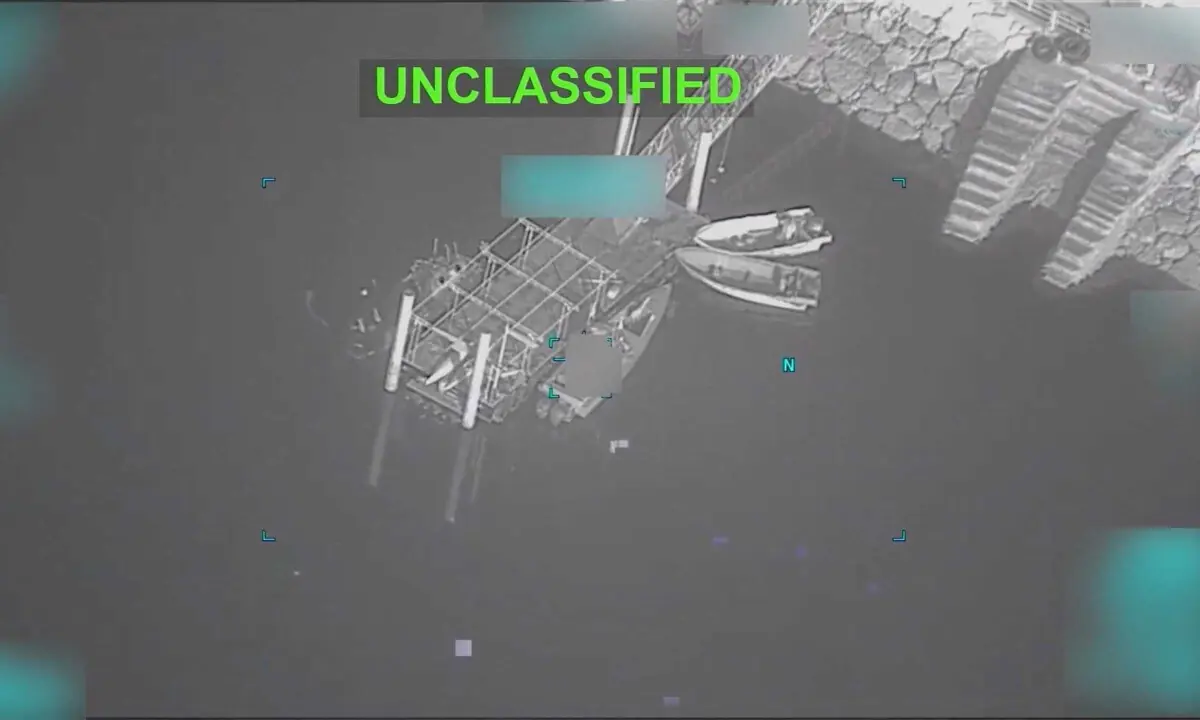
US Central Command (Centcom) confirmed American forces struck Iranian military targets including maritime capabilities, missile and drone storage facilities, coastal surveillance sites, and air defense assets. Centcom said its operations this month have now targeted dozens of Iranian military sites on land and that a naval blockade has redirected nine commercial vessels and disabled one to stop ships entering or leaving Iranian ports. The strikes resumed after a June ceasefire broke down.
The geographic scope of US strikes has expanded over the 12-day campaign, moving from southern Iran into western and central areas. Iranian state media reported two US strikes Thursday on a military target in Bushehr, near Iran's only operating commercial nuclear reactor, marking three hits there in two days. State television also reported two people killed and 11 wounded in what a Khuzestan provincial official described as a US missile strike on the Shalamcheh border crossing with Iraq.
Before this latest escalation, US President Donald Trump vowed to destroy an Iranian bridge or power plant each time Iran shoots at a ship in the Strait of Hormuz. Iran's joint military command responded by warning it would target regional oil, gas, electricity, and economic infrastructure and halt all oil exports if that threat were carried out. Hours later, Iran's Revolutionary Guards reported an explosion in what they called a mined route south of the Strait of Hormuz, claiming one of three tankers caught fire while two others turned back. The Guards declared the strait under their control and described it as completely closed, warning no tanker could enter or leave without Iranian coordination.
Why this matters for shipping and energy markets
The Bab al-Mandeb strait, which connects the Red Sea to the Gulf of Aden, is one of the busiest trade routes on earth. Any sustained closure or threat of attack pushes shipping traffic onto longer alternative routes around the Cape of Good Hope, raising freight costs and delivery times. The Strait of Hormuz, separately, is the passage for roughly 20 percent of global oil trade. Simultaneous pressure on both chokepoints creates compounding risk for energy supply chains.
Pakistan's government issued its sharpest warning yet on Wednesday, condemning Houthi threats to Saudi Arabia and commercial shipping and reserving the right to take measures in self-defense if its maritime interests were targeted. Pakistan's oil imports rely significantly on the Red Sea route through Bab al-Mandeb, and the statement signals growing concern among non-Arab countries about the conflict's reach. No Pakistani vessels have been reported struck or stopped so far.
What to watch: whether Iran follows through on infrastructure threats, how quickly Encelia and any other struck vessels return to service, and whether the US expands its stated blockade. Any Iranian move to formally close the Strait of Hormuz would likely trigger an immediate response from multiple navies and test the limits of the current US military campaign.