
Qatar Signals Progress in US-Iran War Talks
Qatar's foreign ministry said mediators including Qatar, Pakistan, and Oman have reached "very progressive stages" in efforts to end the US-Iran war, pushing Brent crude down more than four percent.
Key Takeaways
May 2, 2026 · 2 min read · By Rishabh Bhardwaj
·
AI-assisted, human-reviewed · Our editorial standards
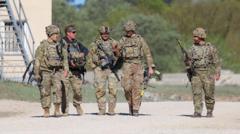
The United States is set to cut its troop presence in Germany by approximately 5,000 soldiers, a move that arrives in the middle of a diplomatic dispute between Washington and Berlin over Iran policy.
The reduction marks a meaningful shift in the American military footprint in Europe. Germany currently hosts one of the largest concentrations of US forces on the continent, and any drawdown carries weight both symbolically and operationally for NATO cohesion.
The timing is tied to a public rift between the Trump administration and German Chancellor Friedrich Merz. The two governments are at odds over how to handle Iran, though the specific points of disagreement have not been fully detailed in available reporting. What is clear is that the troop cut has become entangled with that broader diplomatic tension, rather than being framed purely as a routine force posture adjustment.
US troop deployments in Europe carry both a deterrence function and a political signal. When Washington reduces forces in a NATO ally's territory during an active dispute, the message to that ally, and to others watching, is hard to separate from the underlying political friction.
A cut of 5,000 troops is significant enough to register as a concrete policy move rather than a marginal adjustment. European allies have already been navigating uncertainty about long-term US commitment to the continent since the start of the Trump administration's second term. A visible reduction in Germany, NATO's logistical backbone in central Europe, will sharpen those concerns.
For Germany, the withdrawal has practical consequences: basing agreements, local economies around US installations, and joint operational readiness are all affected when troop numbers shift at this scale.
The Iran dimension adds a layer of complexity. If Berlin and Washington cannot align on Iran, whether on sanctions, diplomacy, or military posture, that disagreement could spill into other areas of the transatlantic relationship, including trade and defense spending negotiations already under strain.
Watch for whether the two governments move to de-escalate through diplomatic channels, and whether other NATO members publicly respond to the drawdown. Any formal NATO-level reaction would signal how seriously allies are reading this as a structural shift versus a short-term political signal.
Qatar's foreign ministry said mediators including Qatar, Pakistan, and Oman have reached "very progressive stages" in efforts to end the US-Iran war, pushing Brent crude down more than four percent.
Qatar confirmed it is mediating between the US and Iran but said no direct talks are currently planned. The clarification follows conflicting statements from President Trump, who claimed talks are under way, and Tehran, which denied any dialogue is happening.
Saudi Aramco reported sharply higher second-quarter 2026 profits as the Iran war restricts global oil supply and pushes crude prices up. Other oil supermajors also posted outsized earnings, raising concerns about sustained fuel cost pressure for importing economies.
President Trump called current Iran negotiations the "last chance" to end five months of conflict, pushing oil prices higher. Tehran denied formal talks are taking place, raising the risk of a diplomatic breakdown with direct consequences for global energy markets.