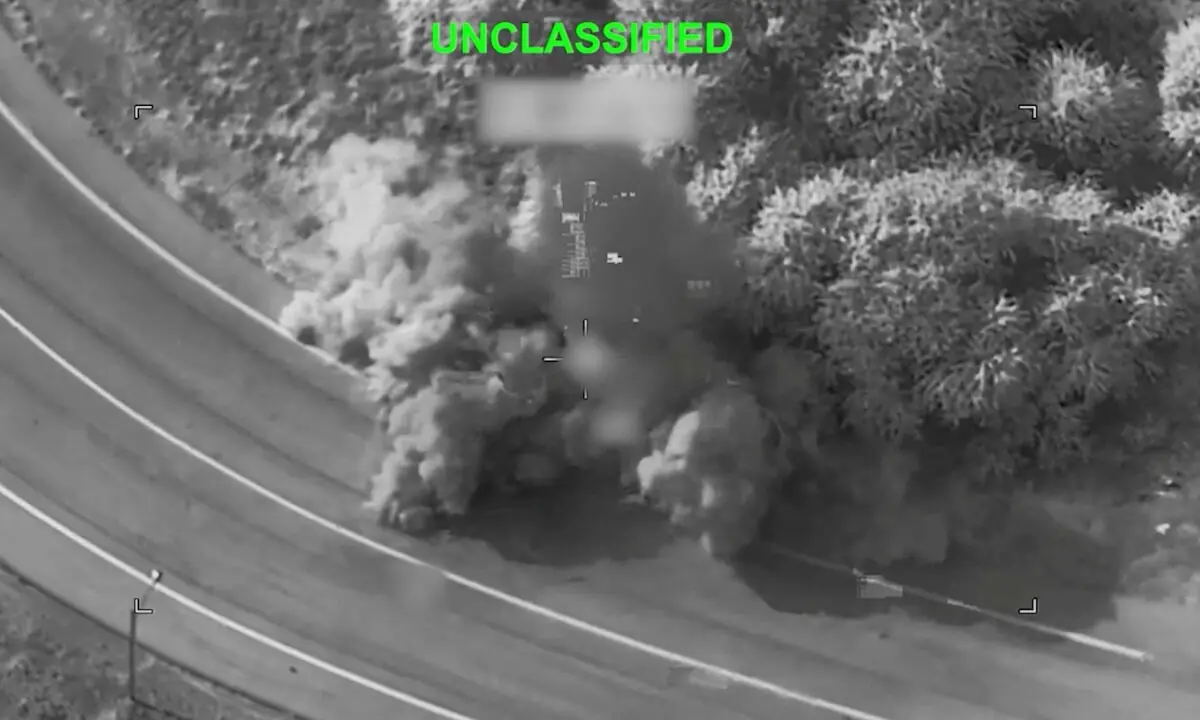
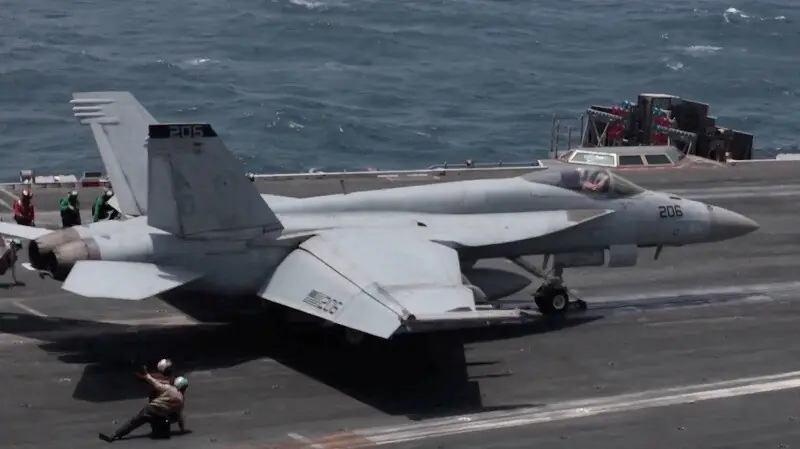
Iran and the United States traded strikes for a sixth consecutive day on Friday, with US forces hitting military targets near Bandar Abbas and Qeshm Island while Iran launched fresh attacks on American facilities in Bahrain and Kuwait. The fighting has now hardened into a daily exchange that has effectively shut down the Strait of Hormuz, the world's single most important shipping lane for oil and gas, and is driving up global energy prices.
US Central Command said its overnight operation used fighter jets, aerial drones, and warships to hit dozens of Iranian military targets, including coastal surveillance systems, air defense sites, military logistics infrastructure, and maritime capabilities. Iranian state media reported that five bridges were destroyed in the latest round, along with a train station in Bandar Khamir and Iranshahr Airport in southeastern Iran. Seven people were killed in the Bandar Khamir bridge strikes, according to Iran's state news agency IRNA.
Iran's response has gone beyond its own borders. Its military said it struck US facilities in Bahrain and Kuwait in the early hours of Friday. Explosion-like sounds were heard in Doha, Qatar's capital, and the Qatari Ministry of the Interior confirmed a child was injured by shrapnel. Iran has also been firing missiles and drones at US air bases in neighboring countries, including a base in Jordan.
The Strait of Hormuz is now the central battlefield
The Strait of Hormuz connects the Persian Gulf to the Indian Ocean and carries roughly a fifth of the world's oil and liquefied natural gas. Iran has resumed its blockade of the strait, and Washington has blockaded Iranian ports since Wednesday. Last week, Iran struck ships moving through a corridor in the strait. Both sides are now using maritime access as a pressure lever, and shipping has largely halted as a result.
The standoff over the strait has a specific commercial dimension. Iran wants all vessels using the waterway to travel through a channel close to its shores and plans to charge passage fees after a 60-day negotiation window set out in last month's memorandum expires. The US has urged ships to take an alternative southern route along the Omani coast. US airstrikes have targeted Iran's coastal military infrastructure precisely to reduce Tehran's ability to enforce those demands.
Iranian Army spokesperson Brigadier General Mohammad Akraminia pushed back on Thursday, saying US airstrikes would not succeed because Iran can strike the strait from anywhere within its territory. That claim underlines why the conflict over Hormuz cannot be resolved by degrading any single coastal installation. Iran's missile and drone arsenal is dispersed and mobile, giving Tehran options even as its fixed military infrastructure is damaged.
White House press secretary Karoline Leavitt said on Thursday that President Donald Trump would not allow what she called acts of terrorism in the strait to go unanswered, but added that Trump remained open to diplomacy. That dual messaging, military pressure paired with a negotiation offer, mirrors the pattern from the lead-up to last month's truce, which has since broken down into the current daily exchange.
What could escalate this further
Several threats are now on the table that could sharply widen the conflict. Trump has not ruled out the use of ground forces or an operation to seize Kharg Island, Iran's main oil export terminal. He has also threatened to strike Iranian power plants and bridges in the coming week unless Tehran returns to the negotiating table. Sources told Reuters that Iran, in turn, has signaled it could activate Houthi forces in Yemen to close the Bab al-Mandeb strait at the mouth of the Red Sea, adding a second major chokepoint to the crisis if US strikes hit Iranian civilian infrastructure.
Closing both Hormuz and Bab al-Mandeb simultaneously would disrupt the two main seaborne routes connecting Gulf oil to Asian and European markets. Tanker operators, insurers, and energy traders are already pricing in elevated risk. Any signal that either side is moving toward those escalation thresholds, whether a ground incursion near Kharg or a Houthi activation order, is likely to move oil markets sharply. The next few days, and whether Tehran responds to Trump's deadline by resuming talks, will determine how far this goes.