
Qatar Signals Progress in US-Iran War Talks
Qatar's foreign ministry said mediators including Qatar, Pakistan, and Oman have reached "very progressive stages" in efforts to end the US-Iran war, pushing Brent crude down more than four percent.
Key Takeaways
July 14, 2026 · 4 min read · By Rishabh Bhardwaj
·
AI-assisted, human-reviewed · Our editorial standards
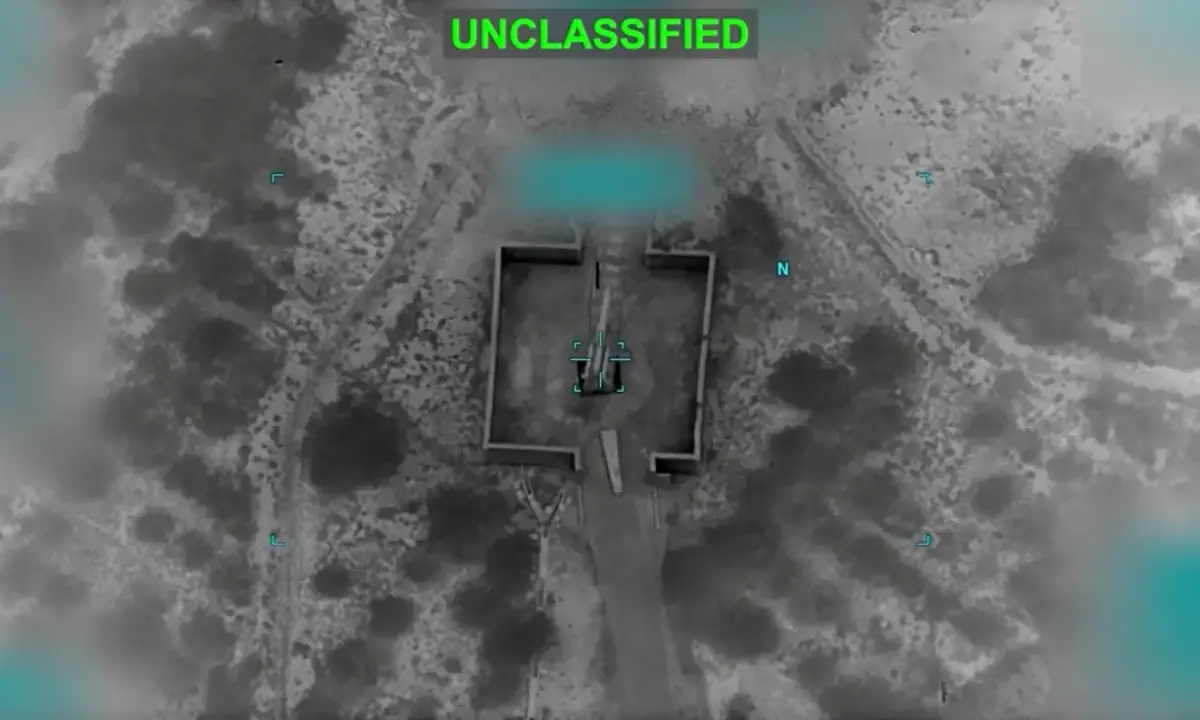
The United States launched fresh airstrikes on Iran over the weekend as Tehran declared the Strait of Hormuz closed for a second time, escalated attacks on US military facilities across the Gulf, and struck additional commercial vessels in the waterway. The conflict, which began when the US and Israel launched operations against Iran on February 28, has now entered a sharper and more dangerous phase after President Donald Trump declared the end of a ceasefire meant to halt the fighting.
US Central Command said American forces struck 140 Iranian military targets on Saturday alone, part of more than 300 strikes conducted over three nights. The stated aim was to degrade Iran's capacity to attack civilian mariners and commercial vessels transiting the Strait of Hormuz. Iranian state media reported explosions across several port cities following those strikes.
Iran's Revolutionary Guards responded with a broad set of retaliatory strikes on US military and allied installations throughout the region. They claimed to have destroyed a command and control centre and drone hangars at a base in Jordan, targeted a US military radar site in Kuwait, struck US aircraft carrier support and refueling platforms in Oman, and destroyed a fighter jet maintenance centre and command and control facility in Qatar. The Guards also said they disabled a second vessel in the Strait of Hormuz.
The geographic spread of Sunday's Iranian strikes marks a clear escalation. In recent weeks, Iran had hit sites in Kuwait and Bahrain while holding back from targeting Qatar since early April and the UAE since early May. The attacks on Jordan, Oman, and Qatar in a single day represent a significant expansion of the conflict's footprint. The UAE said its air defence systems intercepted Iranian missiles and drones. Warning sirens sounded in Bahrain, and explosions were heard in Doha.
Iran said it fired an initial warning shot at a vessel travelling on what it called an unauthorised route and warned that any retaliation would be met with a severe response. The Revolutionary Guards stated the strait would remain closed until, in their words, the end of US interference in the region. Central Command, however, maintained that commercial vessels continued to transit the waterway.
Before the war began, the Strait of Hormuz carried one-fifth of the world's oil and liquefied natural gas shipments. Iran's effective blockade of the waterway has caused energy prices to surge, feeding global inflation and raising concerns about an economic slowdown. For Trump, elevated gasoline prices carry direct political weight ahead of the November congressional elections.
The episode that broke the ceasefire involved three Qatari and Saudi commercial tankers that came under fire earlier in the week. The US responded by revoking the licence authorising the sale of Iranian crude and striking Iranian sites. Iran then hit US military installations across the Gulf, drawing the current exchange.
Diplomatic channels have not closed entirely. Iran's Foreign Minister Abbas Araqchi and Omani Foreign Minister Badr Albusaidi met in Oman to exchange views on mechanisms for safe ship passage through the strait. Oman's state news agency said negotiations between Omani and Iranian officials would continue at both technical and political levels. Iran's top negotiator Mohammad Baqer Ghalibaf posted on X: "The era of one-sided deals is OVER." Araqchi, for his part, accused the US of violating the ceasefire agreement, writing on X: "There can only be mutual compliance."
Adding another dimension to the conflict, Iran's new supreme leader, Ayatollah Mojtaba Khamenei, issued a written statement on Saturday pledging to "avenge the blood of the martyred leader and all the martyrs," a reference to his father, Ayatollah Ali Khamenei, who was killed in the war's opening strikes. Funeral ceremonies for the elder Khamenei were held Thursday. The new supreme leader did not attend and has not appeared publicly since the war began.
Trump has left the door open to continued negotiations despite declaring the ceasefire over. The combination of active military strikes, a contested strait closure, and parallel diplomatic talks in Oman suggests neither side is ready to fully exit the negotiating track, even as the military exchange intensifies. What changes next depends heavily on whether Oman's mediation effort can produce any agreed framework for vessel transit, and whether either side's military calculus shifts as Gulf states absorb repeated strikes.
Qatar's foreign ministry said mediators including Qatar, Pakistan, and Oman have reached "very progressive stages" in efforts to end the US-Iran war, pushing Brent crude down more than four percent.
Qatar confirmed it is mediating between the US and Iran but said no direct talks are currently planned. The clarification follows conflicting statements from President Trump, who claimed talks are under way, and Tehran, which denied any dialogue is happening.
Saudi Aramco reported sharply higher second-quarter 2026 profits as the Iran war restricts global oil supply and pushes crude prices up. Other oil supermajors also posted outsized earnings, raising concerns about sustained fuel cost pressure for importing economies.
President Trump called current Iran negotiations the "last chance" to end five months of conflict, pushing oil prices higher. Tehran denied formal talks are taking place, raising the risk of a diplomatic breakdown with direct consequences for global energy markets.