
Qatar Signals Progress in US-Iran War Talks
Qatar's foreign ministry said mediators including Qatar, Pakistan, and Oman have reached "very progressive stages" in efforts to end the US-Iran war, pushing Brent crude down more than four percent.
Key Takeaways
July 14, 2026 · 4 min read · By Rishabh Bhardwaj
·
AI-assisted, human-reviewed · Our editorial standards
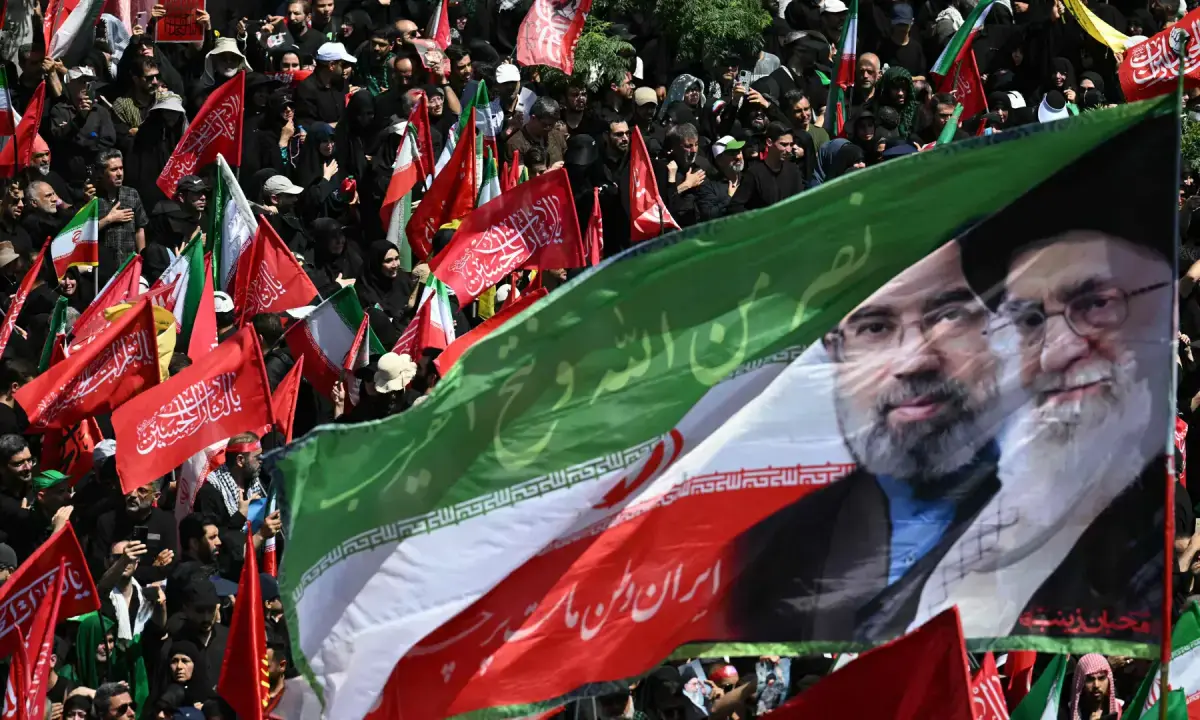
Iran's new Supreme Leader Mojtaba Khamenei has vowed revenge against the United States and Israel for the killing of his father, Ali Khamenei, hours after President Donald Trump warned that any assassination attempt against him would trigger the total destruction of Iran. The exchange of threats marks a sharp escalation between two countries already in an active, if uneasy, conflict, with mediators scrambling to keep diplomacy alive.
Mojtaba Khamenei became Iran's Supreme Leader after his father was killed in US-Israeli strikes on February 28, 2026, the opening day of a war that has since reshaped the region. He has largely stayed out of public view since before the conflict began. His statement on Saturday was his first public message since his father's funeral this week. "Vengeance is the will of our nation and must inevitably be carried out," he wrote, adding that the matter did not depend on his own survival or that of other officials. He also said Iran had compiled a list of individuals to be targeted.
Trump responded on his Truth Social platform with an explicit military threat. He said 1,000 missiles are "locked and loaded" aimed at Iran, with thousands more ready to follow, and that US forces are prepared "for a one year period of time, subject to extension, to completely decimate and destroy all areas of Iran" should Tehran act on any assassination threat against him. The language is more absolute than previous warnings and signals that the White House views Iran's revenge rhetoric as a direct and immediate threat to the president.
The two sides had signed the Pakistan-mediated Islamabad Memorandum of Understanding on June 18, 2026, establishing an interim framework to stop the fighting. That arrangement has now fractured. This week, Iran was accused of targeting three commercial vessels it said had deviated from an approved route through the Strait of Hormuz. Washington responded with a heavy round of airstrikes hitting around 90 targets inside Iran. Iran's government said those strikes killed 17 people and injured 115 more. Iran then launched retaliatory strikes against US-allied Gulf nations hosting American military bases. Trump has since declared the ceasefire over.
Iran's Foreign Minister Abbas Araghchi pushed back on Saturday, saying Tehran had kept its side of the bargain under the MoU. "Reality check: There can only be mutual compliance," he said. Iran's chief negotiator Mohammad Bagher Ghalibaf struck a harder line, saying the confrontation would "never end with Iran's surrender."
Mediators have not given up. Qatar sent a delegation to Tehran on Friday to reinforce its role as a go-between. Qatar's emir also spoke with Pakistani Prime Minister Shehbaz Sharif, who said he had urged Iranian President Masoud Pezeshkian to protect the "hard-earned peace" in the region. The US and Iran have held one round of direct high-level talks in Switzerland since the MoU, plus indirect talks in Qatar earlier in July 2026, but neither produced a breakthrough.
The single biggest roadblock to any final deal is the Strait of Hormuz. Iran closed the waterway to commercial shipping during the war and now insists on controlling which vessels pass through, with plans to charge transit fees. Washington has rejected this position. Under customary international law, states cannot generally charge tolls on straits used for international navigation, making Iran's demand legally contested as well as commercially disruptive. The strait is a critical pipeline for oil and gas exports from Gulf energy producers, and its closure has hit global commodity flows hard.
Iranian Foreign Minister Araghchi arrived in Oman on Saturday for talks specifically about administering the strait. Oman sits on the opposite side of Hormuz from Iran, giving it a direct interest in how the waterway is governed. News outlets Axios and Politico separately reported that Washington gave Tehran until Saturday to stop firing on commercial ships in Hormuz and formally acknowledge the passage is open to navigation.
The practical stakes extend well beyond the two main combatants. Gulf states that host US bases have already been drawn into the conflict through Iranian reprisals. Oil markets, global shipping costs, and the security of energy infrastructure across the region all depend on what happens next in this strait standoff. With both sides escalating their language and no diplomatic framework currently holding, the window for a negotiated pause is narrowing fast.
Qatar's foreign ministry said mediators including Qatar, Pakistan, and Oman have reached "very progressive stages" in efforts to end the US-Iran war, pushing Brent crude down more than four percent.
Qatar confirmed it is mediating between the US and Iran but said no direct talks are currently planned. The clarification follows conflicting statements from President Trump, who claimed talks are under way, and Tehran, which denied any dialogue is happening.
Saudi Aramco reported sharply higher second-quarter 2026 profits as the Iran war restricts global oil supply and pushes crude prices up. Other oil supermajors also posted outsized earnings, raising concerns about sustained fuel cost pressure for importing economies.
President Trump called current Iran negotiations the "last chance" to end five months of conflict, pushing oil prices higher. Tehran denied formal talks are taking place, raising the risk of a diplomatic breakdown with direct consequences for global energy markets.