
Qatar Signals Progress in US-Iran War Talks
Qatar's foreign ministry said mediators including Qatar, Pakistan, and Oman have reached "very progressive stages" in efforts to end the US-Iran war, pushing Brent crude down more than four percent.
Key Takeaways
July 14, 2026 · 4 min read · By Rishabh Bhardwaj
·
AI-assisted, human-reviewed · Our editorial standards
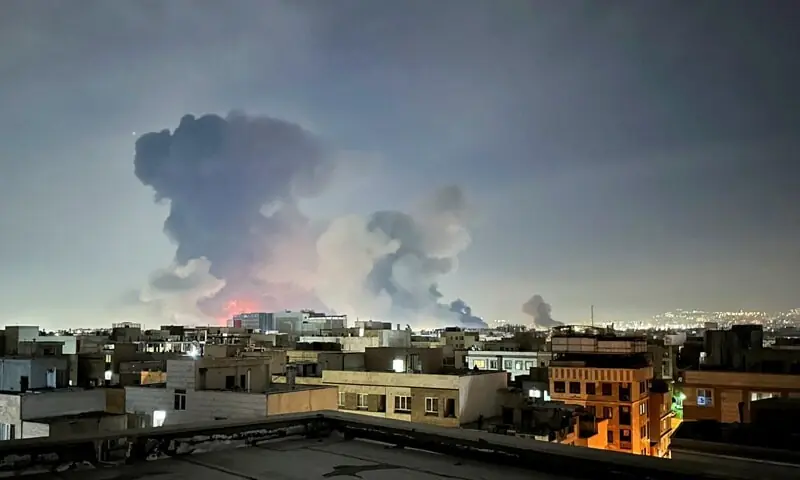
The United States launched its third round of strikes on Iran in a week on Saturday after Iran's Islamic Revolutionary Guard Corps struck a container ship in the Strait of Hormuz and announced the closure of the vital waterway. The conflict, which began on February 28 when the US and Israel launched war on Iran, has now destabilised the entire Gulf region and is squeezing global energy supplies.
US Central Command said it began strikes at 7:15 p.m. ET on Saturday, roughly one hour after Iran released a statement warning that "new enemy bases" in the Middle East would be targeted if the United States retaliated over the ship incident. President Donald Trump ordered the strikes, Central Command confirmed. Iranian state media reported explosions in several port cities following the attack.
The immediate trigger was Iran's strike on the M/V GFS Galaxy, a Cyprus-flagged container ship transiting the strait. Central Command said the vessel suffered significant engine-room damage and that a civilian crew member was missing. The United Kingdom Maritime Trade Operations Centre said the crew had abandoned ship east of Oman and were in a lifeboat. Iran said the ship was travelling on an "unauthorised route" and disregarded repeated warnings, framing the strike as a warning shot rather than an act of aggression.
The IRGC then declared the Strait of Hormuz closed, saying it would remain shut until "the end of US interference in this region." Before the war began, the strait carried roughly one-fifth of the world's oil and liquefied natural gas supplies. Its effective blockade has driven energy prices sharply higher, feeding inflation globally. For Trump, rising gasoline prices carry direct political weight ahead of November's congressional elections.
The broader attack pattern extended well beyond the strait. Iran's Revolutionary Guards said they destroyed a command and control centre and drone hangars at a base in US ally Jordan. The United Arab Emirates said its air defence systems were engaging Iranian missiles and drones. Qatar said it intercepted a missile attack, warning sirens sounded in Bahrain, and explosions were heard in Doha. The conflict has effectively spread across Gulf states.
Even as strikes continued, parallel diplomatic activity was under way. Iranian Foreign Minister Abbas Araghchi met Omani Foreign Minister Badr Albusaidi in Oman to discuss "appropriate mechanisms for the safe passage of ships through the Strait of Hormuz," according to Araghchi's statement. Oman's state news agency said negotiators from both sides would continue talks at technical and political levels.
CNN reported that Oman put forward a draft proposal allowing free navigation through its southern corridor in Omani territorial waters, while vessels using the northern corridor through Iranian waters would need prior Iranian approval, though no tolls would be imposed. The White House and State Department did not immediately respond to requests for comment on the proposal.
Washington's publicly stated demands are firm: Iran must state clearly that attacks on shipping will stop and that all lanes will remain open without conditions. Iran's Foreign Minister Araghchi has accused the US of violating the original ceasefire agreement, writing on X: "There can only be mutual compliance." The US revoked the licence authorising sales of Iranian crude on Tuesday, after three Qatari and Saudi commercial tankers came under fire earlier in the week. Iran has not claimed responsibility for those ship attacks.
Iran's new supreme leader, Ayatollah Mojtaba Khamenei, added a further layer of tension on Saturday. A written statement released to mark funeral ceremonies for his predecessor and father, Ayatollah Ali Khamenei, who was killed in the war's opening strikes, pledged vengeance: "We pledge to avenge the blood of the martyred leader and all the martyrs." Mojtaba Khamenei did not attend the funeral and has not appeared in public since the war began. Separately, Trump posted on Friday that he had ordered the US military to prepare to launch thousands of missiles against Iran if Tehran attempted to assassinate him. Iran has not responded to that claim.
The pattern now is a cycle of ship strikes, US airstrikes on Iranian targets, Iranian missile launches at Gulf state bases, and diplomatic talks running in parallel, all centred on who controls passage through Hormuz. As long as the strait stays closed or conditionally open, energy markets face sustained pressure, Gulf allies face direct military risk, and the ceasefire that Trump declared over remains formally suspended. The Omani channel is the only active diplomatic track, and its draft proposal is the nearest thing to a potential off-ramp currently visible.
Qatar's foreign ministry said mediators including Qatar, Pakistan, and Oman have reached "very progressive stages" in efforts to end the US-Iran war, pushing Brent crude down more than four percent.
Qatar confirmed it is mediating between the US and Iran but said no direct talks are currently planned. The clarification follows conflicting statements from President Trump, who claimed talks are under way, and Tehran, which denied any dialogue is happening.
Saudi Aramco reported sharply higher second-quarter 2026 profits as the Iran war restricts global oil supply and pushes crude prices up. Other oil supermajors also posted outsized earnings, raising concerns about sustained fuel cost pressure for importing economies.
President Trump called current Iran negotiations the "last chance" to end five months of conflict, pushing oil prices higher. Tehran denied formal talks are taking place, raising the risk of a diplomatic breakdown with direct consequences for global energy markets.