
Qatar Signals Progress in US-Iran War Talks
Qatar's foreign ministry said mediators including Qatar, Pakistan, and Oman have reached "very progressive stages" in efforts to end the US-Iran war, pushing Brent crude down more than four percent.
Key Takeaways
July 13, 2026 · 4 min read · By Rishabh Bhardwaj
·
AI-assisted, human-reviewed · Our editorial standards
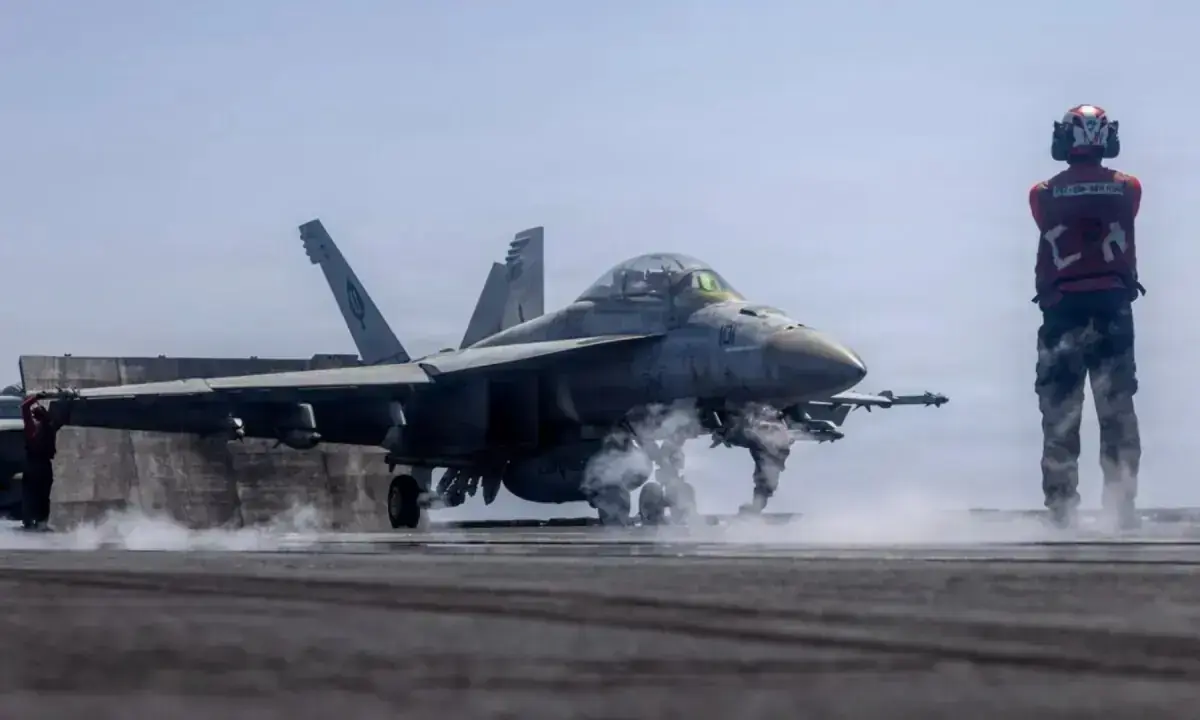
US and Iranian forces have exchanged their heaviest strikes since an April ceasefire, with fighting now centered on the Strait of Hormuz, the world's most important oil shipping lane. Iran's Revolutionary Guards declared the strait closed, the US insists it remains open, and the diplomatic framework meant to end the war is under serious strain.
The latest US barrage began at 2am Pakistan time on Sunday and targeted dozens of Iranian sites, including Qeshm island, Bandar Abbas, and Khuzestan province bordering Iraq. US Central Command (Centcom) said the strikes were designed to degrade Iran's ability to attack international shipping through the Strait of Hormuz. They followed a previous wave less than 24 hours earlier in which Centcom said 140 Iranian military targets were hit. Iranian state media reported two deaths and damage at a water pumping station in Mahshahr.
Iran responded by striking US military positions across the Gulf. The Islamic Revolutionary Guard Corps (IRGC) announced attacks on Prince Hassan Air Base in Jordan, a drone command centre in Bahrain, and Ali Al Salem and Ahmad Al Jaber bases in Kuwait. The IRGC said its missiles and drones set fire to fuel storage tanks and ammunition depots on the Jordanian base. Air raid alerts sounded in Bahrain, Kuwait's army said it was intercepting hostile aerial targets, and Jordan's military reported it had shot down four Iranian missiles. Bahrain accused Iran of attacks targeting civilians and said it had downed several projectiles.
Control of the Strait of Hormuz has become the defining lever in this conflict. The waterway carries roughly a fifth of global oil supply, and both sides are now framing it as the core issue. An adviser to Iran's supreme leader said the strait was more important than "dozens of atomic bombs." The IRGC declared it closed after an Iranian attack on a commercial vessel early Sunday forced its crew to abandon ship in flames. Centcom countered that the strait remained open to all lawful transit.
Shipping data tracked by Kpler showed tanker traffic through the strait fell to its lowest level since May 25. Vessels are increasingly switching off their public AIS tracking transponders, which makes it harder to count how many ships are still moving through. Ship broker Gibson warned that if escalation leads to another prolonged closure, depleted global inventories would mean tighter supply, higher prices, and significant disruption to tanker markets. At least three pairs of tankers were conducting ship-to-ship oil transfers off Oman's coast, a workaround that avoids Hormuz but adds time and cost. One shipping official described the situation as a "managed conflict" comparable to the Houthi campaign in the Red Sea, which paralysed the Bab al Mandeb waterway for nearly two years before a 2026 ceasefire.
Oil markets responded immediately. Prices jumped as much as 4.5 percent, with the US benchmark WTI climbing to nearly $74 a barrel on fears of disrupted supply.
The June agreement meant to halt the fighting, known as the Islamabad Memorandum of Understanding, is now formally in crisis. Iran's foreign ministry spokesman Esmaeil Baqaei said directly: "There is no doubt that this document is in crisis." Tehran said it would stop complying with the MoU if Washington failed to meet its commitments, citing a pattern of the US not fulfilling its obligations first. Iran's foreign ministry said the US strikes had "caused the return of insecurity in the Strait of Hormuz" and "rendered futile all efforts" at regional peace.
US President Donald Trump this week called the MoU "over" but left room for further talks. Pakistan's Deputy Prime Minister and Foreign Minister Ishaq Dar called for de-escalation in a phone call with Iranian Foreign Minister Abbas Araghchi on Sunday. Pakistan, Qatar, and Oman are still engaged as mediators, and Iran's foreign ministry confirmed Tehran is continuing talks with all three to prevent further escalation.
Chatham House associate fellow Bader Al-Saif said the scale of attacks reflects a stalemate, not a change in direction. "Both sides want to end the impasse on their own terms, and they are increasingly finding it difficult to do so," he said. In his view, the escalation only delays the negotiated settlement that will eventually come. The practical question for markets, shipping operators, and Gulf states is how long that delay lasts and at what cost.
Qatar's foreign ministry said mediators including Qatar, Pakistan, and Oman have reached "very progressive stages" in efforts to end the US-Iran war, pushing Brent crude down more than four percent.
Qatar confirmed it is mediating between the US and Iran but said no direct talks are currently planned. The clarification follows conflicting statements from President Trump, who claimed talks are under way, and Tehran, which denied any dialogue is happening.
Saudi Aramco reported sharply higher second-quarter 2026 profits as the Iran war restricts global oil supply and pushes crude prices up. Other oil supermajors also posted outsized earnings, raising concerns about sustained fuel cost pressure for importing economies.
President Trump called current Iran negotiations the "last chance" to end five months of conflict, pushing oil prices higher. Tehran denied formal talks are taking place, raising the risk of a diplomatic breakdown with direct consequences for global energy markets.