
Qatar Signals Progress in US-Iran War Talks
Qatar's foreign ministry said mediators including Qatar, Pakistan, and Oman have reached "very progressive stages" in efforts to end the US-Iran war, pushing Brent crude down more than four percent.
Key Takeaways
June 22, 2026 · 4 min read · By Rishabh Bhardwaj
·
AI-assisted, human-reviewed · Our editorial standards
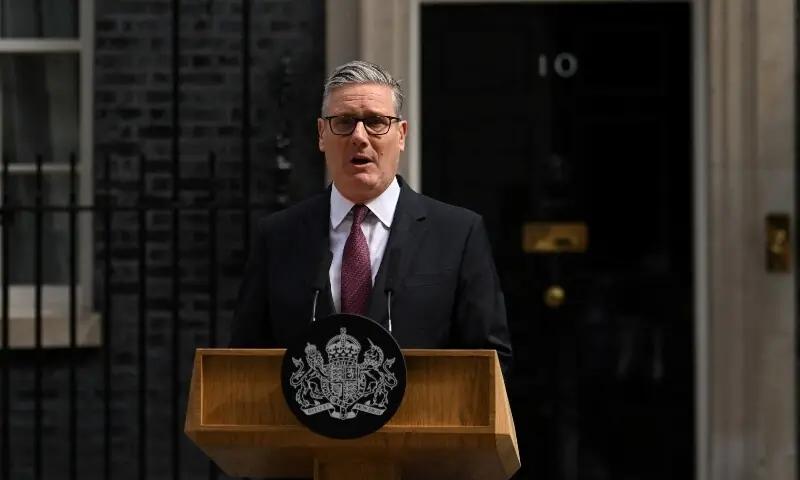
Keir Starmer resigned as UK Prime Minister and Labour Party leader on Monday, June 22, 2026, becoming Britain's seventh prime minister in a decade. Speaking outside 10 Downing Street, he said he had heard his parliamentary party's answer on whether he was best placed to lead Labour into the next general election and accepted it "with good grace."
Starmer said he informed King Charles III of his decision on Monday morning. He asked Labour's National Executive Committee to open a leadership contest timetable on July 9, with the process completed before parliament returns in September. He will remain as caretaker prime minister until that contest concludes.
The resignation follows months of accumulated damage. Multiple scandals, high-profile ministerial resignations, and poor polling had steadily weakened Starmer's position. The tipping point came Friday when Andy Burnham, the Greater Manchester mayor, won a parliamentary by-election, beating a candidate from Nigel Farage's Reform UK party. Burnham is due to be sworn in as a member of parliament on Monday, clearing his path to enter the leadership race. Reform UK has led national opinion polls for more than a year and defeated Labour in local elections in May, further exposing Starmer's vulnerability.
Starmer's tenure was also derailed by specific political missteps. His decision to appoint Peter Mandelson, described in the article as a known associate of the late US sex offender Jeffrey Epstein, as UK ambassador to Washington nearly ended his premiership in March. Benefits cuts drew public anger. Defence spending plans attracted sustained criticism. His popularity ratings fell to the lowest recorded for any sitting British leader.
In his resignation speech, Starmer listed what he called his government's achievements over two years: real wage growth above inflation every month, the fastest fall in NHS waiting lists in 17 years, expanded workers' and renters' rights, a major uplift in defence spending, falling small boat Channel crossings, and half a million children lifted out of poverty. He said he was proud of transforming a "financially, politically and morally bankrupt" Labour Party into one that won a landslide majority in 2024, ending 14 years of Conservative rule.
Burnham enters the race as the frontrunner but carries real economic risk. Britain already carries the highest borrowing costs among Group of Seven nations, shaped by high debt, years of weak growth, and rising defence commitments. Burnham said last September that Britain needed to move "beyond this thing of being in hock to the bond markets," a comment he later said was misrepresented. Economists at Citibank said on Friday that "a Burnham premiership would inherit a precarious fiscal situation with few tools to deliver meaningful change." Investors contacted by Reuters were divided on whether he would reassure bond markets.
Beyond cost-of-living pledges, Burnham has not yet spelled out his positions on foreign affairs, the economy, or defence. That ambiguity is not trivial. Bond market investors have constrained the UK government's room to borrow and spend for years, and any new leader faces the same structural ceiling regardless of political ambition.
The timing adds symbolic weight. Starmer's resignation comes one day before the tenth anniversary of the Brexit referendum, the event that began Britain's cycle of rapid leadership changes. Starmer himself was the fourth prime minister to take office in the post-Brexit era.
The contest timetable, opening July 9 and closing before the summer recess, means a new Labour leader and prime minister could be confirmed within weeks. Parliament returns in September. Whoever wins will inherit a government with a large Commons majority but a fragile fiscal position, a resurgent opposition in Reform UK, and an electorate that polling consistently shows believes the country is not working properly. Burnham is the most visible candidate, but Labour's internal dynamics and the compressed timeline could still produce surprises before September.
Qatar's foreign ministry said mediators including Qatar, Pakistan, and Oman have reached "very progressive stages" in efforts to end the US-Iran war, pushing Brent crude down more than four percent.
Qatar confirmed it is mediating between the US and Iran but said no direct talks are currently planned. The clarification follows conflicting statements from President Trump, who claimed talks are under way, and Tehran, which denied any dialogue is happening.
Saudi Aramco reported sharply higher second-quarter 2026 profits as the Iran war restricts global oil supply and pushes crude prices up. Other oil supermajors also posted outsized earnings, raising concerns about sustained fuel cost pressure for importing economies.
President Trump called current Iran negotiations the "last chance" to end five months of conflict, pushing oil prices higher. Tehran denied formal talks are taking place, raising the risk of a diplomatic breakdown with direct consequences for global energy markets.