
Qatar Signals Progress in US-Iran War Talks
Qatar's foreign ministry said mediators including Qatar, Pakistan, and Oman have reached "very progressive stages" in efforts to end the US-Iran war, pushing Brent crude down more than four percent.
Key Takeaways
May 8, 2026 · 2 min read · By Rishabh Bhardwaj
·
AI-assisted, human-reviewed · Our editorial standards
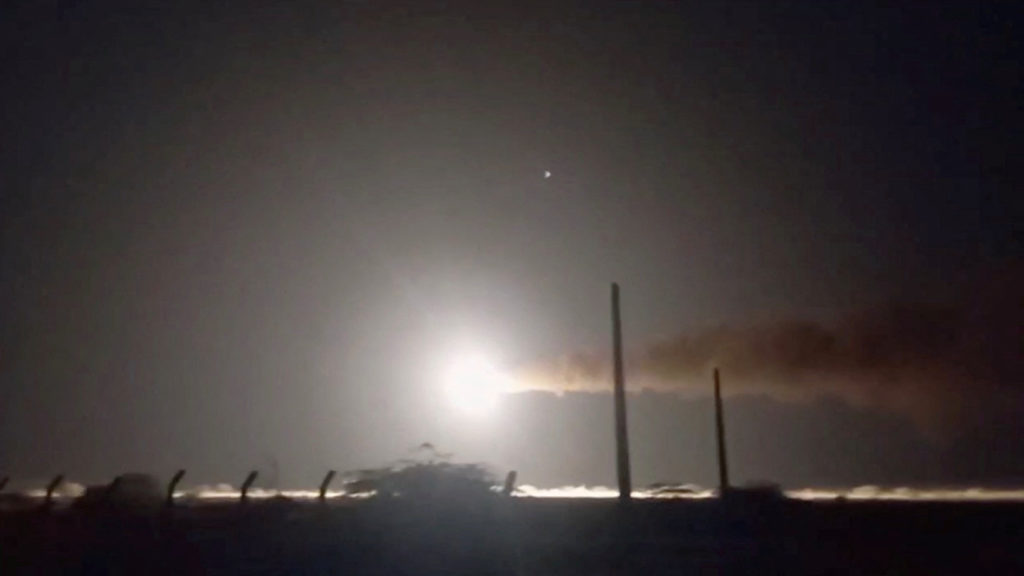
The United Arab Emirates said its air defenses intercepted two ballistic missiles and three drones launched by Iran, leaving three people wounded. The UAE Defense Ministry confirmed the attack and the interceptions, marking a direct Iranian strike on Gulf state territory amid sharply rising tensions in the region.
The incident follows a separate U.S. military statement that American forces had exchanged fire with Iranian assets. The back-to-back confrontations signal that what had been a period of proxy skirmishes and indirect pressure is now producing direct military exchanges involving multiple actors in the same theater.
Iran launched a combined drone and ballistic missile salvo toward the UAE. UAE air defenses engaged all five projectiles. Three people were still wounded, suggesting either debris from intercepts or a partial penetration of the defensive screen. The UAE has invested heavily in layered missile defense systems, including Patriot batteries, making a successful strike unusual and the wounding of civilians notable even in a defended scenario.
The U.S. exchange with Iranian forces adds a separate dimension. American forces operating in or near the Gulf engaged Iranian assets, though the precise location, scale, and outcome of that exchange were not detailed in the source material. The timing of both events in close sequence raises the possibility of a coordinated Iranian escalation rather than isolated incidents.
Direct Iranian strikes on UAE soil carry immediate consequences for oil markets. The UAE is a major crude producer and hosts one of the world's busiest trade and transit hubs. Any sustained threat to the Emirates, or even prolonged uncertainty about the security environment, tends to push oil prices higher and compress risk appetite for Gulf assets.
For regional business, the UAE's reputation as a stable commercial and financial center is central to its economic model. A pattern of missile and drone attacks challenges that positioning in ways that sustained diplomatic tension alone does not. Foreign investment, aviation, and logistics are the sectors most sensitive to security perception shifts.
The immediate question is whether Iran's action was a one-off pressure move or the start of a broader escalation arc. Watch for UAE and U.S. official responses, any Iranian statement claiming or contextualizing the attack, and movement in Brent crude prices in the near term.
Qatar's foreign ministry said mediators including Qatar, Pakistan, and Oman have reached "very progressive stages" in efforts to end the US-Iran war, pushing Brent crude down more than four percent.
Qatar confirmed it is mediating between the US and Iran but said no direct talks are currently planned. The clarification follows conflicting statements from President Trump, who claimed talks are under way, and Tehran, which denied any dialogue is happening.
Saudi Aramco reported sharply higher second-quarter 2026 profits as the Iran war restricts global oil supply and pushes crude prices up. Other oil supermajors also posted outsized earnings, raising concerns about sustained fuel cost pressure for importing economies.
President Trump called current Iran negotiations the "last chance" to end five months of conflict, pushing oil prices higher. Tehran denied formal talks are taking place, raising the risk of a diplomatic breakdown with direct consequences for global energy markets.