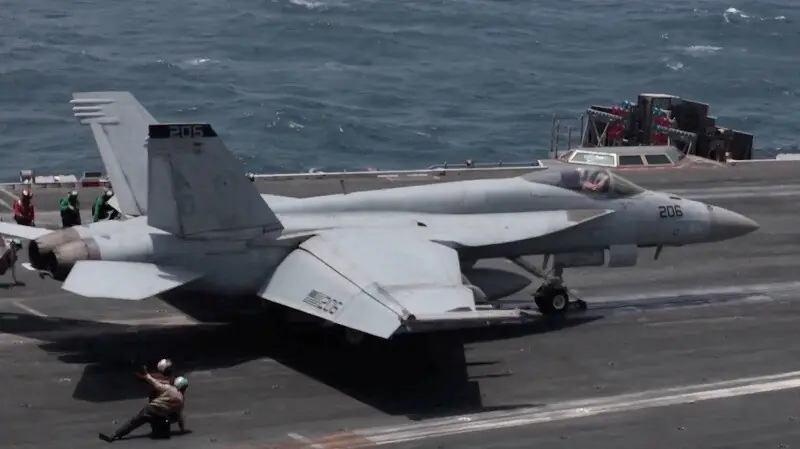
US President Donald Trump abandoned a proposal to charge ships a 20 percent fee for transiting the Strait of Hormuz less than five hours before it was set to take effect, saying he would pursue investment deals with Gulf states instead. The reversal came as US forces carried out strikes on Iran for the third consecutive night and both sides traded attacks across the wider region, deepening uncertainty over whether a recent ceasefire framework can hold.
Trump announced the fee on Monday after Tehran claimed it had closed the strait and Washington reimposed a naval blockade on Iranian shipping. By Tuesday evening, he posted on Truth Social that the strait was open to all traffic except Iranian vessels, and that Gulf states would make large investment commitments into the United States in place of paying any toll. "Investments will be MASSIVE but, at the same time, extraordinarily good for them, and their future," he wrote, without specifying which states had agreed to anything or what concrete commitments had been made.
The fee proposal had faced immediate and broad pushback. The International Maritime Organization, the United Nations shipping agency, said it opposed any fees on straits used in international navigation and that no legal basis existed for mandatory tolls on strait transits. Germany's Hapag-Lloyd, the world's fifth-largest container shipping company, called the idea "fundamentally wrong." Trump later said he himself did not like the concept and that calls from foreign leaders had prompted the shift.
Strikes continue as region-wide tensions rise
The diplomatic reversal did not stop the military exchanges. The governor's office of Iran's Qeshm Island, located on the Strait of Hormuz, said a US projectile struck the island at around 7pm local time on Tuesday, according to Iranian state media. A separate US projectile exploded near a water and electricity facility on Iran's Kish Island, the semi-official Tasnim news agency reported, and an explosion was heard in Andimeshk in southern Khuzestan province.
Iran responded by firing ballistic missiles at a US Army base in Jordan. Jordan said it shot down four of those missiles. Bahrain, which hosts a US naval base, said it fended off an Iranian aerial attack, and explosions were heard in Manama, the Bahraini capital. Kuwait's armed forces said they were engaging with hostile aerial targets and state media there reported air sirens.
The conflict began on February 28 when the US and Israel struck Iran. Iran responded by attacking Israel and Gulf states hosting US bases, which also reignited fighting between Israel and Hezbollah in Lebanon. The war has killed thousands and displaced millions since then.
Energy markets and economic fallout
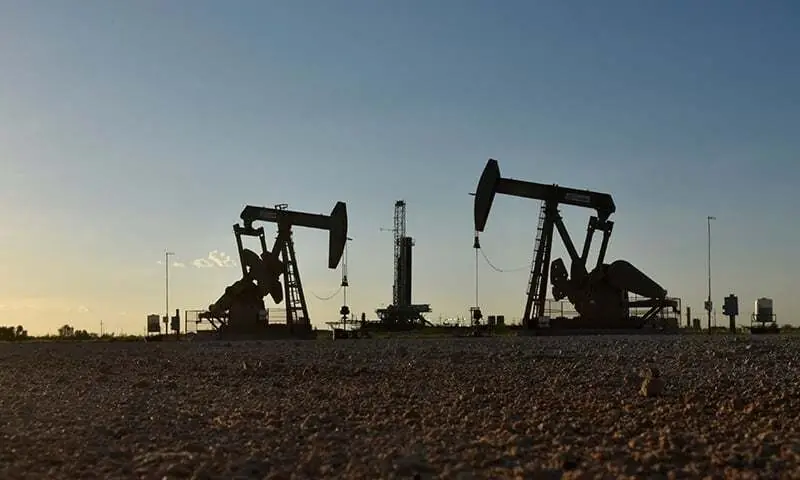
Oil prices rose roughly two percent to a one-month high on Tuesday after the US reimposed its naval blockade and the fresh strikes raised concerns about energy flows through the strait. Before the war, roughly one fifth of global oil and liquefied natural gas traffic passed through the Hormuz waterway daily. The proposed 20 percent fee, had it taken effect, could have generated around $240 million per day, according to estimates cited in reporting on the plan.
The worsening attacks have added doubt that a memorandum of understanding signed last month will produce a lasting ceasefire. Regional analysts told reporters they believe both sides are still seeking leverage for an eventual deal but warned that a loss of control remains possible. Yezid Sayigh, a senior fellow at the Carnegie Middle East Center, said he doubted a full war would resume but noted that both Iran and Trump faced real risks of overplaying their positions.
Inside the United States, the conflict is increasingly unpopular. Gasoline prices have risen since the war began, and congressional elections are approaching in November 2026. A Reuters poll found that half of respondents believed the war had not been worth its costs, a political pressure point that likely factors into Trump's calculations on how hard to push economic measures like the Hormuz fee.
Lebanon and Israel resumed talks on Tuesday in Rome, with Beirut pressing for progress on an Israeli withdrawal from south Lebanon under a US-brokered framework. That parallel diplomatic track suggests some channels remain open even as military exchanges intensify elsewhere in the region. What Gulf states ultimately commit to in place of the transit fee, and whether those commitments materialize, will be the first concrete test of whether Tuesday's diplomatic pivot produces anything durable.