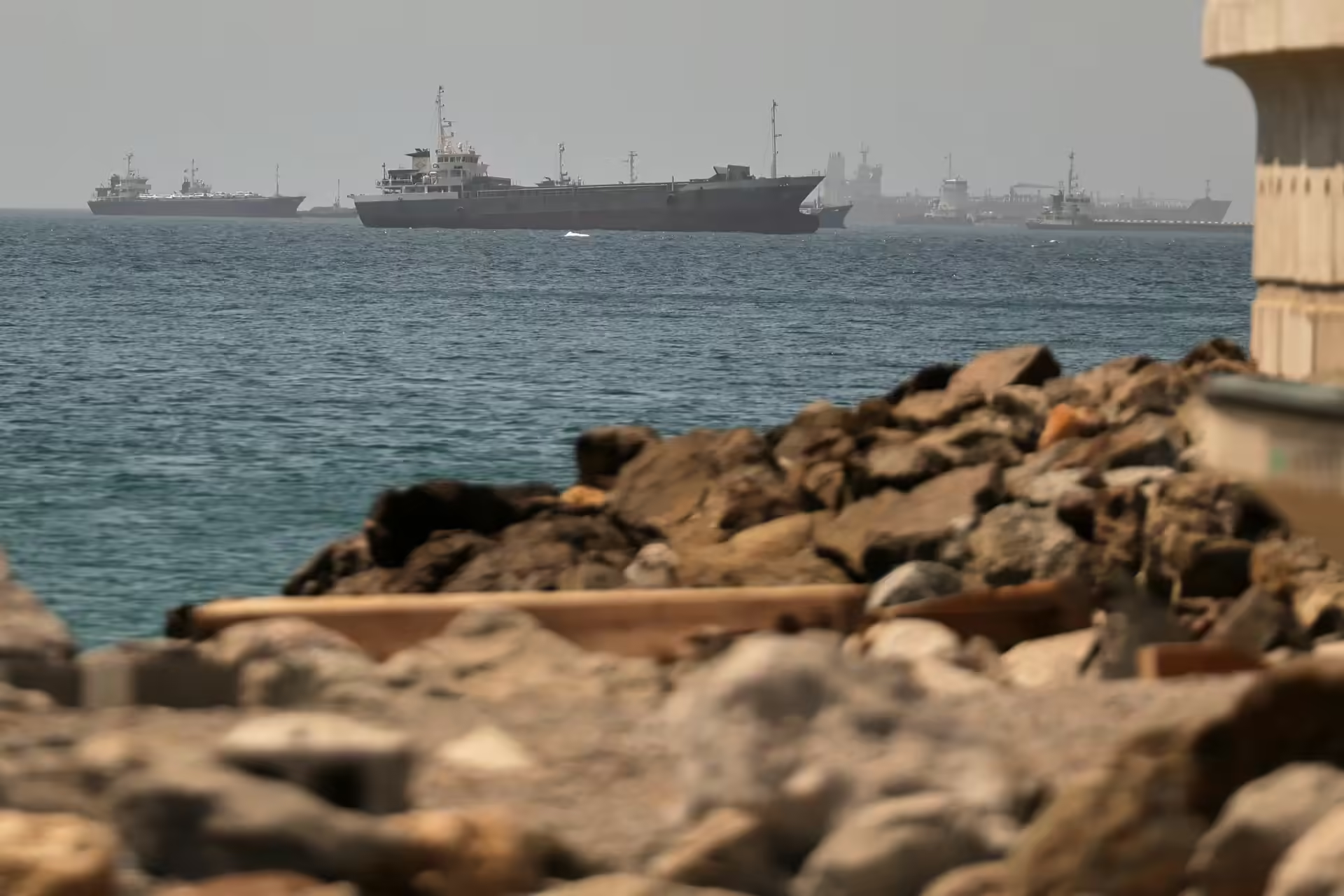
Oil prices surged roughly 5% on Tuesday after President Donald Trump announced on social media that the United States would be "reimbursed" for helping ships pass through the Strait of Hormuz, a move widely read as a reimposition of a hard naval blockade on Iranian oil exports.
The Strait of Hormuz is the narrow waterway between Iran and Oman through which roughly one-fifth of the world's traded oil flows every day. Any credible threat to that passage sends immediate shockwaves through global energy markets, because traders must reprice supply risk the moment transit becomes uncertain or costly.
Trump's social media post did not spell out the precise mechanism, but the language of the U.S. being "reimbursed" for escort or transit services signals that Washington intends to reassert direct control over who moves oil through the strait and at what cost. That framing puts pressure on buyers of Iranian crude, primarily in Asia, who now face the prospect of renewed sanctions enforcement at sea, not just on paper.
Why the Market Moved So Fast
A 5% single-session jump in oil is a significant move. Crude markets are liquid and heavily traded, which means they normally absorb news gradually. A move of this size tells you that traders judged the announcement as both credible and immediate, not a negotiating bluff to be discounted.
Iran has been selling oil in defiance of earlier U.S. sanctions, largely because enforcement had become inconsistent. If the Trump administration now stations naval assets to physically monitor or intercept tankers near Hormuz, the effective supply of Iranian crude reaching the market could drop sharply and quickly. Traders are pricing in that possibility now rather than waiting for confirmation.
Beyond Iran, any disruption to Hormuz passage affects every producer that ships through it, including Saudi Arabia, the UAE, Kuwait, and Iraq. Combined, those countries represent a large share of global export capacity. Even a short period of uncertainty raises insurance costs, freight rates, and risk premiums for the entire region's oil.
What Changes Next
The key question for markets over the coming days is whether the Trump announcement translates into actual naval deployment and interception activity, or whether it remains a declaratory posture. If U.S. vessels begin stopping or redirecting tankers, the supply shock becomes real and sustained. If not, some of today's price gain may retrace.
Secondary pressure will come from how Iran responds. Tehran has previously threatened to close the strait entirely in response to U.S. pressure, a scenario that would push oil prices far higher than a 5% move. Whether Iran escalates or seeks a diplomatic off-ramp will shape the next phase of this story.
For consumers and businesses, higher oil prices feed through to fuel costs within days and into broader inflation over weeks. Central banks watching energy price spikes will weigh whether this is a temporary geopolitical shock or the start of a sustained supply disruption. That distinction matters for interest rate decisions globally.
Equity markets with heavy energy sector exposure, particularly in the Gulf and among major oil companies listed in New York and London, are likely to see a positive repricing. Airline stocks, shipping companies with thin fuel hedges, and energy-intensive manufacturers face the opposite pressure.
The situation remains fast-moving. Trump's social media announcement is the starting point, not the final word. Watch for official U.S. military or State Department statements in the hours ahead, as those will clarify whether this is a policy shift with enforcement teeth or a pressure tactic aimed at forcing Iran back to the negotiating table.