
Qatar Signals Progress in US-Iran War Talks
Qatar's foreign ministry said mediators including Qatar, Pakistan, and Oman have reached "very progressive stages" in efforts to end the US-Iran war, pushing Brent crude down more than four percent.
Key Takeaways
May 1, 2026 · 2 min read · By Rishabh Bhardwaj
·
AI-assisted, human-reviewed · Our editorial standards
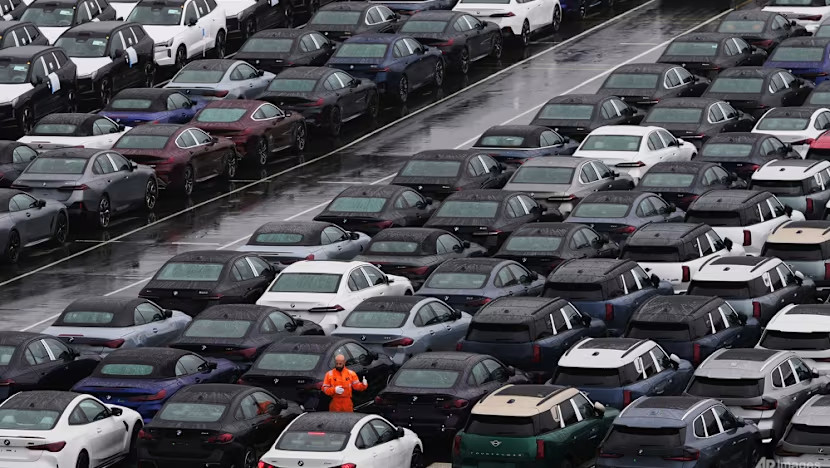
President Donald Trump announced that the US will raise tariffs on European Union cars and trucks to 25 percent, effective next week, accusing the EU of failing to honor a prior trade agreement.
The move escalates an already tense transatlantic trade relationship. Trump did not specify which prior deal he was referring to, but the accusation frames the tariff hike as a punitive response rather than a fresh opening bid, signaling the US sees the EU as the party in breach.
A 25 percent tariff is a significant cost increase on every car or truck shipped from the EU to the US. European automakers, led by German brands like Volkswagen, BMW, and Mercedes-Benz, are among the world's largest exporters to the American market. At 25 percent, the added duty either squeezes manufacturer margins or gets passed on to US buyers as higher sticker prices, or both.
European carmakers have already been navigating a difficult environment: slowing EV demand, competition from Chinese manufacturers, and weak domestic sales. A sharp new US tariff adds another direct hit to export revenue, particularly for premium German brands that rely heavily on the American market.
The EU is likely to respond, as it has with previous US tariff actions. Brussels has historically prepared retaliatory lists targeting US goods, agricultural products, motorcycles, and consumer goods, when faced with American trade barriers. The pace of any EU response and its scope will matter for how quickly this escalates into a broader trade standoff.
For markets, the announcement adds fresh uncertainty for European auto stocks and for sectors exposed to transatlantic trade. Any tit-for-tat exchange would widen the damage beyond cars, affecting US exporters selling into Europe as well.
The key details to watch: whether the 25 percent rate takes effect as stated next week, whether the EU files a formal WTO challenge or moves directly to retaliation, and whether other vehicle categories beyond cars and trucks get pulled into the dispute.
Qatar's foreign ministry said mediators including Qatar, Pakistan, and Oman have reached "very progressive stages" in efforts to end the US-Iran war, pushing Brent crude down more than four percent.
Qatar confirmed it is mediating between the US and Iran but said no direct talks are currently planned. The clarification follows conflicting statements from President Trump, who claimed talks are under way, and Tehran, which denied any dialogue is happening.
Saudi Aramco reported sharply higher second-quarter 2026 profits as the Iran war restricts global oil supply and pushes crude prices up. Other oil supermajors also posted outsized earnings, raising concerns about sustained fuel cost pressure for importing economies.
President Trump called current Iran negotiations the "last chance" to end five months of conflict, pushing oil prices higher. Tehran denied formal talks are taking place, raising the risk of a diplomatic breakdown with direct consequences for global energy markets.