
Qatar Signals Progress in US-Iran War Talks
Qatar's foreign ministry said mediators including Qatar, Pakistan, and Oman have reached "very progressive stages" in efforts to end the US-Iran war, pushing Brent crude down more than four percent.
Key Takeaways
July 30, 2026 · 3 min read · By Rishabh Bhardwaj
·
AI-assisted, human-reviewed · Our editorial standards
President Donald Trump has warned that the United States will hit Iran "hard" following an attack on American bases in Jordan, escalating the rhetoric around a widening confrontation in the Middle East.
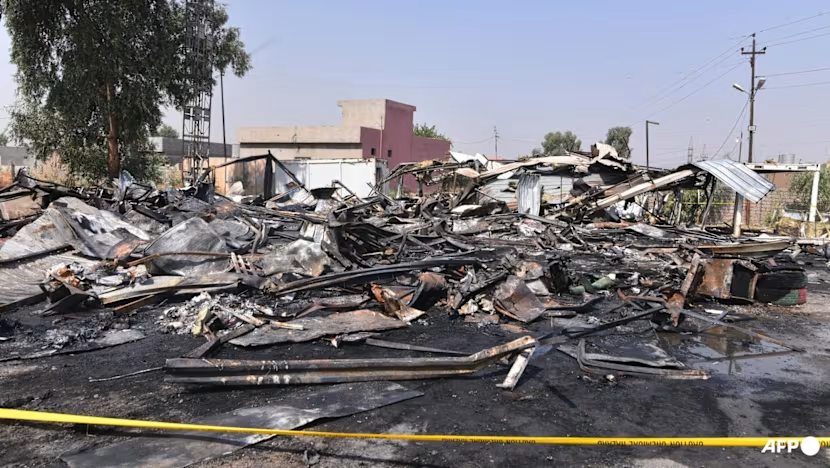
Trump made the threat in comments to Fox News, where he also confirmed that overnight US-Saudi airstrikes targeting pro-Iranian militias inside Iraq had been coordinated with authorities in Baghdad. That claim sits in direct tension with the Iraqi government's public condemnation of the same strikes, raising immediate questions about what Baghdad privately agreed to versus what it said openly for domestic and regional audiences.
The attack on US bases in Jordan marks a serious escalation. American military installations in the region have faced intermittent drone and rocket fire from Iran-backed groups, but a strike on bases in Jordan, a close US ally, signals a significant step up in direct targeting of American forces. Trump's language, promising a hard response aimed at Iran itself rather than just its proxies, suggests Washington is considering action beyond retaliatory strikes on militia positions.
The US-Saudi coordination on the Iraq strikes is itself notable. It indicates that Riyadh is now directly involved in offensive military action against Iranian-aligned forces, not merely supporting American operations logistically. Saudi Arabia and Iran have maintained fragile diplomatic contact in recent years, so active Saudi participation in airstrikes against pro-Iranian militias marks a meaningful shift in the regional posture of both countries.
The gap between what Iraq's government says publicly and what it reportedly agreed to privately is a recurring pressure point. Baghdad depends on both Washington and Tehran for political and economic support, and is structurally unable to be seen endorsing strikes that kill militia figures with deep ties to Iraqi politics. Public condemnation allows the government to manage domestic blowback while, according to Trump, private coordination still took place. Whether that account is accurate, and whether Baghdad will formally dispute it, will matter for the stability of the US military presence in Iraq.
The central question now is how the United States responds to the Jordan attack, and whether that response targets Iranian territory, Iranian assets abroad, or remains focused on proxy forces. Trump's statement points toward Iran directly, but the specific form of any retaliation has not been defined publicly.
A strike on Iranian soil would be a qualitative escalation with unpredictable consequences for oil markets, regional shipping lanes, and the broader diplomatic effort to contain the conflict. OPEC member states in the Gulf would face immediate pressure to signal their positions. Markets have already been sensitive to Middle East risk since the broader conflict cycle intensified, and direct US-Iran military engagement would reprice that risk sharply.
For Iraq, the episode adds to an already volatile domestic situation. Armed factions aligned with Iran hold significant political and military power inside the country. If the Iraqi government is seen as having quietly permitted strikes against those factions, that could destabilize the governing coalition and invite retaliatory pressure from the militias themselves.
The Saudi angle also warrants close attention. Active participation in offensive strikes against Iran-backed forces represents a harder line than Riyadh has publicly taken in recent months. Whether this signals a durable shift in Saudi strategy or a one-time coordinated action will shape the region's diplomatic landscape in the weeks ahead.
Qatar's foreign ministry said mediators including Qatar, Pakistan, and Oman have reached "very progressive stages" in efforts to end the US-Iran war, pushing Brent crude down more than four percent.
Qatar confirmed it is mediating between the US and Iran but said no direct talks are currently planned. The clarification follows conflicting statements from President Trump, who claimed talks are under way, and Tehran, which denied any dialogue is happening.
Saudi Aramco reported sharply higher second-quarter 2026 profits as the Iran war restricts global oil supply and pushes crude prices up. Other oil supermajors also posted outsized earnings, raising concerns about sustained fuel cost pressure for importing economies.
President Trump called current Iran negotiations the "last chance" to end five months of conflict, pushing oil prices higher. Tehran denied formal talks are taking place, raising the risk of a diplomatic breakdown with direct consequences for global energy markets.