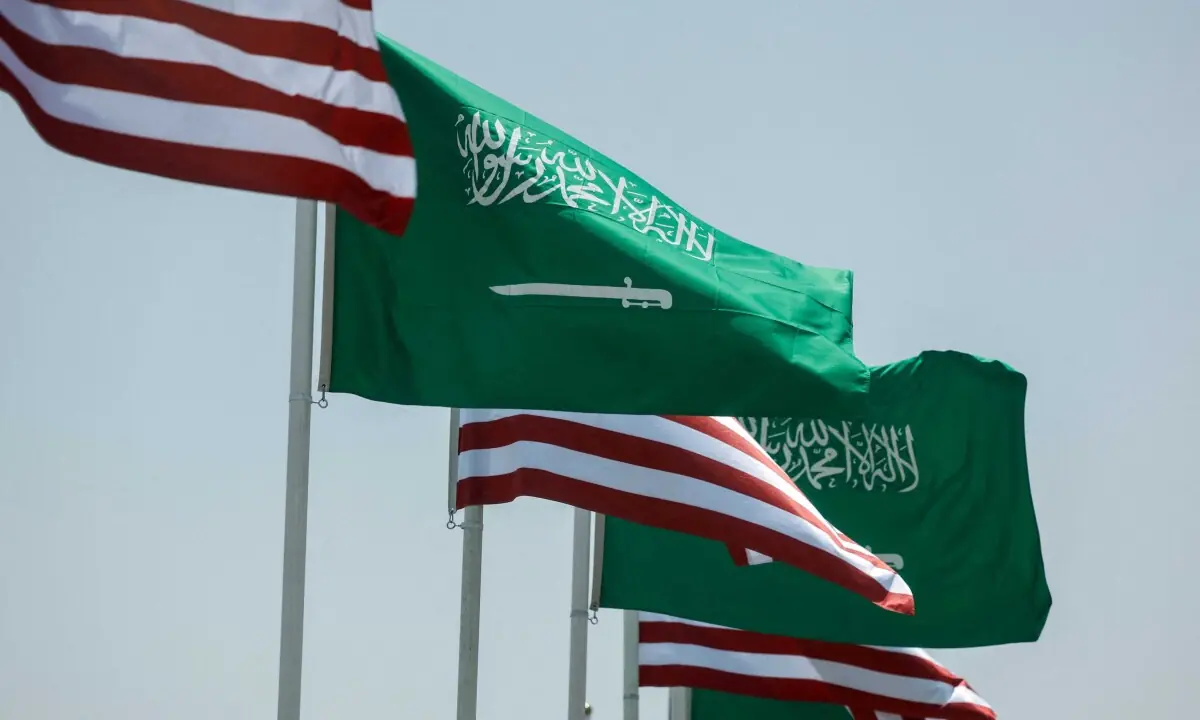
The United States has signed a formal civilian nuclear cooperation deal with Saudi Arabia, but President Donald Trump has made one condition clear: the agreement only moves forward if Riyadh joins the Abraham Accords and normalises relations with Israel. Trump announced this linkage in a post on Truth Social, framing the nuclear deal as one piece of a much larger strategic package.
Two agreements were signed by US Energy Secretary Chris Wright and his Saudi counterpart Prince Abdulaziz bin Salman. One covers "peaceful nuclear cooperation" and the other covers "bilateral safeguards." The Energy Department described them as laying "the legal foundation for a decades-long, multi-billion-dollar partnership" that advances nuclear non-proliferation alongside economic and strategic goals. The text of the deals was not made public immediately.
Trump specified that the deal covers only civilian nuclear use, citing Iran and the UAE as countries that already operate similar facilities. The reference to Iran is notable given that the US is currently engaged in a military conflict with Tehran that began in large part over concerns about Iran's nuclear programme. Peace talks between Washington and Tehran are stalled, making the nuclear file more politically charged than usual.
What the deal actually includes
The deal was signed under Section 123 of the US Atomic Energy Act, the standard legal vehicle for American nuclear cooperation agreements. The US has such deals with more than 50 countries, though the terms vary significantly. The Wall Street Journal reported that a provision in the agreement could allow US companies to build a uranium enrichment facility inside Saudi Arabia. The Energy Department did not confirm or deny that detail. Enrichment is the most sensitive part of the nuclear fuel cycle because the same technology used to produce reactor fuel can, at higher concentrations, produce weapons-grade material.
That is precisely what has alarmed both US lawmakers and Israeli officials for years. Critics from both parties have previously opposed any enrichment capability on Saudi soil, fearing Riyadh could eventually convert it toward weapons development. Saudi Arabia, like Iran, has consistently insisted on its right to pursue a civilian nuclear programme, including domestic enrichment.
Energy Secretary Wright pushed back on proliferation concerns, stating the agreements "uphold the highest standards of nuclear safety and non-proliferation" and rely on American nuclear technology and scientists. But independent experts are more cautious. Matthew Kroenig of the Atlantic Council warned before the deal was announced that "it would be a mistake to allow Saudi Arabia the capability for enrichment," even while supporting stronger US-Saudi ties broadly.
Why the Abraham Accords linkage matters
The Abraham Accords, brokered during Trump's first term in 2020, normalised relations between Israel and several Arab states. They remain unpopular across much of the Arab public, in part because they sidestep the Israeli-Palestinian conflict. Saudi Arabia joining would be the most significant expansion of the accords yet, given Riyadh's weight in the Arab world and its role as custodian of Islam's holiest sites.
Washington had already been pursuing a broader strategic package for Saudi Arabia that would bundle a nuclear deal with a US-Saudi defence pact. Saudi Arabia separately signed a mutual defence pact with Pakistan in September 2025. The nuclear agreement will now go to the Republican-controlled Congress for review, but a block is considered unlikely.
Jennifer T. Gordon, director of the Atlantic Council's Nuclear Energy Policy Initiative, framed the deal as a competitive win, arguing that Saudi Arabia was always going to build a civil nuclear programme and the real question was whether it would work with the US or turn to Russia or China. From that angle, the deal secures American industry access to what could be a significant long-term market, while giving Washington greater influence over how Saudi Arabia's nuclear infrastructure develops.
What to watch: whether Saudi Arabia accepts the Abraham Accords condition, how Congress reacts to any enrichment provision if the full text is released, and whether stalled US-Iran talks revive in a way that changes the regional nuclear calculus.