
Qatar Signals Progress in US-Iran War Talks
Qatar's foreign ministry said mediators including Qatar, Pakistan, and Oman have reached "very progressive stages" in efforts to end the US-Iran war, pushing Brent crude down more than four percent.
Key Takeaways
May 12, 2026 · 3 min read · By Rishabh Bhardwaj
·
AI-assisted, human-reviewed · Our editorial standards
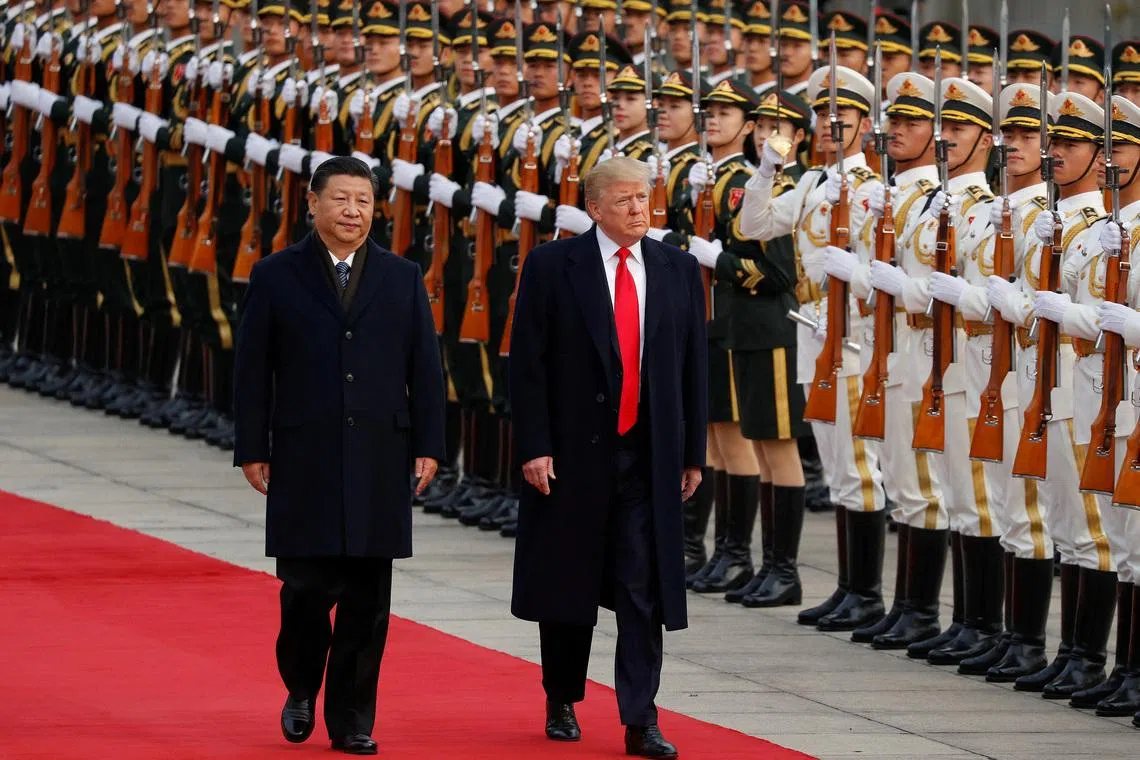
Donald Trump is traveling to Beijing at a moment when the relationship between Washington and Beijing has rarely been more strained. The visit comes against a backdrop of active conflict in the region, unresolved trade friction, and a rivalry between the two powers that has hardened across military, economic, and technological lines.
The trip signals that both sides see value in direct engagement, even when the structural tensions between them have not eased. High-level summits between American presidents and Chinese leadership have historically served as a pressure valve, offering a channel to manage disputes without resolving them. This visit follows that pattern, arriving at a time when multiple flashpoints are live simultaneously.
Trade remains one of the sharpest points of contention. Tariffs, export controls on advanced semiconductors, and restrictions on Chinese investment in American technology have all accumulated over several years. Beijing has responded with its own countermeasures, including limits on exports of critical minerals that American manufacturers depend on. Neither side has fully backed down, and the economic cost of the standoff is being felt in supply chains, corporate earnings, and capital allocation decisions across both countries.
The war context adds further complexity. Regional conflicts and the question of how each power aligns itself with different parties in active fighting create diplomatic pressure that cannot be separated from the trade agenda. When a head of state travels to a rival capital during wartime conditions, the signal sent to third countries about alignment and leverage is as significant as any communique issued after the talks.
The competition between the United States and China has moved well beyond a disagreement over trade balances. It now spans military posture in the Indo-Pacific, control over next-generation technologies including artificial intelligence and advanced chips, access to critical supply chains, and influence over the rules that govern global finance and trade. Each of these domains has seen direct policy action from both sides in recent years, and the accumulated effect is a rivalry that is structural rather than situational.
For markets, a Trump visit to Beijing carries real consequence. Any sign of a trade truce, even a temporary one, tends to move equity and commodity markets quickly, particularly in sectors exposed to tariffs or export controls. Conversely, a breakdown in talks or a hostile statement from either side can tighten financial conditions for companies operating across both economies. Investors will watch closely for any language around tariff rates, technology transfer restrictions, or the status of specific bilateral agreements.
On the policy side, the visit creates pressure on allies and partners in both camps. Countries in Southeast Asia, Europe, and the Middle East that maintain economic ties with both Washington and Beijing will read the tone and outcome carefully. A warmer-than-expected meeting could ease some of the pressure those countries face to choose sides. A colder one could accelerate the decoupling dynamic that has already pushed some supply chains out of China entirely.
The practical stakes for businesses are direct. Multinational companies with operations or sales in China have been navigating an environment of regulatory uncertainty, technology restrictions, and geopolitical risk for several years. Any shift in the diplomatic temperature, even a modest one, affects their planning horizon, their ability to move capital, and the risk premium they attach to China exposure in their portfolios.
What to watch coming out of the talks: any joint statement language on trade, specific commitments or deadlines on tariff relief, signals on military communication channels, and whether any agreement is reached on critical minerals access. The absence of concrete outcomes would itself be a signal about where the relationship stands.
Qatar's foreign ministry said mediators including Qatar, Pakistan, and Oman have reached "very progressive stages" in efforts to end the US-Iran war, pushing Brent crude down more than four percent.
Qatar confirmed it is mediating between the US and Iran but said no direct talks are currently planned. The clarification follows conflicting statements from President Trump, who claimed talks are under way, and Tehran, which denied any dialogue is happening.
Saudi Aramco reported sharply higher second-quarter 2026 profits as the Iran war restricts global oil supply and pushes crude prices up. Other oil supermajors also posted outsized earnings, raising concerns about sustained fuel cost pressure for importing economies.
President Trump called current Iran negotiations the "last chance" to end five months of conflict, pushing oil prices higher. Tehran denied formal talks are taking place, raising the risk of a diplomatic breakdown with direct consequences for global energy markets.