
Qatar Signals Progress in US-Iran War Talks
Qatar's foreign ministry said mediators including Qatar, Pakistan, and Oman have reached "very progressive stages" in efforts to end the US-Iran war, pushing Brent crude down more than four percent.
Key Takeaways
May 4, 2026 · 2 min read · By Rishabh Bhardwaj
·
AI-assisted, human-reviewed · Our editorial standards
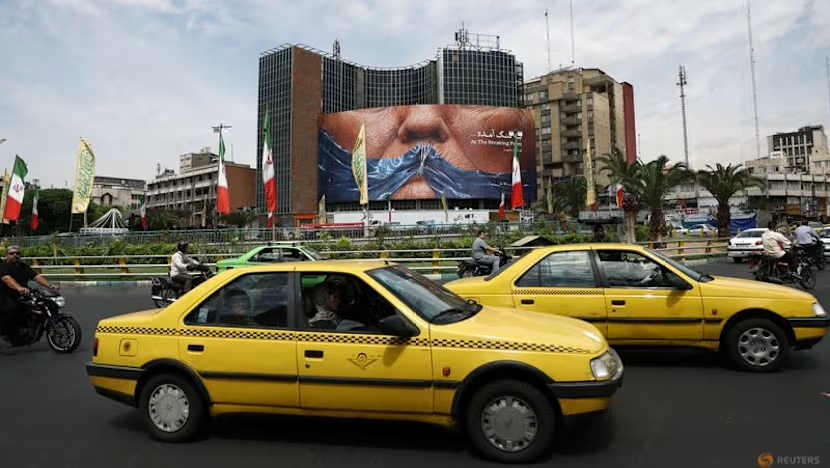
President Donald Trump said the United States would begin helping countries guide their ships through the Strait of Hormuz from Monday, May 4, describing ongoing talks with Iran as "very positive."
The Strait of Hormuz is one of the world's most critical oil shipping corridors. About 20% of global oil supply passes through this narrow waterway between Iran and Oman, making it a pressure point whenever US-Iran tensions rise. Any disruption there moves energy markets fast.
Trump's announcement frames the move as assistance to countries that request it, not a unilateral patrol or blockade. The US would help requesting nations escort or guide their vessels through the strait. That distinction matters: it keeps the action framed as protective rather than aggressive, but it still puts American naval presence directly in waters Iran considers its backyard.
The timing runs alongside diplomatic engagement. Trump called the Iran negotiations "very positive," suggesting Washington sees the military posture and the talks as parallel tracks rather than contradictions. The combination of naval escorts and active diplomacy is a classic pressure-and-negotiate approach.
Energy markets watch Hormuz closely. If Iran perceives the US escort program as escalatory, the risk of incidents in the strait rises, and even a single confrontation can spike oil prices sharply. Conversely, if the escort program stabilizes tanker traffic while talks progress, it could reduce the risk premium already baked into crude prices.
For shipping companies and oil importers, including major Asian buyers like India, China, Japan, and South Korea, safe passage through Hormuz is not optional. Any signal that the US is actively guaranteeing that passage reduces operational risk for those buyers, though it also draws them into the geopolitical dynamic between Washington and Tehran.
The key things to watch: whether Iran responds to the escort program diplomatically or militarily, how quickly requesting countries sign on, and whether the "very positive" talks produce any concrete agreement on Iran's nuclear program, the underlying issue driving the tension.
Qatar's foreign ministry said mediators including Qatar, Pakistan, and Oman have reached "very progressive stages" in efforts to end the US-Iran war, pushing Brent crude down more than four percent.
Qatar confirmed it is mediating between the US and Iran but said no direct talks are currently planned. The clarification follows conflicting statements from President Trump, who claimed talks are under way, and Tehran, which denied any dialogue is happening.
Saudi Aramco reported sharply higher second-quarter 2026 profits as the Iran war restricts global oil supply and pushes crude prices up. Other oil supermajors also posted outsized earnings, raising concerns about sustained fuel cost pressure for importing economies.
President Trump called current Iran negotiations the "last chance" to end five months of conflict, pushing oil prices higher. Tehran denied formal talks are taking place, raising the risk of a diplomatic breakdown with direct consequences for global energy markets.