
Qatar Signals Progress in US-Iran War Talks
Qatar's foreign ministry said mediators including Qatar, Pakistan, and Oman have reached "very progressive stages" in efforts to end the US-Iran war, pushing Brent crude down more than four percent.
Key Takeaways
May 27, 2026 · 3 min read · By Rishabh Bhardwaj
·
AI-assisted, human-reviewed · Our editorial standards
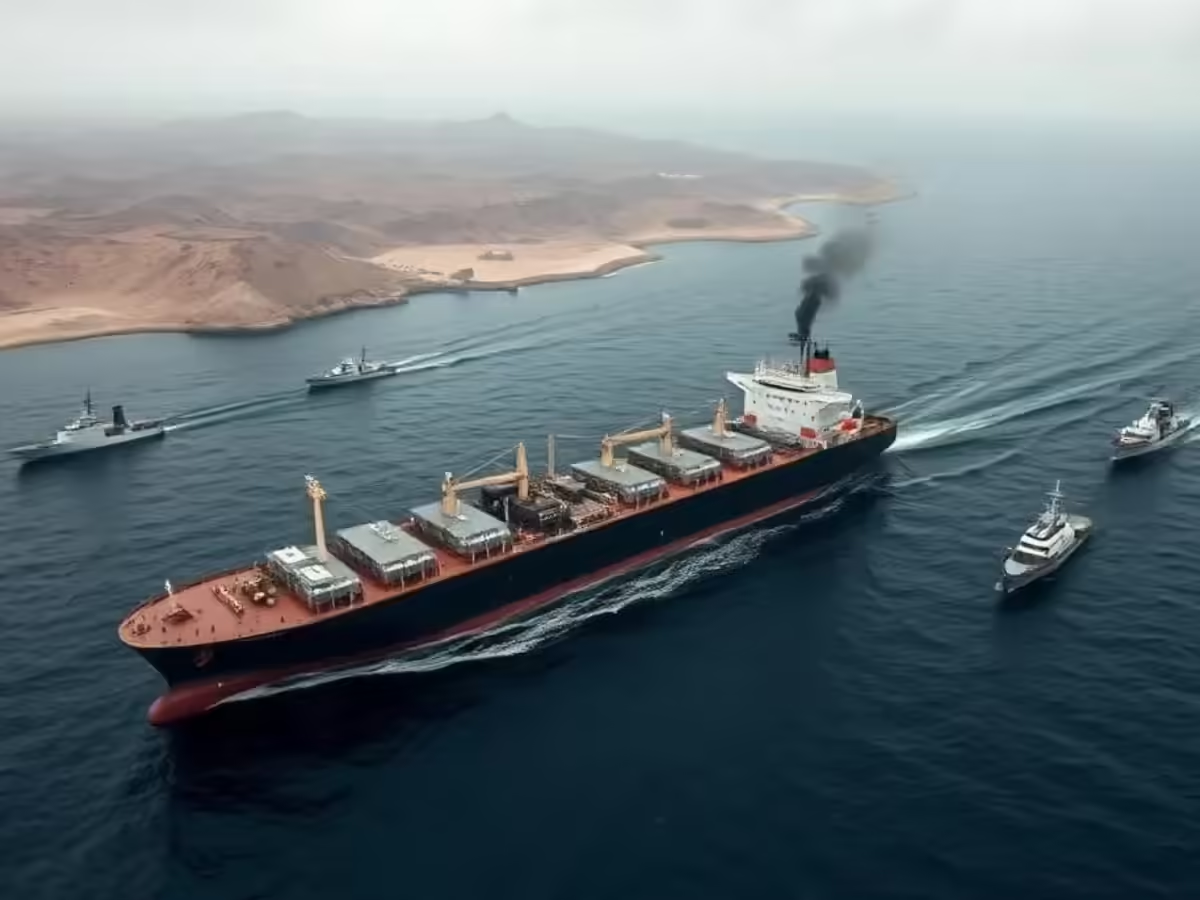
Oil prices fell sharply on Wednesday, with Brent crude dropping below $95 a barrel, a decline of roughly 5%, after signals emerged that Iran may reopen shipping lanes through the Strait of Hormuz as part of broader US-Iran diplomatic talks.
The Strait of Hormuz is the world's most critical oil chokepoint. About 20% of global oil supply passes through it daily, connecting the Persian Gulf to open ocean routes. Any closure or threat to that passage pushes oil prices higher almost immediately. The reverse is equally true: credible signals of reopening ease the risk premium baked into crude prices.
Wednesday's move was driven by renewed hope that US-Iran negotiations could produce meaningful progress toward ending the conflict in the Middle East. Markets treat these signals as forward-looking. Traders do not wait for a deal to be signed. They price in the probability of one, which is why a 5% single-day drop is possible on diplomatic hints alone.
The Strait sits between Iran and Oman at its narrowest point, roughly 33 kilometers wide. Iran has previously threatened to block the passage during periods of geopolitical tension, and those threats alone have been enough to spike global oil prices. A genuine reopening, or even a credible diplomatic pathway to one, removes a significant supply-disruption risk that has been embedded in energy markets.
When that risk premium deflates, prices can fall fast. A 5% drop in a single session reflects how much of the recent price level was fear-driven rather than tied to actual supply and demand fundamentals.
For oil importers, including India, which sources a large share of its crude from the Middle East, lower prices translate directly into reduced import costs. That helps compress the current account deficit, eases pressure on the rupee, and gives the government more room on fuel subsidies and retail pricing. Inflation linked to energy costs would also face downward pressure if prices hold at lower levels.
The 5% drop is a market reaction to signals, not a confirmed outcome. Diplomacy between the US and Iran has a long history of progress and reversal, and oil markets will reprice quickly in either direction as the situation develops.
Key things to watch include whether formal talks produce a ceasefire framework, whether Iranian shipping guarantees are part of any agreement, and how major producers in OPEC respond to falling prices. Saudi Arabia and other Gulf producers have production targets and fiscal breakeven prices that may prompt them to consider output cuts if crude stays below certain levels.
Energy equities and refining margins will also respond. Oil exploration and production companies priced in elevated crude will face earnings pressure if the drop is sustained. Refiners, on the other hand, could see margin improvements depending on how product prices adjust relative to input costs.
For now, markets are pricing in hope. The next move depends on whether the diplomacy behind Wednesday's signals has substance, or whether it fades as past overtures have.
Qatar's foreign ministry said mediators including Qatar, Pakistan, and Oman have reached "very progressive stages" in efforts to end the US-Iran war, pushing Brent crude down more than four percent.
Qatar confirmed it is mediating between the US and Iran but said no direct talks are currently planned. The clarification follows conflicting statements from President Trump, who claimed talks are under way, and Tehran, which denied any dialogue is happening.
Saudi Aramco reported sharply higher second-quarter 2026 profits as the Iran war restricts global oil supply and pushes crude prices up. Other oil supermajors also posted outsized earnings, raising concerns about sustained fuel cost pressure for importing economies.
President Trump called current Iran negotiations the "last chance" to end five months of conflict, pushing oil prices higher. Tehran denied formal talks are taking place, raising the risk of a diplomatic breakdown with direct consequences for global energy markets.