India to Restore UPI Merchant Fees, PhonePe Gains Most
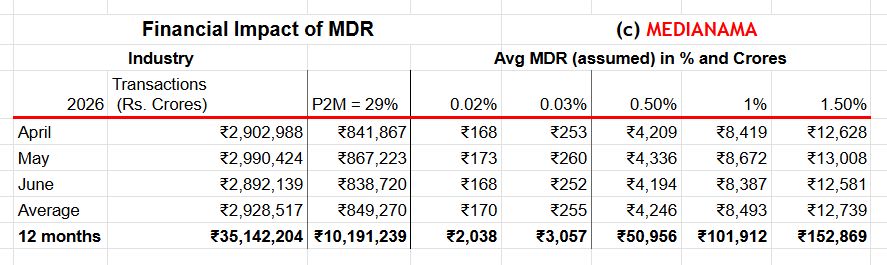
India's government plans to amend the Payment and Settlement Systems Act to restore UPI merchant discount rates, ending the zero-MDR regime in place since January 2020.
Key Takeaways
July 3, 2026 · 4 min read · By Rishabh Bhardwaj
·
AI-assisted, human-reviewed · Our editorial standards
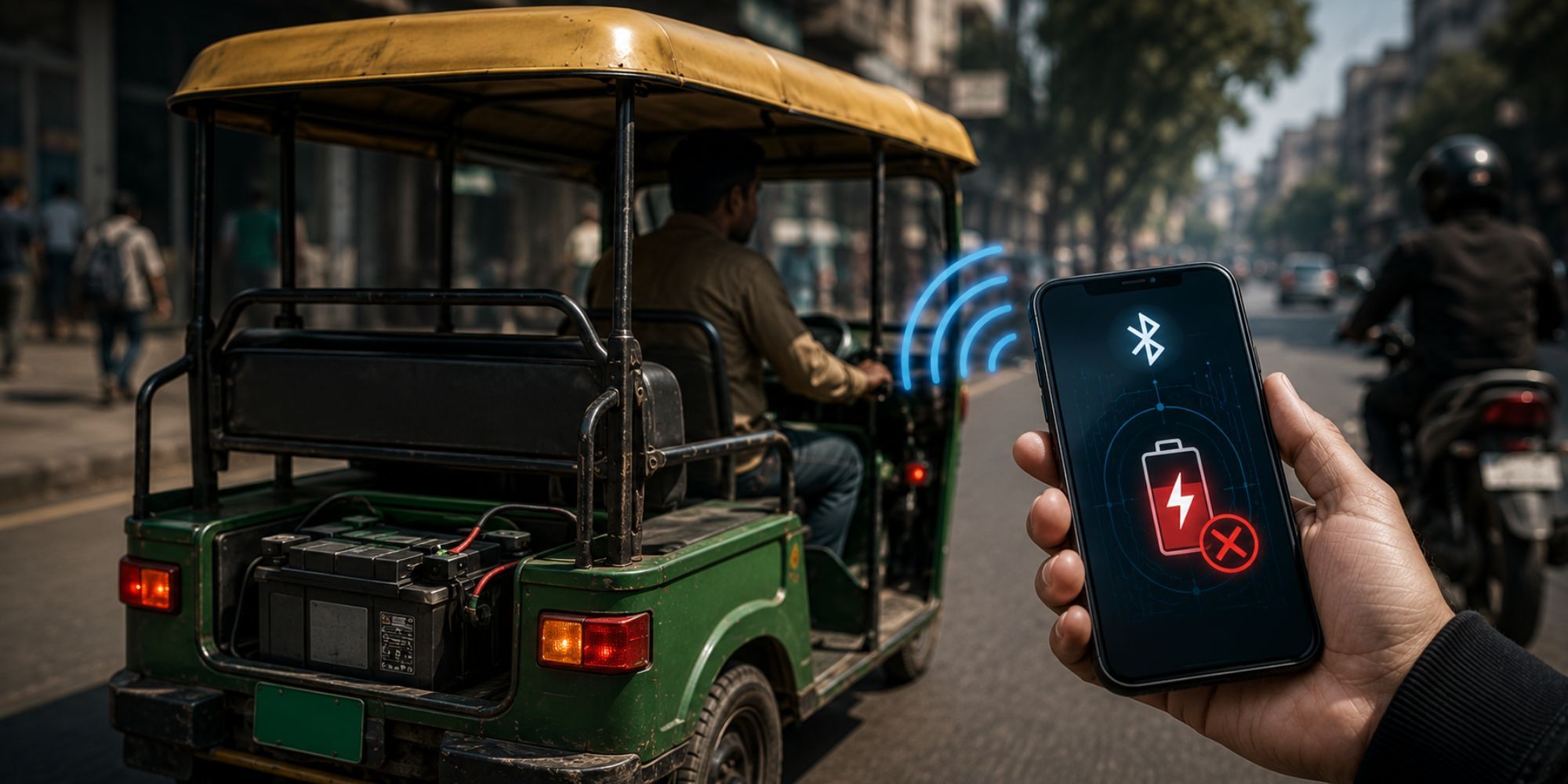
India's Ministry of Electronics and Information Technology ordered Google Play and the Apple App Store on 3 July 2026 to remove mobile apps that can cut power to electric rickshaws mid-journey over a Bluetooth connection, after viral videos showed drivers being stranded in Delhi by strangers nearby with smartphones.
MeitY Secretary S. Krishnan confirmed that two apps had already been pulled by the time the ministry made its announcement, and said the government had become aware of the issue only a day earlier. He added that app stores must exercise due care, and that the Centre would act to prevent such apps from resurfacing. The Delhi Transport Department has launched a parallel investigation.
Three apps have been named in reports: BAT-BMS, Lossigy, and Epoch-i-ion. All three are Battery Management System tools, software designed to let owners and technicians monitor a lithium-ion battery's voltage, current, temperature, and health in real time. BAT-BMS was developed by China's Shenzhen Grenergy Technology as a companion app for Bluetooth-enabled batteries. The same feature that allows a technician to toggle a battery's discharge on or off for servicing is what makes the misuse possible.
The mechanism is straightforward. On many budget e-rickshaws, the Battery Management System connects to nearby phones over Bluetooth with no password protection, or with factory-default credentials still in place. Anyone within roughly 10 to 15 metres who has the matching app can pair with the battery and switch discharge off. The vehicle stalls immediately, and the ignition key cannot restart it until the discharge setting is restored. The viral clips showed exactly this: individuals apparently pairing with a moving e-rickshaw's battery and cutting its power, leaving the driver unable to move.
The vulnerability is real but narrower than the videos imply. It affects only e-rickshaws fitted with Bluetooth-enabled lithium-ion batteries running an unprotected or default-credential BMS. Vehicles on older lead-acid batteries and branded EVs with encrypted systems are not at risk. Still, a large share of India's low-cost e-rickshaw fleet runs on imported components, and many of those components ship without enforced authentication.
E-rickshaws are a critical piece of last-mile transport across Indian cities, relied on by millions of daily commuters and providing livelihoods for drivers who often work on thin daily margins. A stalled vehicle in traffic is not only a safety hazard for passengers and the driver but also a direct hit to earnings for workers who cannot afford downtime. The episode arrives as India accelerates its electric mobility push, meaning the size of the exposed fleet could grow if software security is not built into procurement and import standards from the start.
MeitY's response, ordering app takedowns within roughly 24 hours of the issue surfacing, is fast by regulatory standards. But app removal addresses only one access point. The underlying flaw sits in the battery hardware and firmware: a BMS that accepts any connection without authentication. Removing the consumer apps limits casual misuse, but the Bluetooth interface on the battery itself remains open to anyone who can build or sideload a compatible tool.
Krishnan's statement that platforms will be pushed to tighten vetting signals that MeitY sees this as a platform-responsibility issue as well as a product-safety one. More app takedowns could follow if additional BMS tools are flagged. The Delhi Transport Department's investigation may also lead to recommendations for the city's e-rickshaw fleet, which is one of the largest in the country.
The fix, as MeitY has signalled, ultimately comes down to authentication: BMS firmware must require a unique credential before allowing any discharge control command. That means action at the manufacturer and importer level, not just the app store level. As India's EV fleet scales, the software governing batteries will need the same regulatory scrutiny as the physical components on the road, and this incident has made that gap impossible to ignore.
India's government plans to amend the Payment and Settlement Systems Act to restore UPI merchant discount rates, ending the zero-MDR regime in place since January 2020.
India's government has introduced the Taxation and Other Laws (Amendment) Bill, 2026, proposing changes to payments regulation, income tax, and the Finance Act to attract FDI and support Make in India. The Bill's final shape will depend on parliamentary debate and committee review.
The government's Taxation and Other Laws (Amendment) Bill, 2026, proposes to replace the blanket UPI MDR ban with a system allowing the Centre to notify which payment modes stay fee-free.
Prime Minister Narendra Modi inaugurated the Rs 5,000 crore Bhogapuram greenfield airport in Andhra Pradesh, built under a public-private partnership model. He also laid foundation stones for infrastructure projects worth nearly Rs 18,000 crore in the state, signalling a broad investment push for the region.