India to Restore UPI Merchant Fees, PhonePe Gains Most
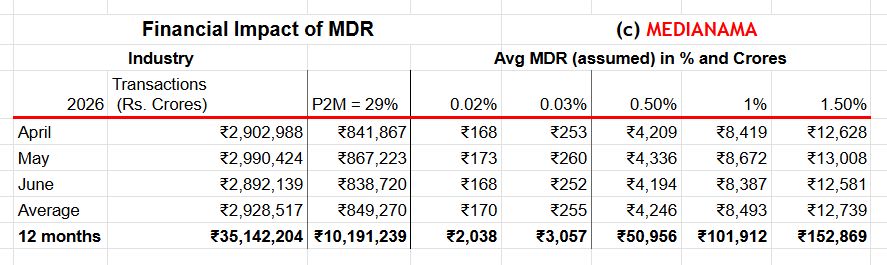
India's government plans to amend the Payment and Settlement Systems Act to restore UPI merchant discount rates, ending the zero-MDR regime in place since January 2020.
Key Takeaways
July 2, 2026 · 3 min read · By Rishabh Bhardwaj
·
AI-assisted, human-reviewed · Our editorial standards

President Donald Trump renewed his threat to remove Federal Reserve Governor Lisa D. Cook on Wednesday, saying he would "take appropriate action immediately" against her. The warning came days after a federal court blocked his earlier attempt to fire two members of the Federal Trade Commission, a ruling that cast doubt on his broader push to dismiss independent agency officials.
Trump's renewed threat against Cook is a direct escalation of his ongoing effort to exert greater White House control over institutions that have traditionally operated at arm's length from the executive branch. The Fed, created by Congress, is deliberately structured to insulate monetary policy decisions from short-term political pressure. Governors serve 14-year terms precisely to prevent a sitting president from reshaping the board quickly.
The federal court ruling against Trump's FTC firings matters here because it reinforced a legal precedent: presidents cannot remove independent agency officials without cause. That same logic applies to Fed governors, who are protected by statute from at-will removal. The court loss did not deter Trump from signaling intent to act against Cook. If anything, it appears to have prompted a more direct public statement of intent, likely as a pressure tactic ahead of any formal legal move.
Cook, an economist and Michigan State University professor, was appointed by President Biden in 2022 and confirmed by the Senate. She was the first Black woman to serve on the Federal Reserve Board of Governors. Her term runs well beyond Trump's current time in office, and she has not publicly indicated any intention to resign.
Any attempt to remove Cook would almost certainly trigger immediate litigation. Legal experts broadly agree that the statutory protections for Fed governors are strong, and a removal attempt would face the same constitutional challenge that stalled the FTC firings. The Fed's independence is also embedded in decades of market expectations: investors and bond markets price assets partly on the assumption that monetary policy will not be dictated by the White House.
The threat alone carries real market weight, even without a formal removal. Uncertainty about Fed independence tends to weaken the dollar, push up long-term bond yields, and increase volatility in rate-sensitive assets. Investors watching the Fed's next moves on interest rates are now also watching a political confrontation that could, if it escalates, complicate the central bank's ability to communicate policy clearly.
Fed Chair Jerome Powell, whose own tenure has been the subject of Trump's public criticism in recent months, has stated repeatedly that he will serve out his term and that the Fed will make decisions based on its economic mandate, not political direction. Cook's situation adds a new front to that broader tension between the White House and the central bank.
The immediate practical question is whether Trump moves beyond rhetoric to a formal removal action. If he does, the legal battle would likely move fast given how much institutional and market interest is riding on the outcome. A court injunction blocking the removal would be the probable first step, mirroring the FTC case. If a higher court were to side with Trump, it would represent a fundamental shift in how independent agencies operate in the United States, with consequences well beyond the Fed alone.
For now, the threat stands as a signal, but markets and legal observers will be watching closely for any formal executive action in the days ahead.
India's government plans to amend the Payment and Settlement Systems Act to restore UPI merchant discount rates, ending the zero-MDR regime in place since January 2020.
India's government has introduced the Taxation and Other Laws (Amendment) Bill, 2026, proposing changes to payments regulation, income tax, and the Finance Act to attract FDI and support Make in India. The Bill's final shape will depend on parliamentary debate and committee review.
The government's Taxation and Other Laws (Amendment) Bill, 2026, proposes to replace the blanket UPI MDR ban with a system allowing the Centre to notify which payment modes stay fee-free.
Prime Minister Narendra Modi inaugurated the Rs 5,000 crore Bhogapuram greenfield airport in Andhra Pradesh, built under a public-private partnership model. He also laid foundation stones for infrastructure projects worth nearly Rs 18,000 crore in the state, signalling a broad investment push for the region.