
Qatar Signals Progress in US-Iran War Talks
Qatar's foreign ministry said mediators including Qatar, Pakistan, and Oman have reached "very progressive stages" in efforts to end the US-Iran war, pushing Brent crude down more than four percent.
Key Takeaways
July 3, 2026 · 4 min read · By Rishabh Bhardwaj
·
AI-assisted, human-reviewed · Our editorial standards
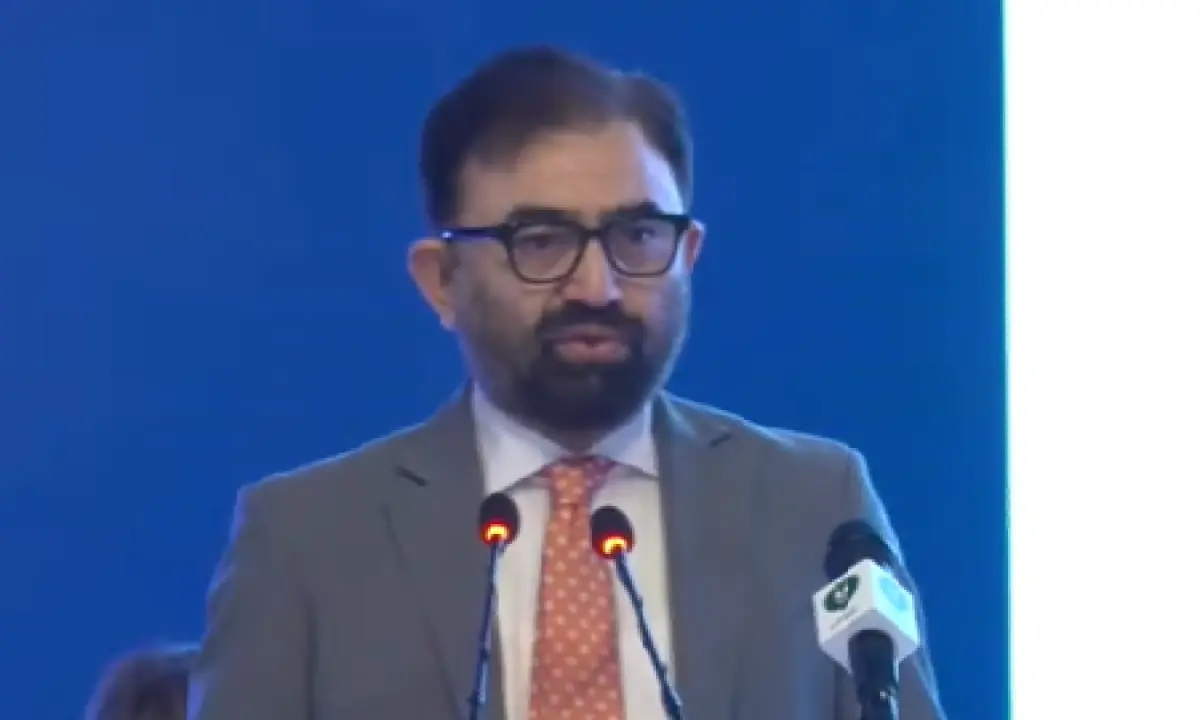
Pakistan's Commissioner for Indus Waters, Syed Muhammad Mehar Ali Shah, warned at an Islamabad seminar on Tuesday that India's suspension of its obligations under the Indus Waters Treaty is not a diplomatic gesture but a deliberate attempt to disable a 65-year-old water-sharing architecture that underpins Pakistan's food supply, economy, and national stability.
Shah framed the stakes in precise economic terms: over 80 percent of Pakistan's arable land depends on the Indus basin, agriculture accounts for roughly a quarter of GDP and nearly a third of all employment, and the water needs of more than 240 million people are tied to these rivers. "Water uncertainty becomes national uncertainty," he said, making clear that Islamabad views any disruption to treaty flows as a security threat, not merely a technical dispute.
The 1960 treaty, brokered by the World Bank, divided the Indus River system between the two countries. India received rights to the three eastern rivers, while the three western rivers, including the Chenab, were allocated to Pakistan, with India permitted only specific, narrowly defined uses. Pakistan rebuilt its entire irrigation and water economy around that allocation over the following decades.
India announced last year that it was placing its IWT obligations in abeyance following an attack on tourists in Pahalgam, in Indian-administered Kashmir, that killed 26 people. New Delhi blamed Pakistan for the attack. Pakistan denied involvement and called for a neutral investigation. Shah said India's abeyance posture amounted to disabling four interlocking elements that made the treaty function: allocation, cooperation, the Indus Waters Commission as an institutional channel, and a structured dispute resolution mechanism. Remove any one element, he argued, and the peace function of the treaty fails.
On data-sharing, Shah said the breakdown is now creating direct operational risk. He disclosed that he had written to his Indian counterpart the previous night about "significant fluctuations" in the flow of the Chenab River, the fourth such communication since April of last year. Pakistan has received no response. Monthly hydrological data from the Indian side has been outstanding since August 2023, and the last meeting of the Indus Waters Commission was held in May 2022. Without real-time flow data, Shah said, Pakistan's downstream water managers cannot distinguish between natural variability and upstream intervention, shrinking flood forecast windows and undermining the reliability of barrages and reservoirs on which millions of farmers depend.
Shah pointed to two rulings from the Court of Arbitration, one issued in 2025 and a second in May 2026, as reinforcing Pakistan's legal standing. The court confirmed four points: India's non-appearance did not halt proceedings; India's abeyance claim did not strip the court of jurisdiction; the awards are final and binding; and India must allow the western rivers to flow under treaty terms, with exceptions applied strictly. Shah described this not as a political position but as "the treaty speaking through its own court."
Pakistan initiated the arbitration in 2016, seeking a general interpretation of provisions governing India's development projects on the western rivers. India began work on projects along those rivers around 2000, and disputes over design and operations have persisted since. Deputy Prime Minister and Foreign Minister Ishaq Dar recently described 17 Indian projects on Indus waterways as "tools for hydro-hegemony." Shah said Pakistan does not oppose lawful hydropower development but objects to what he called unlawful control, excessive discretion, and opaque operations.
Information Minister Attaullah Tarar opened the seminar with a sharper political warning. He said Pakistan's civilian and military leadership had made clear that the treaty cannot be amended, suspended, or revoked unilaterally, and that India's attempt to hold it in abeyance had caused "international embarrassment" at legal forums. He said Pakistan would use "all means" at international forums, legal and otherwise, to protect what he called the "inalienable right" of 240 million Pakistanis to Indus waters. He added a pointed warning: any attempt to stop Pakistan's water would be met with an effective response from the country's leadership.
The seminar's timing matters. It follows a period of acute India-Pakistan tension triggered by the Pahalgam attack, an Indian military operation, and a subsequent ceasefire. Water has now moved to the centre of the bilateral dispute alongside the military and diplomatic tracks, with both sides publicly hardening their positions. Pakistan's decision to hold a formal seminar focused on the legal and constitutional framework of the IWT signals a coordinated effort to build an international record ahead of further legal and diplomatic steps.
What to watch: whether India responds to Pakistan's treaty-channel communications on Chenab fluctuations; how New Delhi responds to the 2025 and 2026 arbitration awards it has so far declined to engage with; and whether third parties, including the World Bank as the treaty's original guarantor, are drawn into the dispute as it escalates beyond bilateral channels.
Qatar's foreign ministry said mediators including Qatar, Pakistan, and Oman have reached "very progressive stages" in efforts to end the US-Iran war, pushing Brent crude down more than four percent.
Qatar confirmed it is mediating between the US and Iran but said no direct talks are currently planned. The clarification follows conflicting statements from President Trump, who claimed talks are under way, and Tehran, which denied any dialogue is happening.
Saudi Aramco reported sharply higher second-quarter 2026 profits as the Iran war restricts global oil supply and pushes crude prices up. Other oil supermajors also posted outsized earnings, raising concerns about sustained fuel cost pressure for importing economies.
President Trump called current Iran negotiations the "last chance" to end five months of conflict, pushing oil prices higher. Tehran denied formal talks are taking place, raising the risk of a diplomatic breakdown with direct consequences for global energy markets.