
Qatar Signals Progress in US-Iran War Talks
Qatar's foreign ministry said mediators including Qatar, Pakistan, and Oman have reached "very progressive stages" in efforts to end the US-Iran war, pushing Brent crude down more than four percent.
Key Takeaways
July 1, 2026 · 4 min read · By Rishabh Bhardwaj
·
AI-assisted, human-reviewed · Our editorial standards
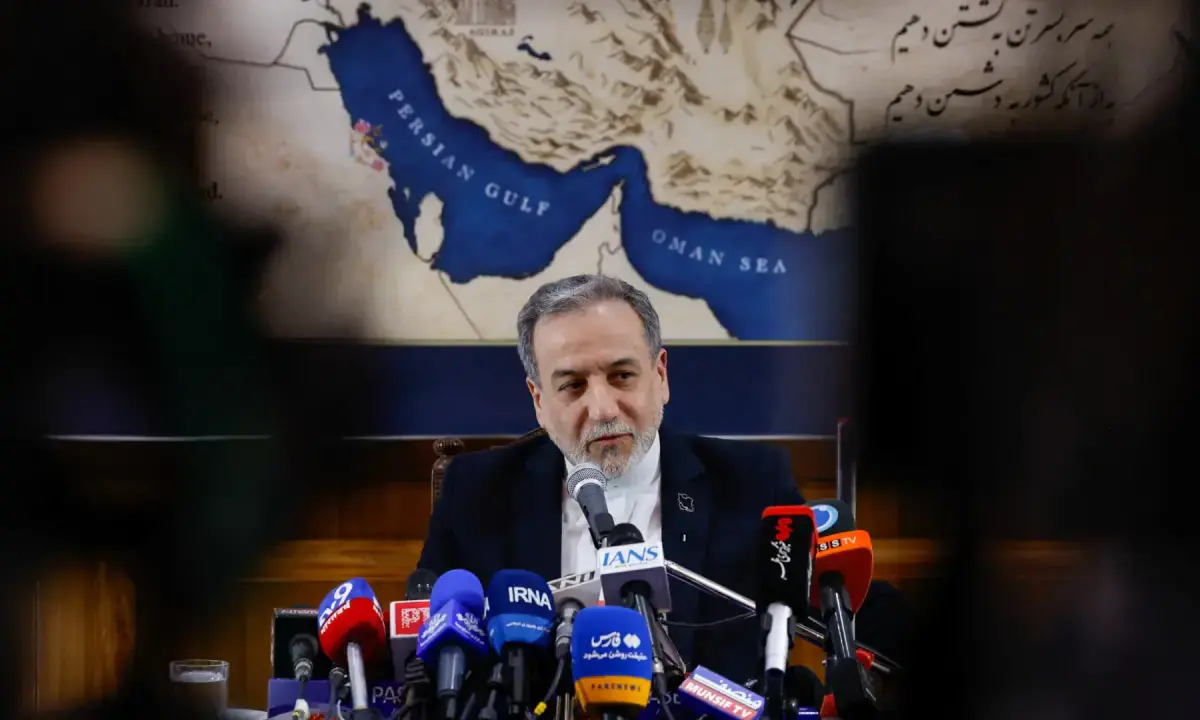
Iran and the United States exchanged fresh strikes over the weekend, raising serious doubts about a ceasefire that was meant to end a war that began on February 28 and has paralysed shipping through the Strait of Hormuz. Iran's Foreign Minister Abbas Araghchi warned Sunday that any attempt to bypass shipping routes agreed with Washington would "increase tensions" and delay the reopening of the strait, one of the world's most critical oil passages.
The immediate trigger was an Iranian drone attack on the Panama-flagged oil tanker Kiku, which was carrying roughly two million barrels of crude. US Central Command responded with strikes on what it described as Iranian surveillance infrastructure, air defence sites, drone storage facilities, and minelayer capabilities near Sirik in southern Iran. Tehran then launched strikes on US military bases in Bahrain and Kuwait, with the Islamic Revolutionary Guard Corps claiming it destroyed eight facilities at the Ali al-Salem base in Kuwait and the Fifth Fleet's Port Salman base in Bahrain. Air raid sirens sounded twice in Bahrain; a residential building in Muharraq province was damaged, though no casualties were reported. Kuwait's army said it intercepted two ballistic missiles without damage.
A US official confirmed the attacks on American facilities and told Reuters there were no US casualties and no major damage, but noted the situation was still developing.
The standoff is not just about tit-for-tat military strikes. It is fundamentally about who controls the passage of vessels through the Strait of Hormuz. Under the Islamabad memorandum of understanding signed June 18 under Pakistan's mediation, Iran agreed to safe passage of commercial vessels for 60 days through a corridor running along Iran's coast. The problem: vessels have continued to use a separate passage not approved by Tehran. The IRGC says Oman and the International Maritime Organisation announced that alternative corridor without consulting Iran, a claim that has sharpened the standoff considerably.
Araghchi made clear in Baghdad on Sunday that Tehran sees any separate arrangement as a direct provocation. "Any attempt to adopt new or separate arrangements compared to what is underway by the Islamic Republic of Iran will only lead to more complicated situations and delays in the reopening of the Strait of Hormuz," he said. The IRGC simultaneously warned that vessels using the non-approved route "will be dealt with more firmly than before," a direct threat to global oil traffic at a chokepoint through which roughly a fifth of the world's oil supply moves.
The MoU, brokered by Pakistan on June 18, required both the US and Iran and their allies to refrain from initiating military operations or threatening force against each other. Each side is now accusing the other of violating that text. The IRGC said US strikes "will result in the complete halt of all diplomatic processes." Washington framed its strikes as defensive responses to Iranian attacks on commercial shipping.
US President Donald Trump escalated the rhetoric sharply on Sunday, writing on Truth Social that if the US is "forced" to resume full-scale war, "the Islamic Republic of Iran will no longer exist." The threat follows a pattern of US strikes framed as ceasefire enforcement, but each exchange makes a return to full conflict more plausible.
In Baghdad, Araghchi pushed a broader diplomatic proposal: a new regional security framework including Gulf countries, Iran, and Iraq, explicitly excluding outside powers. This echoes a proposal from Iranian President Masoud Pezeshkian for a "regional security structure" without external interference. Iraq is expected to host Gulf states, Iran, and Iraq in a regional meeting, and is also planning July 8 funeral processions for Iran's Supreme Leader Ayatollah Ali Khamenei, who was killed during the opening strikes of the war on February 28.
The Lebanon front is adding further pressure. Israel launched strikes in Lebanon on Saturday after Hezbollah chief Naim Qassem rejected a US-backed Israel-Lebanon agreement signed Friday, calling it "humiliating" and a "surrender of sovereignty." Israeli Prime Minister Benjamin Netanyahu called the deal historic, but his far-right security minister Itamar Ben Gvir condemned it as "a big mistake." Netanyahu has insisted Israeli troops will remain in southern Lebanon until Hezbollah disarms, a condition Hezbollah has flatly rejected. Iran called Israel's Lebanon strikes a "blatant violation" of the interim truce.
For energy markets, the core risk is straightforward: if Iran follows through on tighter Hormuz enforcement or if the ceasefire collapses entirely, oil supply disruption could escalate sharply beyond what markets have already priced in since February. Bahrain has asked the UN Security Council to hold an urgent session to hold Iran accountable, but the diplomatic path looks narrow with military exchanges still ongoing. The next 48 to 72 hours, and the July 8 Iraq meeting, will be the clearest indicators of whether the June 18 MoU survives.
Qatar's foreign ministry said mediators including Qatar, Pakistan, and Oman have reached "very progressive stages" in efforts to end the US-Iran war, pushing Brent crude down more than four percent.
Qatar confirmed it is mediating between the US and Iran but said no direct talks are currently planned. The clarification follows conflicting statements from President Trump, who claimed talks are under way, and Tehran, which denied any dialogue is happening.
Saudi Aramco reported sharply higher second-quarter 2026 profits as the Iran war restricts global oil supply and pushes crude prices up. Other oil supermajors also posted outsized earnings, raising concerns about sustained fuel cost pressure for importing economies.
President Trump called current Iran negotiations the "last chance" to end five months of conflict, pushing oil prices higher. Tehran denied formal talks are taking place, raising the risk of a diplomatic breakdown with direct consequences for global energy markets.