
Qatar Signals Progress in US-Iran War Talks
Qatar's foreign ministry said mediators including Qatar, Pakistan, and Oman have reached "very progressive stages" in efforts to end the US-Iran war, pushing Brent crude down more than four percent.
Key Takeaways
July 7, 2026 · 4 min read · By Rishabh Bhardwaj
·
AI-assisted, human-reviewed · Our editorial standards
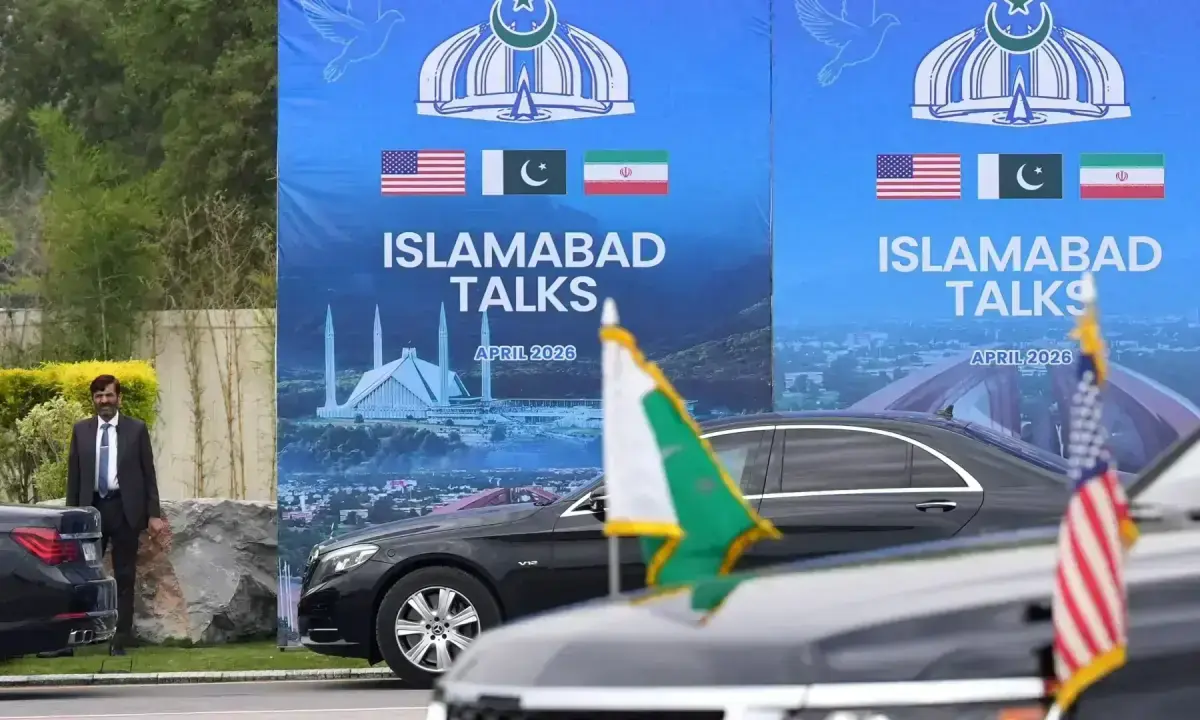
Islamabad is the leading candidate to host the next round of technical negotiations between the United States and Iran, expected on July 11, diplomatic sources told Dawn. The Swiss resort of Burgenstock remains an alternative, but Pakistan's capital is the more likely choice. A final venue decision has not yet been announced.
The talks are designed to advance the framework set out in the Islamabad Memorandum of Understanding, signed roughly two weeks ago. That agreement gave both sides a 60-day window to negotiate a comprehensive deal covering Iran's nuclear programme, sanctions relief, and frozen Iranian assets. The July 11 session is a technical-level meeting, meant to do the detailed groundwork before higher-level diplomats convene.
Negotiators are expected to work through three broad clusters. The first is Iran's nuclear programme and the scope of any restrictions Tehran would accept. The second is the release of Iranian assets frozen abroad and the easing of US-led sanctions. The third covers regional security, specifically the Strait of Hormuz and the Lebanon ceasefire agreed after June negotiations in Switzerland.
Iran's foreign ministry has said the composition of Tehran's delegation will be confirmed after state funeral ceremonies for Supreme Leader Ayatollah Ali Khamenei conclude. The multi-day funeral delayed the talks. Diplomatic sources said mediators from Qatar and Pakistan maintained indirect contacts during the pause, focusing on Hormuz navigation and the ceasefire.
The most recent high-level session was held at Burgenstock and mediated by Qatar and Pakistan. Those talks produced what negotiators called a roadmap covering nuclear restrictions, sanctions relief, maritime security, and regional de-escalation. A follow-on round of high-level direct talks is expected in Doha during the third week of July, once technical teams finish their work. Negotiators cautioned the process remains fragile.
Separately, earlier indirect technical talks in Doha this week drew a positive public reaction from US President Donald Trump, who called them "very good." Iranian officials said both sides had agreed on a partial release of frozen Iranian assets. US officials disputed that any such agreement had been reached, a discrepancy that underlines how much distance still separates the two sides.
While negotiations continued, both governments traded pointed public statements during Khamenei's funeral. Speaking at Mount Rushmore on July 4, Trump mocked the pause in talks, saying Washington had "given Iran a week off for a funeral because we're nice." He claimed Tehran was "dying to settle" and compared the US approach to Iran with its actions in Venezuela. Iran's foreign ministry responded by saying Tehran would seek justice against the US and Israel as "an enduring cause." The commander of the Islamic Revolution Guards Corps Navy, Rear Admiral Ali Ozmaei, said "divine retribution" against the US and Israel was "not far off."
Iran's Deputy Foreign Minister Kazem Gharibabadi added a pointed warning about military movements near the Strait of Hormuz. "The Strait of Hormuz is not a theatre for the military display of extra-regional powers," he wrote, saying Iran would hold those responsible for creating tension "fully accountable." The Strait carries roughly a fifth of global seaborne oil trade, making any threat to navigation a direct concern for energy markets worldwide.
Iranian parliament speaker and chief negotiator Mohammad Bagher Ghalibaf pushed back separately on Trump's claim that Iran would buy US agricultural products as part of a peace deal. Ghalibaf dismissed the assertion on X, pointing to American food insecurity at home. He also told Uzbekistan's parliamentary speaker that post-war "realities have changed," arguing that recent events had forced Washington to accept new conditions. He said trade relations could expand and expressed hope that sanctions relief would follow, linking better prospects to joint management of the Persian Gulf and Strait of Hormuz by Iran and Oman.
The dual track of sharp rhetoric and active diplomacy reflects the pressure on both sides. The 60-day countdown from the Islamabad MOU is already running. If technical teams do not deliver a workable framework by July 11, the Doha high-level session scheduled for late July will have little to build on. Pakistan's role as both a possible host and a mediating channel gives Islamabad unusual leverage and visibility in a negotiation that will shape sanctions regimes, energy prices, and regional security across the Middle East.
Qatar's foreign ministry said mediators including Qatar, Pakistan, and Oman have reached "very progressive stages" in efforts to end the US-Iran war, pushing Brent crude down more than four percent.
Qatar confirmed it is mediating between the US and Iran but said no direct talks are currently planned. The clarification follows conflicting statements from President Trump, who claimed talks are under way, and Tehran, which denied any dialogue is happening.
Saudi Aramco reported sharply higher second-quarter 2026 profits as the Iran war restricts global oil supply and pushes crude prices up. Other oil supermajors also posted outsized earnings, raising concerns about sustained fuel cost pressure for importing economies.
President Trump called current Iran negotiations the "last chance" to end five months of conflict, pushing oil prices higher. Tehran denied formal talks are taking place, raising the risk of a diplomatic breakdown with direct consequences for global energy markets.