
Qatar Signals Progress in US-Iran War Talks
Qatar's foreign ministry said mediators including Qatar, Pakistan, and Oman have reached "very progressive stages" in efforts to end the US-Iran war, pushing Brent crude down more than four percent.
Key Takeaways
May 8, 2026 · 2 min read · By Rishabh Bhardwaj
·
AI-assisted, human-reviewed · Our editorial standards
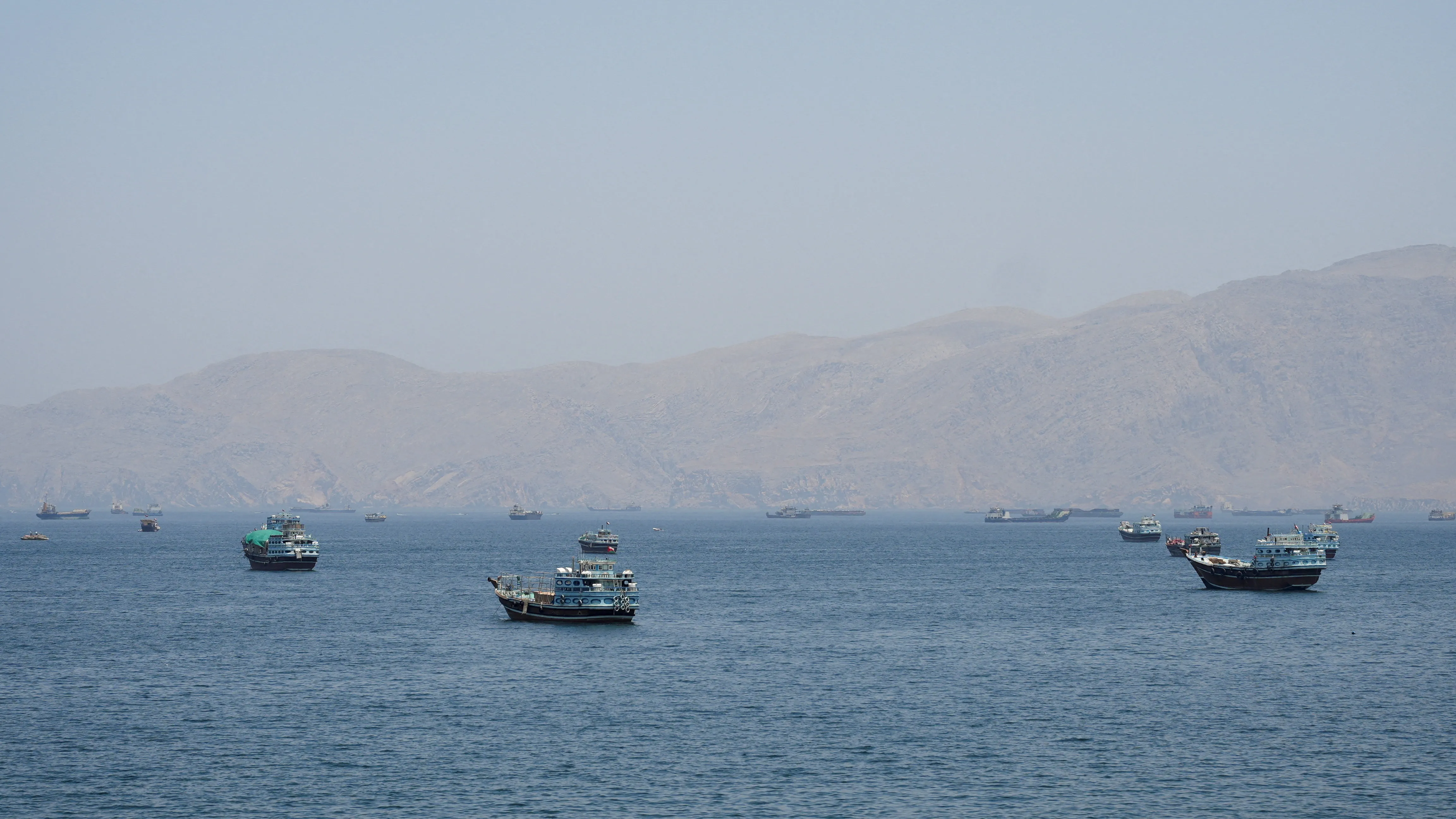
Iran and the United States exchanged fire near the Strait of Hormuz, with each side accusing the other of striking first, raising fresh doubts about the durability of any ceasefire arrangement in the region.
Iran's government accused American forces of violating a ceasefire agreement near Hormuz, one of the world's most critical shipping lanes. CENTCOM, the US military's Central Command overseeing Middle East operations, pushed back, saying its forces responded to Iranian attacks rather than initiating them. Both accounts cannot simultaneously be true, and no independent verification of the sequence of events has emerged from the available source material.
The Strait of Hormuz is the narrow waterway between Iran and Oman through which roughly one-fifth of the world's oil supply passes. Any sustained military activity there directly threatens tanker traffic, marine insurance rates, and global energy supply chains. Even brief exchanges of fire in the area tend to push oil prices higher as markets price in disruption risk.
The conflicting claims reflect a pattern seen repeatedly in this conflict: neither side is willing to be seen as the aggressor, making de-escalation harder to manage. When both parties frame their actions as defensive responses, each new incident becomes a justification for the next, and formal ceasefire mechanisms lose credibility quickly.
The incident marks day 70 of what the source describes as an ongoing Iran war, suggesting this conflict has already stretched well beyond a short-term flare-up. A ceasefire that both sides publicly acknowledge but privately contest through competing narratives is functionally fragile. Each accusation of breach gives domestic audiences and military commanders on both sides grounds to escalate further.
For energy markets, the immediate concern is whether tanker operators and insurers will treat this as a one-off skirmish or a sign that Hormuz is no longer safe for normal traffic. For diplomats, the core problem is that there is no agreed neutral arbiter to determine who fired first, which means the ceasefire, if one exists, has no enforcement mechanism both sides trust.
Watch for any formal diplomatic response from either government, changes in tanker routing through the strait, and whether CENTCOM issues further operational details that clarify the sequence of events.
Qatar's foreign ministry said mediators including Qatar, Pakistan, and Oman have reached "very progressive stages" in efforts to end the US-Iran war, pushing Brent crude down more than four percent.
Qatar confirmed it is mediating between the US and Iran but said no direct talks are currently planned. The clarification follows conflicting statements from President Trump, who claimed talks are under way, and Tehran, which denied any dialogue is happening.
Saudi Aramco reported sharply higher second-quarter 2026 profits as the Iran war restricts global oil supply and pushes crude prices up. Other oil supermajors also posted outsized earnings, raising concerns about sustained fuel cost pressure for importing economies.
President Trump called current Iran negotiations the "last chance" to end five months of conflict, pushing oil prices higher. Tehran denied formal talks are taking place, raising the risk of a diplomatic breakdown with direct consequences for global energy markets.