
Qatar Signals Progress in US-Iran War Talks
Qatar's foreign ministry said mediators including Qatar, Pakistan, and Oman have reached "very progressive stages" in efforts to end the US-Iran war, pushing Brent crude down more than four percent.
Key Takeaways
July 21, 2026 · 3 min read · By Rishabh Bhardwaj
·
AI-assisted, human-reviewed · Our editorial standards
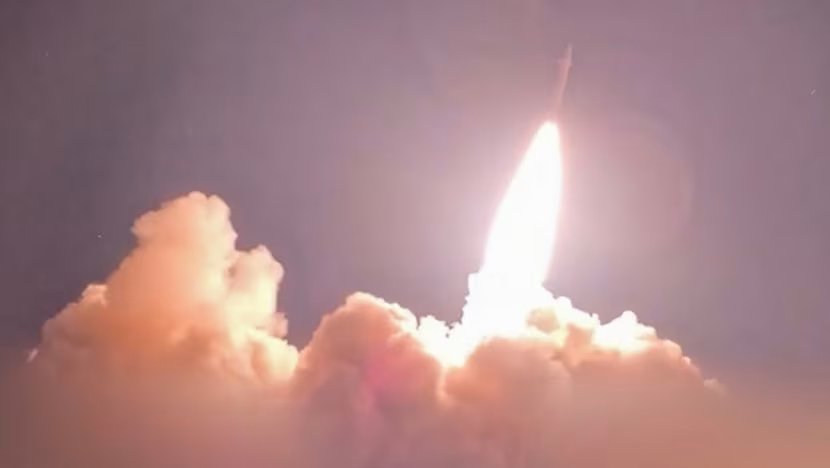
Iran and the United States have both raised military and diplomatic pressure in the Gulf, yet the release of an American held in Iran is being read as a deliberate signal that both sides want a way out of the standoff.
The simultaneous escalation and the prisoner release reflect a well-worn pattern in US-Iran tensions: public hardening for domestic audiences while quiet channels stay open. The fact that Iran freed an American national at this precise moment suggests Tehran is not seeking a full confrontation, even as it projects strength in the Gulf waterway through which a significant share of global oil supply passes.
Both governments have taken steps that raise the risk of miscalculation. The US has reinforced its military posture in the region, and Iran has signaled its ability to threaten shipping and American assets. Yet neither side has crossed a threshold that would force a direct military exchange. The prisoner release, a concrete and costly gesture from Tehran's perspective, is the clearest evidence available that Iran is preserving room to de-escalate.
In past episodes, Iran has used prisoner releases as a low-cost diplomatic signal, one that costs nothing in terms of military capability but demonstrates willingness to engage. For Washington, accepting the release without a reciprocal concession being publicly announced keeps its own negotiating position flexible.
The Gulf remains the world's most consequential energy chokepoint. Any sustained military escalation there would push oil prices higher almost immediately, adding to inflation pressures already weighing on major economies in mid-2026. Shipping insurers and tanker operators watch these signals closely, and even the threat of conflict raises war-risk premiums on cargo moving through the Strait of Hormuz.
For India, the stakes are direct. India is one of the largest buyers of Gulf crude, and a meaningful rise in oil prices would widen the import bill, pressure the rupee, and complicate the Reserve Bank of India's effort to keep inflation within its target band. Indian nationals also work across the Gulf in large numbers, making any regional security deterioration a consular and economic concern simultaneously.
Beyond energy, a hot conflict in the Gulf would disrupt the broader set of US-Iran nuclear diplomacy threads that have been running in various forms. Any deal, partial or complete, becomes harder to reach the moment either side takes an irreversible military step.
The current posture from both governments looks more like coercive bargaining than a genuine slide toward war. Each side is raising the cost of inaction for the other while keeping the exit door open. The prisoner release is Tehran's way of indicating it is still standing near that door.
What to watch next: whether the US responds with any reciprocal gesture, such as sanctions relief on specific Iranian individuals or entities, and whether the two sides move toward a formal meeting, even through intermediaries such as Oman, which has historically brokered US-Iran back-channel contacts. Any halt to Iranian harassment of Gulf shipping would be a stronger de-escalation signal than a single prisoner release. Absent that, the risk of an unintended incident remains elevated, and markets will stay sensitive to any news from the Strait of Hormuz.
Qatar's foreign ministry said mediators including Qatar, Pakistan, and Oman have reached "very progressive stages" in efforts to end the US-Iran war, pushing Brent crude down more than four percent.
Qatar confirmed it is mediating between the US and Iran but said no direct talks are currently planned. The clarification follows conflicting statements from President Trump, who claimed talks are under way, and Tehran, which denied any dialogue is happening.
Saudi Aramco reported sharply higher second-quarter 2026 profits as the Iran war restricts global oil supply and pushes crude prices up. Other oil supermajors also posted outsized earnings, raising concerns about sustained fuel cost pressure for importing economies.
President Trump called current Iran negotiations the "last chance" to end five months of conflict, pushing oil prices higher. Tehran denied formal talks are taking place, raising the risk of a diplomatic breakdown with direct consequences for global energy markets.