
Qatar Signals Progress in US-Iran War Talks
Qatar's foreign ministry said mediators including Qatar, Pakistan, and Oman have reached "very progressive stages" in efforts to end the US-Iran war, pushing Brent crude down more than four percent.
Key Takeaways
May 10, 2026 · 2 min read · By Rishabh Bhardwaj
·
AI-assisted, human-reviewed · Our editorial standards
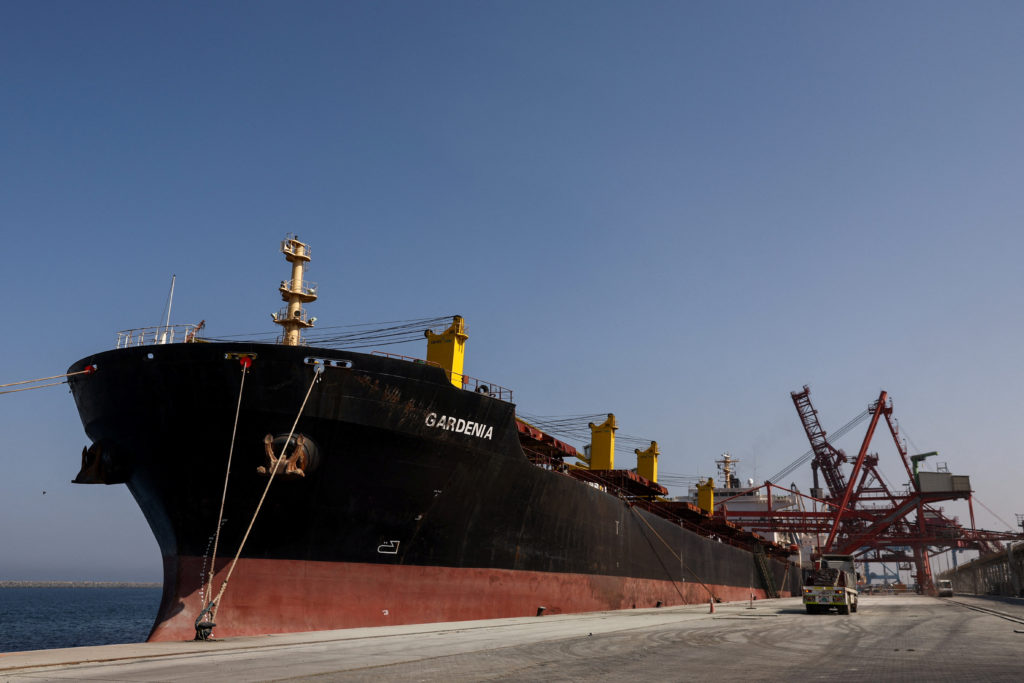
Iran has established a new agency to control shipping through the Strait of Hormuz, its most strategically sensitive waterway, at the same moment its government is reviewing a potential peace framework with the United States.
The Strait of Hormuz is the world's most critical oil chokepoint. Roughly 20 percent of global oil supply passes through its narrow waters between Iran and Oman. Any disruption there moves energy markets immediately, raises shipping insurance costs, and tightens supply across Asia and Europe.
The timing sharpened considerably when Iranian state media reported that the country's armed forces exchanged fire with "the enemy" on Qeshm Island, which sits directly inside the Strait of Hormuz. The report gave no further detail on who the opposing side was, what weapons were used, or whether there were casualties.
Qeshm is Iran's largest island and sits close to major international shipping lanes. An armed incident there, even a limited one, places the new shipping control agency in an immediately operational context rather than a bureaucratic one.
The combination of moves sends two messages at once. Creating a centralized agency to govern Strait traffic gives Iran a formal mechanism to restrict, inspect, or slow vessels, going beyond ad hoc naval interceptions it has conducted in recent years. At the same time, Iranian officials are publicly engaging with a potential U.S. peace deal, suggesting the new agency could be a bargaining chip as much as an operational tool.
For oil markets, the immediate question is whether the Qeshm incident escalates or stays contained. For diplomacy, the question is whether Iran is using heightened maritime control as leverage in talks or as a fallback if talks fail.
Key things to watch: official identification of the "enemy" in the Qeshm exchange, any response from U.S. naval forces in the region, and whether the new agency issues formal rules for foreign vessels transiting the strait.
Qatar's foreign ministry said mediators including Qatar, Pakistan, and Oman have reached "very progressive stages" in efforts to end the US-Iran war, pushing Brent crude down more than four percent.
Qatar confirmed it is mediating between the US and Iran but said no direct talks are currently planned. The clarification follows conflicting statements from President Trump, who claimed talks are under way, and Tehran, which denied any dialogue is happening.
Saudi Aramco reported sharply higher second-quarter 2026 profits as the Iran war restricts global oil supply and pushes crude prices up. Other oil supermajors also posted outsized earnings, raising concerns about sustained fuel cost pressure for importing economies.
President Trump called current Iran negotiations the "last chance" to end five months of conflict, pushing oil prices higher. Tehran denied formal talks are taking place, raising the risk of a diplomatic breakdown with direct consequences for global energy markets.