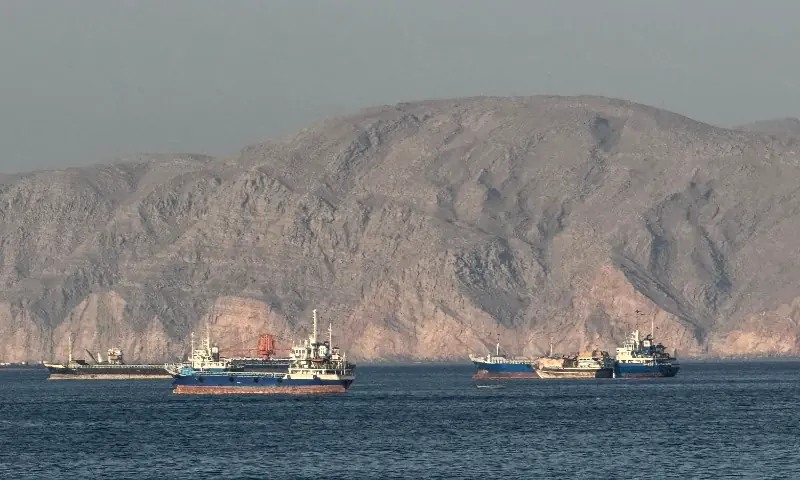
Iran's military reimposed control over the Strait of Hormuz on Saturday, declaring the waterway under 'strict management' of its armed forces hours after reopening it following a Lebanon ceasefire agreement. The reversal came with more than a dozen commercial ships mid-transit, several of which turned back after the announcement while others hugged Iranian territorial waters and broadcast Indian or Chinese identities in apparent bids for safe passage. The rapid oscillation undermined Trump's Friday claim that a peace deal ending the US-Israeli war on Iran was 'very close.' Tehran's trigger was explicit: the US naval blockade of Iranian ports, which Washington launched alongside the February 28 military campaign, remained active despite the ceasefire. Parliamentary speaker Mohammad Bagher Ghalibaf and foreign ministry spokesman Esmaeil Baqaei both warned the blockade constituted a ceasefire violation. Trump, speaking aboard Air Force One, confirmed the blockade would remain regardless of whether the ceasefire extends past Wednesday, and threatened resumed airstrikes if no long-term deal is concluded. Core gaps persist: Iran refuses to transfer its enriched uranium stockpile to the US, contradicting Trump's stated terms, and Tehran's proposed tolls on Hormuz shipping are off the table per Washington. The strait normally carries roughly a fifth of global oil and LNG supply, making its status a direct variable in energy markets.
Qatar's foreign ministry said mediators including Qatar, Pakistan, and Oman have reached "very progressive stages" in efforts to end the US-Iran war, pushing Brent crude down more than four percent.
Qatar confirmed it is mediating between the US and Iran but said no direct talks are currently planned. The clarification follows conflicting statements from President Trump, who claimed talks are under way, and Tehran, which denied any dialogue is happening.
Saudi Aramco reported sharply higher second-quarter 2026 profits as the Iran war restricts global oil supply and pushes crude prices up. Other oil supermajors also posted outsized earnings, raising concerns about sustained fuel cost pressure for importing economies.
President Trump called current Iran negotiations the "last chance" to end five months of conflict, pushing oil prices higher. Tehran denied formal talks are taking place, raising the risk of a diplomatic breakdown with direct consequences for global energy markets.