
Qatar Signals Progress in US-Iran War Talks
Qatar's foreign ministry said mediators including Qatar, Pakistan, and Oman have reached "very progressive stages" in efforts to end the US-Iran war, pushing Brent crude down more than four percent.
Key Takeaways
May 26, 2026 · 3 min read · By Rishabh Bhardwaj
·
AI-assisted, human-reviewed · Our editorial standards
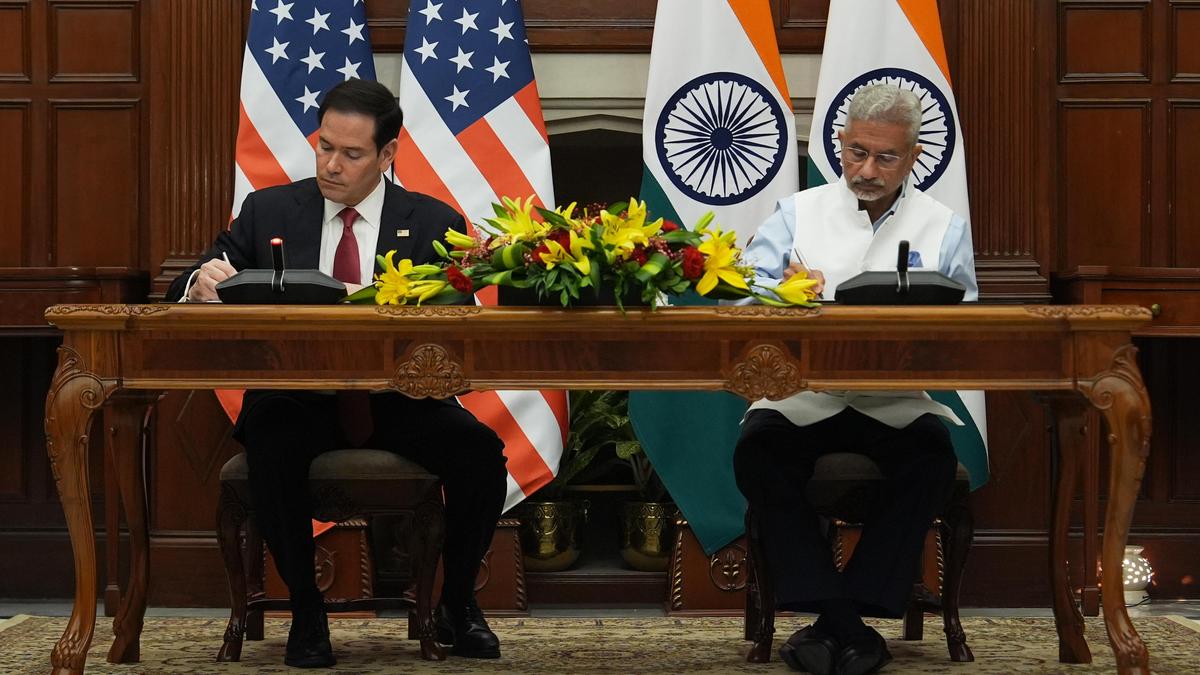
India and the United States have signed a framework agreement on critical minerals, covering the securing, mining, and processing of materials that sit at the heart of modern defence, clean energy, and electronics supply chains. The deal was signed on the sidelines of the Quad Foreign Ministers' meeting in New Delhi.
Critical minerals are a shortlist of raw materials, including lithium, cobalt, rare earths, and graphite, for which there is high demand but concentrated supply. China currently dominates both the mining and, more importantly, the processing of many of these materials. A country that can refine lithium or rare earths holds a chokepoint over battery makers, chipmakers, and defence contractors worldwide.
The timing is deliberate. Both Washington and New Delhi have been building out strategies to reduce dependence on Chinese-controlled mineral supply chains. For the U.S., the concern spans electric vehicle batteries, semiconductors, and military hardware. For India, the deal offers a path to develop its own substantial mineral reserves, several of which remain underexplored, while plugging into a broader allied network for offtake and technology.
The Quad, which groups the U.S., India, Japan, and Australia, has increasingly moved from a security dialogue toward concrete economic and supply-chain coordination. Signing the minerals framework at the Quad Foreign Ministers' meeting signals that critical minerals are now a formal pillar of that alliance architecture, not just a bilateral talking point.
India brings real assets to this arrangement. The country holds significant deposits of lithium, cobalt, and rare earth elements, though domestic processing infrastructure remains underdeveloped. U.S. backing, whether through financing, technology transfer, or guaranteed demand, could accelerate the buildout of that processing capacity. That is where the real value of any minerals deal lies: raw ore is far less strategically useful than refined, battery-grade material.
For American industry, locking in a reliable non-Chinese source of processed critical minerals reduces exposure to any future export controls Beijing might impose, similar to the graphite and gallium export restrictions China has already deployed. Diversification into an allied and democratic partner like India also satisfies the sourcing requirements attached to U.S. clean energy subsidies under domestic legislation, which preference minerals extracted or processed in free-trade partner countries.
A framework agreement sets shared intentions and a structure for cooperation, but the practical steps that follow will determine its real weight. Watch for downstream announcements on joint investment in Indian processing facilities, U.S. government financing through bodies like the Export-Import Bank or the Development Finance Corporation, and technology-sharing arrangements that help India move up the value chain from raw extraction toward refined output.
The deal also strengthens the hand of Indian mining policy reformers who have pushed for faster clearances and more private-sector involvement in the sector. An active U.S. partnership creates external momentum that can be cited domestically to justify regulatory acceleration.
For markets, the agreement is a directional signal rather than an immediate revenue event. Junior mining companies with Indian assets and established critical minerals processors looking for allied-nation supply agreements will be watching closely. Longer term, any step that materially reduces China's grip on mineral processing is a repricing event for the global clean energy and defence supply chain.
China's dominance in this space was built over decades through sustained state investment, and replacing it takes time. But the India-U.S. framework, set within the Quad's broader architecture, is a concrete move in that direction rather than a statement of intent alone.
Qatar's foreign ministry said mediators including Qatar, Pakistan, and Oman have reached "very progressive stages" in efforts to end the US-Iran war, pushing Brent crude down more than four percent.
Qatar confirmed it is mediating between the US and Iran but said no direct talks are currently planned. The clarification follows conflicting statements from President Trump, who claimed talks are under way, and Tehran, which denied any dialogue is happening.
Saudi Aramco reported sharply higher second-quarter 2026 profits as the Iran war restricts global oil supply and pushes crude prices up. Other oil supermajors also posted outsized earnings, raising concerns about sustained fuel cost pressure for importing economies.
President Trump called current Iran negotiations the "last chance" to end five months of conflict, pushing oil prices higher. Tehran denied formal talks are taking place, raising the risk of a diplomatic breakdown with direct consequences for global energy markets.