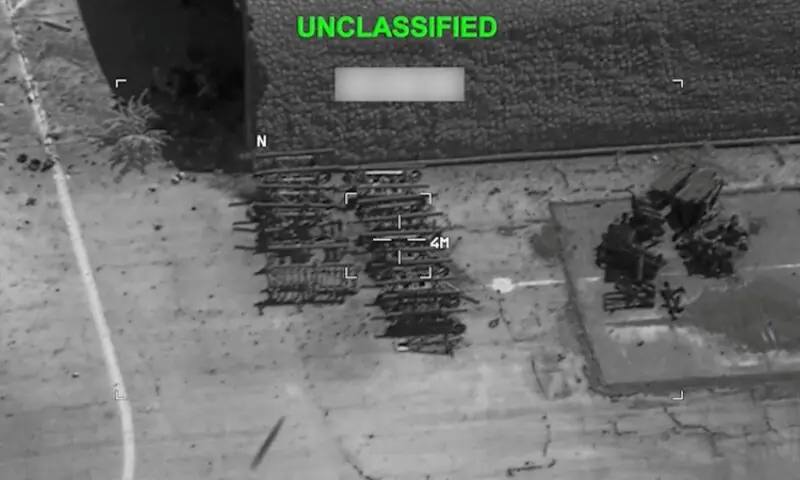
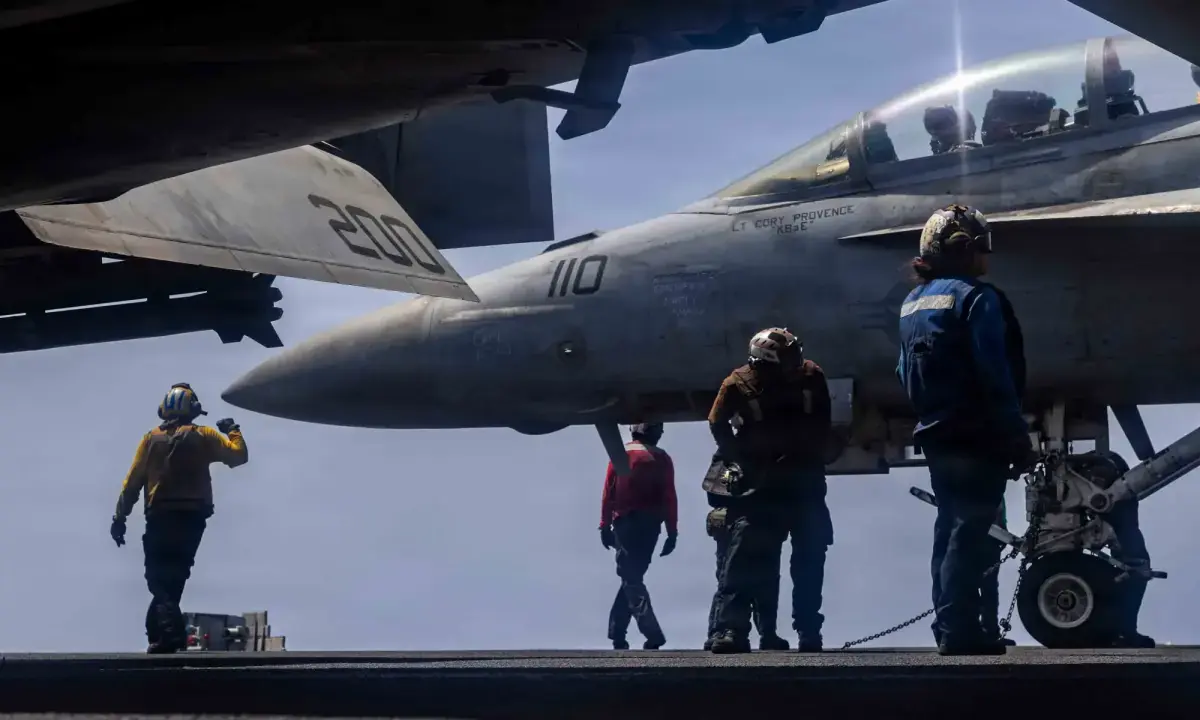
US forces struck Iran for the eleventh consecutive night on Wednesday, triggering air defence systems across Tehran including in the west, east, and northeast of the city, according to Iranian state television. President Donald Trump said the United States was "not finished" and ruled out any near-term withdrawal, even as the Pentagon disclosed the campaign has now cost $37.5 billion and faces fierce political opposition at home.
The US military said its latest strikes targeted "military logistics infrastructure" aimed at degrading Iran's ability to threaten commercial shipping through the Strait of Hormuz. Iranian state media reported attacks across multiple sites, including near Bushehr, which hosts a nuclear power plant. Trump separately warned that the underground site known as Pickaxe Mountain, a subterranean nuclear facility near Natanz where Western intelligence suspects Iran is building an undeclared enrichment facility, could be the next target.
Iran's Khatam Al-Anbiya military command called any strike on that site an "expansion of war in the region" and threatened to hit "all the interests of America, the allies and supporters." The warning signals that targeting Pickaxe Mountain would mark a significant escalation beyond the current campaign's focus on logistics and shipping-related military assets.
The war spreads to Gulf neighbours
The conflict is no longer contained to US-Iran exchanges. Kuwait's army said Wednesday its air defences were actively engaging drone attacks launched from Iran. Bahrain reported intercepting Iranian attacks the previous day, with sirens sounding repeatedly across the country. Jordan also said it intercepted drone and missile strikes. Iran's military said it deliberately targeted US assets in Kuwait and Bahrain, including air defence systems, radar installations, and administrative buildings, framing the strikes as measured reprisals with more to follow.
The Houthi dimension adds another layer of risk to global energy markets. After Tehran's Houthi allies threatened to blockade Saudi ports, maritime intelligence provider Vanguard Tech reported that a Singapore-flagged tanker and a Liberia-flagged tanker both reversed course in the Red Sea after loading crude at the Saudi port of Yanbu. The Revolutionary Guards also said two tankers attempting to transit the Strait of Hormuz were struck by explosions and brought to a standstill. The UK Maritime Trade Operations agency separately confirmed an "unknown projectile" struck a tanker off Oman's coast.
The twin chokepoints, Hormuz and the Red Sea approach to Yanbu, are the arteries through which a large share of global oil exports flow. A sustained blockade or disruption at both simultaneously would have immediate consequences for oil prices, shipping insurance costs, and energy supply chains across Asia and Europe.
Political and diplomatic pressure builds
With US midterm legislative elections approaching in November, the war is becoming a domestic political liability. Pentagon chief Pete Hegseth disclosed the $37.5 billion cost while defending a request for tens of billions in additional military funding, a figure that is drawing scrutiny even from segments of Trump's political base. Trump acknowledged the scale of destruction but framed it as leverage, saying Iran would need "20 to 25 years to rebuild" and suggesting the US holds the decisive upper hand.
Diplomatic channels remain open despite the fighting. Iranian foreign ministry spokesman Esmaeil Baqaei confirmed that exchanges with Washington through mediators are continuing. Pakistan's Prime Minister Shehbaz Sharif is leading mediation efforts and met Iran's Interior Minister Eskandar Momeni on Tuesday, urging all sides to "refrain from actions that could further destabilise the region." The collapse of a preliminary deal after fighting over the Strait of Hormuz suggests any new agreement faces a higher bar to hold.
The next critical markers are whether the US strikes Pickaxe Mountain, whether the Houthis act on the Saudi port blockade threat, and whether Pakistani-led mediation can produce a ceasefire framework before the military and economic costs escalate further. Each of those developments would carry direct consequences for oil markets, Gulf state security, and the broader geopolitical alignment of the Middle East.