US Hits Iran for 11th Night, War Spreads to Gulf
US forces struck Iran for the eleventh straight night, with air defences activating across Tehran, as President Trump said the US was "not finished" after spending $37.5 billion.
Key Takeaways
July 22, 2026 · 3 min read · By Rishabh Bhardwaj
·
AI-assisted, human-reviewed · Our editorial standards
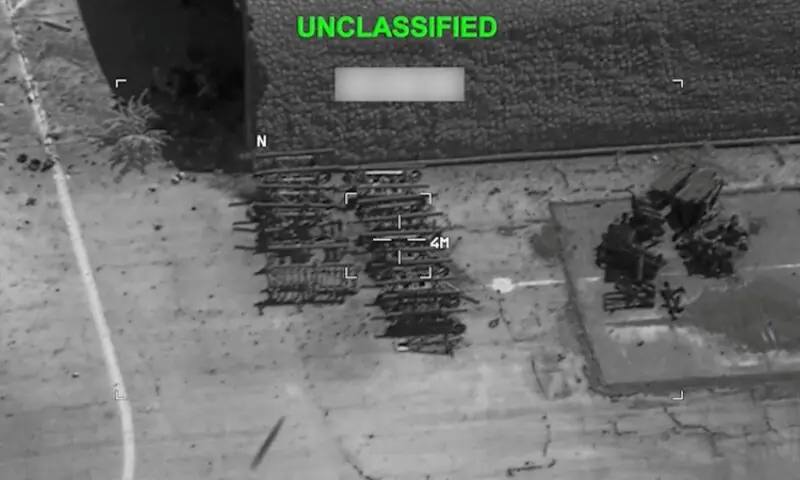
The United States struck targets in Iran's Hormozgan province for the eighth consecutive night, hitting the Sirik and Hajiabad areas, while Iran responded with fire directed at Gulf bases where US forces are stationed.
The US military said the strikes were carried out in part as revenge for the killing of two American soldiers. No further details about how or when those soldiers were killed were provided in the official statement, but the acknowledgment of American deaths marks a significant escalation in the public justification for continued bombardment.
Hormozgan province sits along Iran's southern coastline, bordering the Strait of Hormuz, one of the world's most critical oil and gas transit chokepoints. Roughly 20 percent of global petroleum trade passes through the strait. Sirik is a coastal district, and Hajiabad lies further inland. Strikes in this province carry obvious strategic weight beyond the immediate military exchange.
Eight consecutive nights of US strikes represent a sustained military campaign rather than a one-off retaliatory raid. That rhythm, with strikes continuing even after Iran has returned fire, suggests neither side has found an off-ramp. Iran's willingness to fire back at Gulf bases, where US forces are hosted by partner nations, raises the stakes for those countries as well. Any escalation that draws Gulf states deeper into the conflict could disrupt the regional security architecture that underpins energy exports and dollar-denominated oil trade.
Iran's return fire on Gulf bases is itself a calculated signal. Targeting facilities outside Iranian territory means Tehran is extending the geographic scope of the conflict, testing the resolve of US regional partners and Washington's willingness to keep absorbing exchanges. For markets, the relevant question is whether the Strait of Hormuz remains operationally open. So far there is no confirmed disruption to shipping, but an eight-night exchange with both sides trading blows in the Gulf region is exactly the scenario that keeps energy traders and insurance underwriters on edge.
The stated US rationale, avenging soldier deaths, adds a public accountability dimension that was absent in earlier rounds. That framing makes it harder for Washington to de-escalate quietly, because any pause could be read domestically as abandoning the justification it has already made public. On the Iranian side, firing at Gulf bases rather than purely defending home territory shows a willingness to internationalise the conflict's footprint.
Investors and analysts watching this exchange will focus on three indicators. First, whether Iran takes any action to physically threaten Hormuz shipping lanes, which would immediately move oil prices. Second, whether any Gulf partner nation faces enough domestic or political pressure to restrict US basing rights. Third, whether a diplomatic back-channel emerges, as has happened in past US-Iran escalation cycles, to slow the tempo before it becomes harder to stop.
For India, the stakes are direct. India is one of the largest buyers of Gulf crude and has significant diaspora and trade exposure across the UAE, Oman, and other Gulf states hosting US forces. A broader conflict in the Gulf would pressure import bills, widen the trade deficit, and push up domestic fuel costs at a time when the government is already managing inflation carefully.
No ceasefire, diplomatic contact, or third-party mediation has been confirmed as of this report. The exchange has now lasted eight nights with no visible sign of either side pulling back.
US forces struck Iran for the eleventh straight night, with air defences activating across Tehran, as President Trump said the US was "not finished" after spending $37.5 billion.
Iranian President Masoud Pezeshkian declared his country is in a "full-scale war" with the US as American strikes hit Bushehr, home to Iran's only nuclear power plant, for the ninth consecutive night.
Iran released an American national amid simultaneous US-Iran military escalation in the Gulf, signaling both sides may want a diplomatic off-ramp. Oil markets and regional shipping remain on alert as the standoff continues.

The US launched new airstrikes on Iran after two American troops were killed in Jordan, bringing the US death toll in the conflict to 16. Iran hit two US bases in Kuwait with kamikaze drones and warned it will shift to full-scale offensive operations if strikes continue.