
Qatar Signals Progress in US-Iran War Talks
Qatar's foreign ministry said mediators including Qatar, Pakistan, and Oman have reached "very progressive stages" in efforts to end the US-Iran war, pushing Brent crude down more than four percent.
Key Takeaways
May 7, 2026 · 2 min read · By Rishabh Bhardwaj
·
AI-assisted, human-reviewed · Our editorial standards
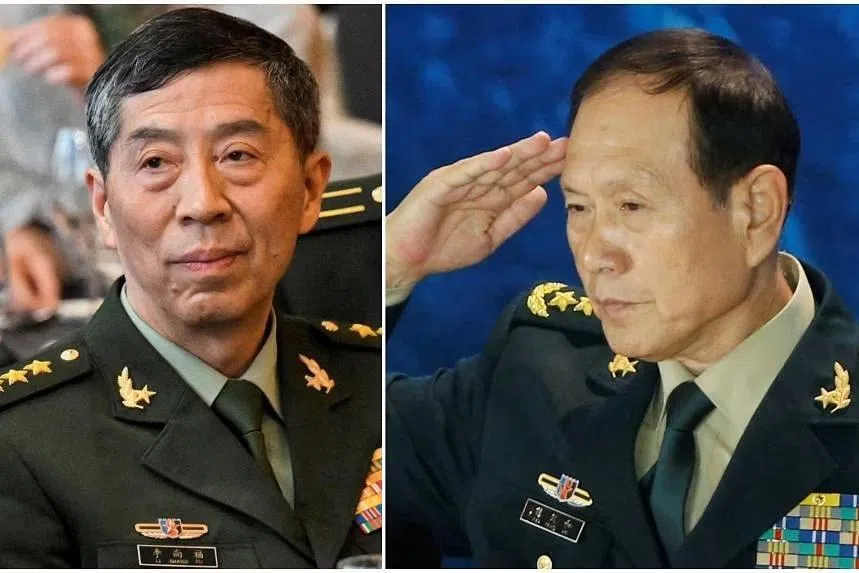
China has sentenced two former defence ministers, Wei Fenghe and Li Shangfu, to death with a reprieve for corruption. Under Chinese law, a death sentence with reprieve is almost always commuted to life imprisonment after a two-year suspension period, meaning neither man is expected to be executed.
Wei Fenghe served as defence minister from 2018 to 2023. Li Shangfu succeeded him but held the post for only eight months before being removed in 2023 without explanation. Both men were also senior military officials within the People's Liberation Army, giving them access to procurement budgets and weapons contracts worth hundreds of billions of yuan.
Their sentencing follows a sweeping anti-corruption drive inside the PLA that has ensnared some of the most senior figures in China's military establishment. Several generals from the Rocket Force, which controls China's nuclear and ballistic missile arsenal, were also removed or investigated around the same time. The scale and seniority of those targeted is unusual even by the standards of Xi Jinping's decade-long anti-graft campaign.
The suspended death sentence is a specific legal tool in China's judicial system. After the two-year reprieve, the sentence is reviewed and, in practice, almost always reduced to life in prison without parole or a fixed-term sentence. It is considered more severe than a straight life sentence but stops short of execution, often used in cases involving senior officials where the state wants to signal maximum severity without carrying out the penalty.
For China's defence establishment, the verdicts send a pointed signal about accountability at the very top of the military hierarchy. Both men sat on the Central Military Commission, the body that directly commands China's armed forces under Xi, making these among the highest-profile military corruption convictions in decades.
The cases also raise questions about the integrity of PLA procurement and equipment programmes during the period both men oversaw. Corruption in weapons acquisition can affect actual military readiness, a concern that outside analysts have flagged when assessing the real capability of Chinese forces.
Watch for whether additional senior figures face charges, and whether Xi uses these verdicts to accelerate structural reforms inside the PLA's procurement and logistics chains.
Qatar's foreign ministry said mediators including Qatar, Pakistan, and Oman have reached "very progressive stages" in efforts to end the US-Iran war, pushing Brent crude down more than four percent.
Qatar confirmed it is mediating between the US and Iran but said no direct talks are currently planned. The clarification follows conflicting statements from President Trump, who claimed talks are under way, and Tehran, which denied any dialogue is happening.
Saudi Aramco reported sharply higher second-quarter 2026 profits as the Iran war restricts global oil supply and pushes crude prices up. Other oil supermajors also posted outsized earnings, raising concerns about sustained fuel cost pressure for importing economies.
President Trump called current Iran negotiations the "last chance" to end five months of conflict, pushing oil prices higher. Tehran denied formal talks are taking place, raising the risk of a diplomatic breakdown with direct consequences for global energy markets.