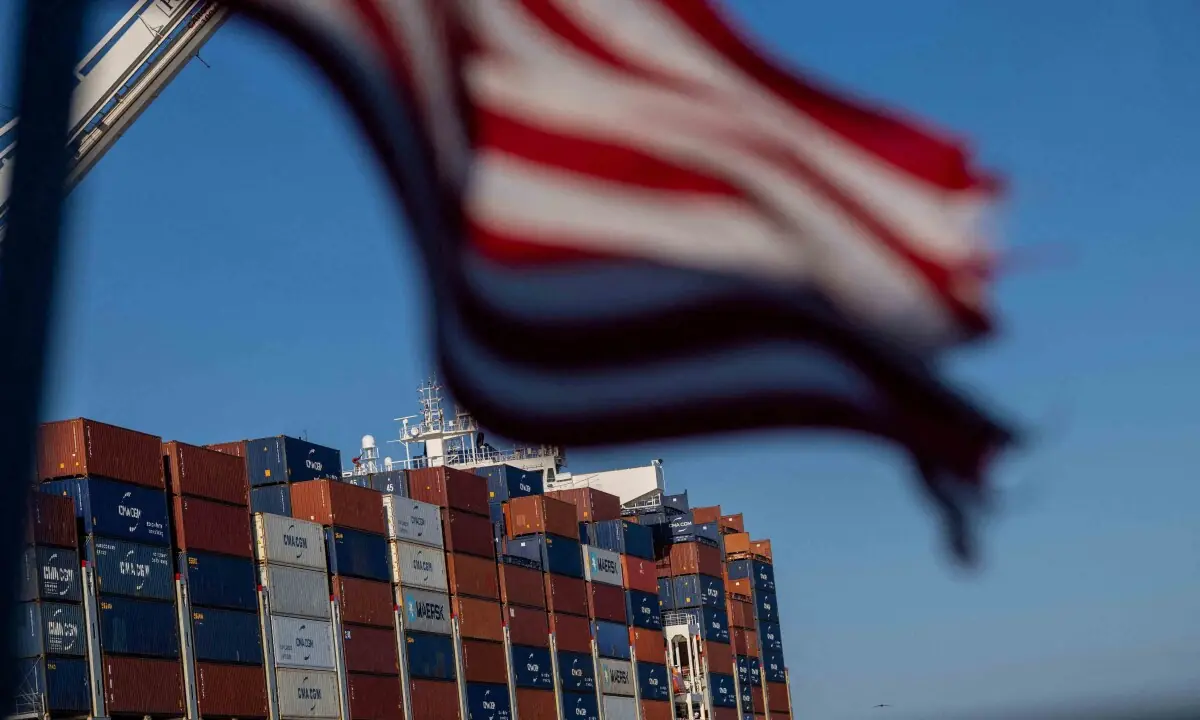
The United States will impose new tariffs on 60 trading partners starting Friday, covering major economies including India, China, Pakistan, the European Union, Japan, South Korea, and Canada. The duties, ranging from 10 to 12.5 percent, are justified on forced labour grounds and replace a temporary 150-day tariff that expires Friday.
US Trade Representative Jamieson Greer framed the move as an enforcement action rather than a trade war escalation. "The United States has had a forced labour import ban for nearly a century, and rigorously enforces it; it's well past time for our trading partners to do the same," he said. The targeted economies, he noted, represent the majority of US trade.
The rate structure differs by country. A flat 10 percent duty applies to a broad group that includes India, Pakistan, Bangladesh, Canada, Mexico, Indonesia, Malaysia, and several others. The EU, Japan, Taiwan, South Korea, and Switzerland get rates that, combined with existing most-favoured-nation tariffs, add up to 10 or 12.5 percent. China and 37 other countries face a straight 12.5 percent rate.
Why These Tariffs Are Built to Last
The legal architecture here matters. The US Supreme Court struck down a broad set of Trump tariffs in February, forcing the administration to find more durable legal footing. The new duties were designed after a months-long investigation specifically to withstand court challenges. Trade lawyer Greta Peisch, a former general counsel at the Office of the US Trade Representative and now a partner at Wiley Rein, said the investigation-backed process makes it "much more likely that they stay for the duration of Trump's term."
That durability is deliberate. By anchoring the tariffs in a formal forced labour investigation rather than emergency executive authority, the administration creates a legal record that is harder to overturn. The earlier 150-day tariff had no such foundation, which is why it needed replacing.
There are carve-outs. Goods already subject to sector-specific tariffs on steel and aluminium are unaffected. Certain energy products and fertilisers are exempt, as are goods covered under the US-Mexico-Canada Agreement. That last exemption is significant for supply chains integrated across North America, though it sits alongside Trump's separate 50 percent tariffs on many Canadian products ordered this week.
Leverage, Compliance, and What Comes Next
The administration is simultaneously running separate investigations into 16 economies over excess industrial capacity. Those probes could produce additional duties on top of what takes effect Friday. Together, the baseline tariff and the threat of further levies give Washington ongoing negotiating pressure over trading partners, Peisch told AFP. Countries that have struck trade deals with the US also face stronger incentives to comply with their terms, she added.
Josh Lipsky of the Atlantic Council noted a secondary benefit for Washington: tariff revenue. Higher duties boost government receipts, which matters as the administration manages fiscal pressures. He described the trajectory as signaling a "much more protectionist world's largest economy" going forward.
Pushback from targeted countries was immediate. Japan's government spokesman Minoru Kihara said Tokyo "regrets" the tariffs, arguing the higher rate is imposed solely because Japan lacks a ban on importing goods made with forced labour. Australia's trade minister Don Farrell called the duties "unjustified" and inconsistent with the two countries' free trade agreement. The EU, which signed a trade pact with the US, said it expects Washington to honour the commitments in their joint statement.
Pakistan submitted detailed responses to the USTR, including a fresh submission ahead of trade talks earlier this month, signalling that Islamabad is actively contesting its inclusion. India faces the same 10 percent baseline rate as Pakistan, which could marginally affect Indian exporters competing in the US market, particularly in textiles, pharmaceuticals, and light manufacturing.
Lipsky also flagged a broader signal embedded in this week's Canada tariffs, which rely on an untested legal provision. That shows the administration has multiple tools available and is willing to use them. US trade deals, he said, "are still fragile," even for partners who believed they had secured durable arrangements.