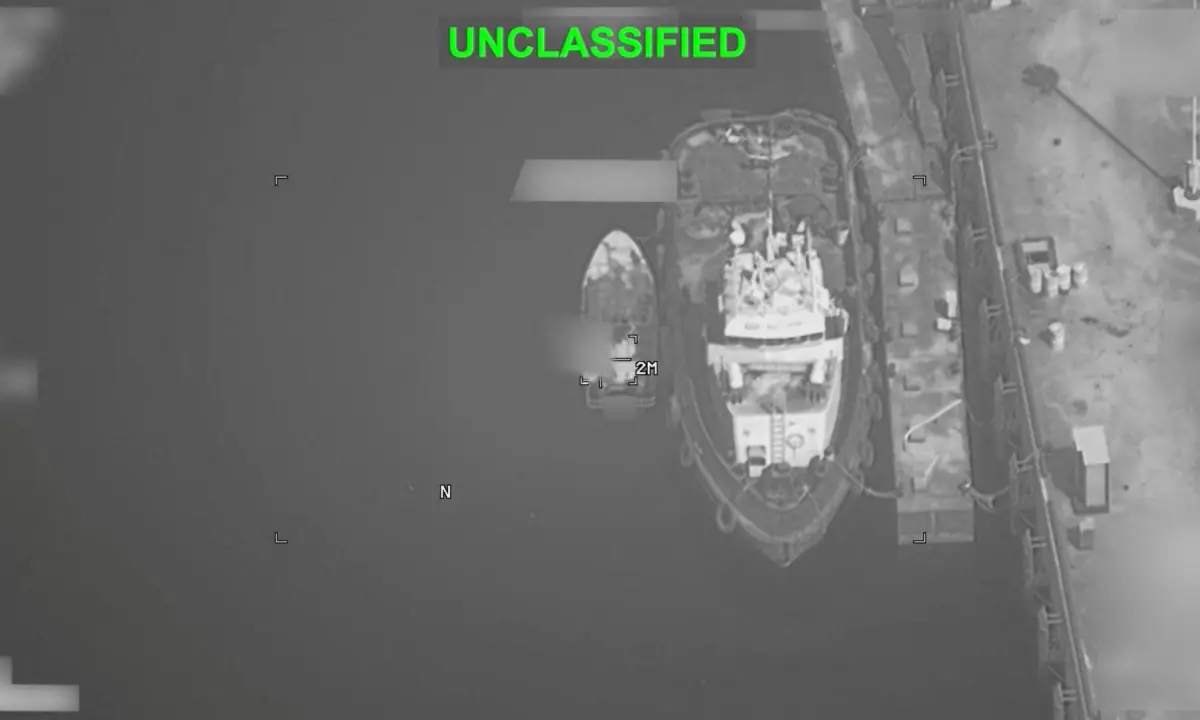
US forces struck Iran for the thirteenth consecutive night early on Friday, hitting military command centres, drone storage sites, communication networks, and coastal surveillance infrastructure across the country. US Central Command said the strikes were designed to reduce the threat Iran poses to commercial shipping through the Strait of Hormuz, a waterway that has effectively become the front line of a war now in its fifth month.
The latest round of attacks followed Houthi rebels striking two Saudi oil tankers in the Red Sea this week. The Houthis, who control northern and western Yemen, announced a naval blockade of Saudi Arabia days ago. Saudi Arabia had been routing millions of barrels of oil per day through a pipeline to the Red Sea specifically to bypass Iran's earlier blockade of Gulf oil through the Strait of Hormuz. The Houthi move now threatens to close a second critical shipping lane, the Bab el-Mandeb strait at the southern entrance to the Red Sea, sometimes called the Gate of Tears.
The double chokepoint risk is what rattled oil markets. Brent crude rose more than six percent on Thursday, crossing $100 a barrel for the first time since May. That spike represented one of the steepest single-day rises since the war began with US and Israeli strikes on Iran in late February. Early Friday, Brent futures pulled back slightly to $99.97 a barrel, but the contract remained on track for a gain of roughly 13.5 percent on the week.
Shipping routes under strain
Tankers are already changing course. Several vessels have turned away from the Bab el-Mandeb and headed north through the Suez Canal, which adds considerable distance and cost for Asian-bound cargoes. The alternative, sailing around Africa, is longer and more expensive still. Meanwhile, traffic through the Strait of Hormuz fell to just one tanker on Thursday, the lowest count since May 7, according to ship-tracking data. The combination of both routes being disrupted simultaneously is unprecedented in this conflict and creates direct pressure on global energy supply chains.
Iranian state media reported that US missiles struck Qeshm Island on the Strait of Hormuz on both Thursday and Friday. Iranian state broadcaster IRIB said four people were killed and five injured in a strike on the city of Ahvaz. Iran's semi-official Fars news agency reported two people injured in a drone strike on Khorramabad. Iran responded with its own drone attacks. The Iranian army said it targeted Sheikh Isa Air Base in Bahrain, hitting fuel storage tanks, equipment warehouses, and troop accommodation. Aircraft hangars and maintenance facilities at the Al-Azraq base in Jordan were also reportedly struck. Earlier, Iran said it hit US missile systems, weapons depots, and fuel storage in Jordan, and struck a US electronic warfare unit at the Al-Adiri base in Kuwait, claiming unspecified casualties. Neither the United States nor Kuwait confirmed casualties.
Iranian military spokesperson Brigadier General Mohammad Akraminia said Iran would continue retaliating for as long as US strikes on its infrastructure continued. Since February, Iran has repeatedly demonstrated an ability to hit US military facilities across the region, undercutting early White House assertions that American strikes had gutted Iranian military capacity.
Political pressure mounts in Washington
President Donald Trump, writing on social media after the tanker attacks, said Iran would be held responsible for Houthi actions and threatened "major military punishment." He told Axios he was considering re-launching major combat operations against Iran and was close to a decision, adding that Tehran had not "received enough pain yet." He also wrote that damages to cargo ships would be paid for using frozen Iranian assets held by the United States, without explaining the legal mechanism.
Iranian Foreign Minister Abbas Arachi rejected that framing, warning on X that seizing one nation's assets to cover unrelated future claims set "an incendiary precedent" and that the resulting chaos would not be "pretty or peaceful."
Congress is applying pressure of its own. The Republican-led House passed legislation directing Trump to halt military action against Iran, the latest in a series of such rebukes from a body that holds the sole constitutional power to declare war. The Senate moved hours later to block a separate, similar measure. Repeated congressional resolutions over recent months have not produced any halt to the conflict. With November congressional elections approaching, Republican allies are facing growing scrutiny as elevated oil prices feed inflation at home.
The key question now is whether the Bab el-Mandeb closes fully to tanker traffic. If it does, the cost and time needed to move Gulf energy to Asia could rise sharply, adding to inflationary pressure in importing economies including India, which depends heavily on Middle East oil. Any further Houthi strikes on tankers, or a US decision to escalate toward major ground or air operations inside Iran, would likely push oil well back above $100 and force a rapid rerouting of a significant share of global energy shipments.