
Qatar Signals Progress in US-Iran War Talks
Qatar's foreign ministry said mediators including Qatar, Pakistan, and Oman have reached "very progressive stages" in efforts to end the US-Iran war, pushing Brent crude down more than four percent.
Key Takeaways
July 10, 2026 · 4 min read · By Rishabh Bhardwaj
·
AI-assisted, human-reviewed · Our editorial standards
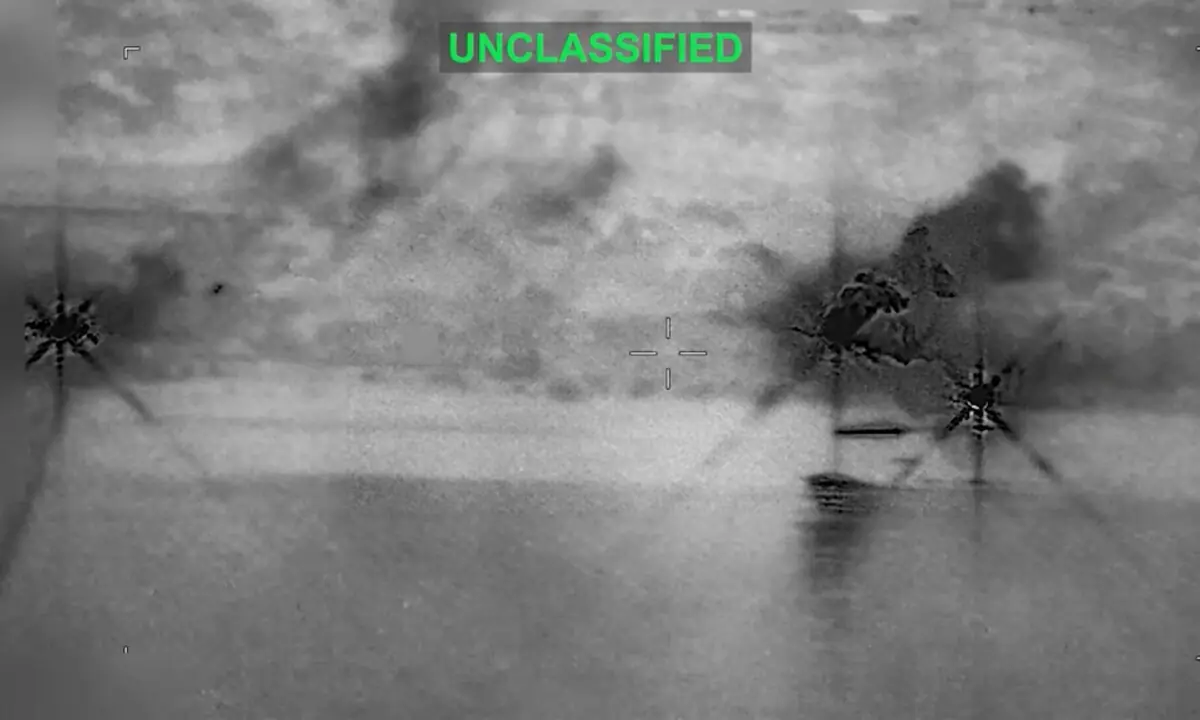
The United States launched a fresh wave of military strikes against Iran on Tuesday and revoked the oil export licence it had granted under a ceasefire deal, after three tankers were attacked in the Strait of Hormuz. The moves have pushed an already shaky truce to the edge of collapse.
US Central Command (Centcom) said it struck more than 80 targets, including over 60 small boats belonging to Iran's Islamic Revolutionary Guard Corps. The stated goal was to degrade Iran's capacity to threaten commercial shipping. "The unwarranted aggression by Iranian forces is a clear and dangerous violation of the ceasefire and undermines freedom of navigation," Centcom said in a statement. A US official told Reuters that the strikes also targeted Iranian air defense systems, coastal surveillance systems, surface-to-air missiles, anti-ship cruise missiles, and drone launch sites.
Iranian media reported explosions early Wednesday local time at Iran's main oil export hub of Kharg Island, as well as on Qeshm Island and in the southern port cities of Sirik and Bandar Abbas. Several people were injured by shrapnel from a projectile that hit a commercial pier in Sirik. Fishing boats were set ablaze in both Sirik and Bandar Abbas. Centcom's statement made no mention of Kharg Island, which handles roughly 90 percent of Iran's crude oil exports and was last struck by the US in April 2026.
The revocation of the oil licence is the strike with the widest economic reach. The US Treasury had issued a general licence on June 22 allowing sales of Iranian crude oil, petrochemicals, and petroleum products through August 21, as part of the interim ceasefire agreement. Washington pulled that licence on Tuesday and gave Iran until July 17 to wind down existing transactions. Oil prices jumped more than 3 percent on the news. Iran's foreign ministry called the revocation a breach of the framework agreement and said Washington would bear responsibility for the consequences.
The ceasefire, struck last month, was meant to open a 60-day window for permanent negotiations. That process has already stalled. Indirect talks in Qatar ended last week without any sign of progress. US President Donald Trump on Monday told reporters in the Oval Office: "We're either going to make a deal or we're going to finish the job. We can knock down their bridges in one hour, we can knock out their energy supply." Iran's Foreign Minister Abbas Araqchi responded that negotiations on a final deal would "not commence if threats continue."
The immediate trigger was a series of overnight tanker strikes. Qatar blamed Iran for attacking the Al Rekayyat, a large Qatari liquefied natural gas carrier, with a drone that started a fire in its engine room. The crew was safe and evacuating. A Saudi-flagged supertanker, believed to be the Wedyan, was also damaged off Oman, though the cause was not immediately confirmed. Qatar's foreign ministry summoned Iran's deputy ambassador and handed over a formal protest note.
Iran denied responsibility for the attacks and said Qatar's accusations were "perplexing." Iran's foreign ministry asserted that commercial vessels face risks when using shipping routes not coordinated with Tehran. That framing points to a broader Iranian objective: installing a permanent fee-collection system over Hormuz passage, which would represent a fundamental shift in who controls one of the world's most critical energy chokepoints. Washington has long acted as the security guarantor for that route.
Iran's top military command, Khatam al-Anbiya Central Headquarters, warned Wednesday that Iranian forces would deliver a "crushing response" and that Tehran would not allow US interference in the management of the Strait of Hormuz. Iranian President Masoud Pezeshkian, who had traveled to Iraq for Ayatollah Ali Khamenei's funeral, returned to Iran after the strikes. Huge crowds had gathered in the holy city of Qom to mourn Khamenei, who was assassinated.
The conflict began in February 2026 with US and Israeli strikes across Iran. The ceasefire paused the fighting but has not resolved any of the underlying disputes. With oil talks collapsed, the licence revoked, tankers under attack, and both sides issuing military warnings, the 60-day diplomatic window is narrowing fast. The next hard deadline is July 17, when Iran's wind-down period for oil transactions expires. How Tehran responds to that date will signal whether any negotiating space remains.
Qatar's foreign ministry said mediators including Qatar, Pakistan, and Oman have reached "very progressive stages" in efforts to end the US-Iran war, pushing Brent crude down more than four percent.
Qatar confirmed it is mediating between the US and Iran but said no direct talks are currently planned. The clarification follows conflicting statements from President Trump, who claimed talks are under way, and Tehran, which denied any dialogue is happening.
Saudi Aramco reported sharply higher second-quarter 2026 profits as the Iran war restricts global oil supply and pushes crude prices up. Other oil supermajors also posted outsized earnings, raising concerns about sustained fuel cost pressure for importing economies.
President Trump called current Iran negotiations the "last chance" to end five months of conflict, pushing oil prices higher. Tehran denied formal talks are taking place, raising the risk of a diplomatic breakdown with direct consequences for global energy markets.