
Qatar Signals Progress in US-Iran War Talks
Qatar's foreign ministry said mediators including Qatar, Pakistan, and Oman have reached "very progressive stages" in efforts to end the US-Iran war, pushing Brent crude down more than four percent.
Key Takeaways
July 10, 2026 · 3 min read · By Rishabh Bhardwaj
·
AI-assisted, human-reviewed · Our editorial standards
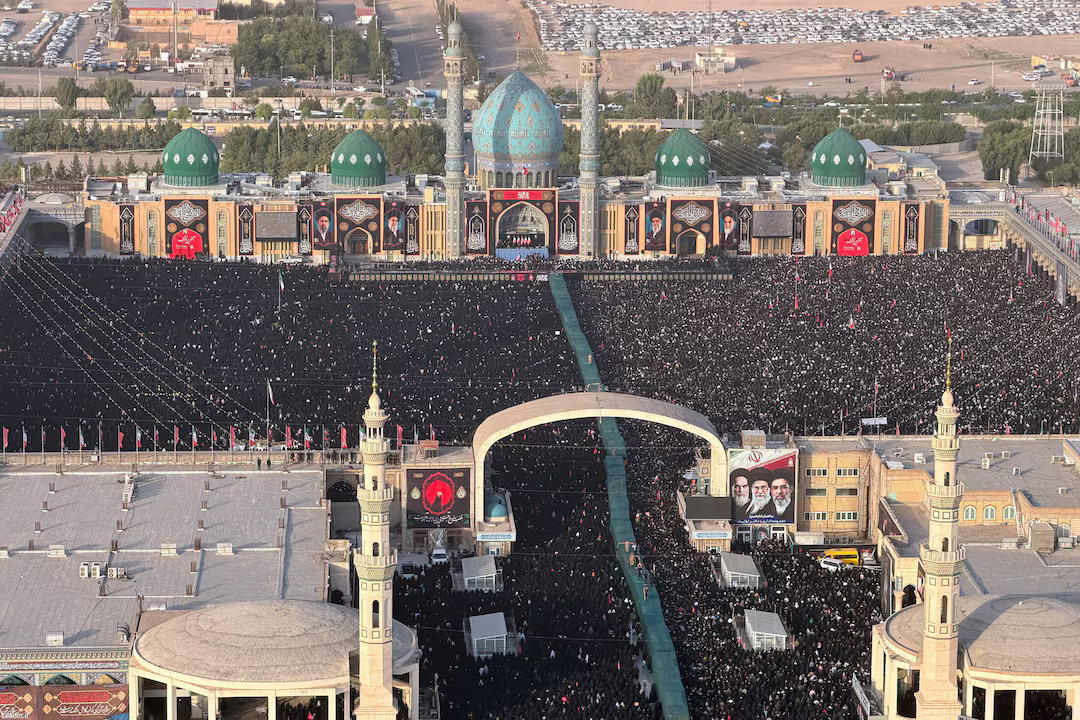
A ship was struck in the Strait of Hormuz on July 10, 2026, as millions of Iranians gathered for mass funeral processions mourning those killed in recent US-Israeli strikes. Iran's government has simultaneously shut the door on diplomatic talks, saying no negotiations will begin unless the United States stops what Tehran calls threats against the country.
The strike on the vessel in Hormuz adds a sharp new dimension to an already volatile situation. The Strait of Hormuz is the world's most critical oil chokepoint, with roughly 20 percent of global petroleum trade passing through it daily. Any sustained disruption there sends immediate signals through energy markets and shipping insurance rates worldwide.
Iran's leadership has used the mass funeral gatherings, which drew millions of people across the country, as a public demonstration of domestic solidarity following the US-Israeli military strikes. State messaging has framed the mourning crowds as evidence that the attacks have unified rather than fractured Iranian society. Whether that narrative reflects genuine public sentiment or organised mobilisation is not independently verifiable from the information available, but the scale of the gatherings gives the government a visible platform to project strength ahead of any potential talks.
The condition Iran has set for diplomacy is direct: the Trump administration must halt what Tehran describes as threats before any negotiations can start. This is a harder precondition than a ceasefire request alone. It effectively demands a change in tone and posture from Washington as the entry price for sitting at a table, which is a position that makes near-term talks unlikely without a significant shift on either side.
Details on which vessel was hit, who struck it, and what cargo it carried are not yet confirmed in available reports. That uncertainty itself carries weight in energy markets. Shipping operators and insurers price risk based on probability of incident, not confirmed facts, so even an unattributed strike raises war-risk premiums on tankers transiting the strait. Higher insurance costs push up the effective price of moving oil through the region, which flows into crude benchmarks and eventually into fuel prices.
Iran has previously used its position along the Hormuz strait as leverage in periods of maximum pressure, including detaining tankers and threatening to close the waterway. A fresh incident in this corridor, timed alongside mass domestic mobilisation and a hardened diplomatic stance, suggests Tehran is signalling that it retains escalation options even as it faces military pressure.
For oil markets, the key variable is whether the Hormuz incident is isolated or the start of a pattern. A one-off strike that does not interrupt flow may cause a short spike in crude prices that fades within days. A series of incidents, or any move that meaningfully restricts tanker passage, would be a different order of problem entirely, one that touches energy security across Asia, Europe, and beyond.
On the diplomatic track, the Iran-set precondition creates a structural deadlock. The Trump administration has not publicly indicated it will soften its language toward Tehran. Iran has said it will not negotiate under what it frames as duress. That gap leaves the situation in a holding pattern where military and economic pressure continues without a diplomatic off-ramp in sight.
Investors and analysts tracking the region should watch three things closely: whether the Hormuz strike is claimed or attributed, how tanker traffic and insurance spreads respond in the coming days, and whether any third-party intermediary, the Gulf states, Europe, or others, attempts to bridge the precondition gap between Washington and Tehran.
Qatar's foreign ministry said mediators including Qatar, Pakistan, and Oman have reached "very progressive stages" in efforts to end the US-Iran war, pushing Brent crude down more than four percent.
Qatar confirmed it is mediating between the US and Iran but said no direct talks are currently planned. The clarification follows conflicting statements from President Trump, who claimed talks are under way, and Tehran, which denied any dialogue is happening.
Saudi Aramco reported sharply higher second-quarter 2026 profits as the Iran war restricts global oil supply and pushes crude prices up. Other oil supermajors also posted outsized earnings, raising concerns about sustained fuel cost pressure for importing economies.
President Trump called current Iran negotiations the "last chance" to end five months of conflict, pushing oil prices higher. Tehran denied formal talks are taking place, raising the risk of a diplomatic breakdown with direct consequences for global energy markets.