India to Restore UPI Merchant Fees, PhonePe Gains Most
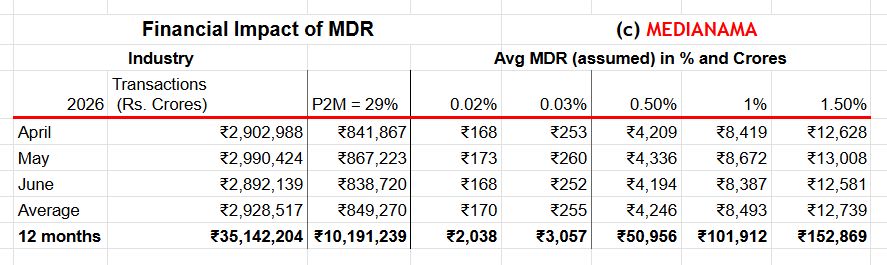
India's government plans to amend the Payment and Settlement Systems Act to restore UPI merchant discount rates, ending the zero-MDR regime in place since January 2020.
Key Takeaways
July 4, 2026 · 3 min read · By Rishabh Bhardwaj
·
AI-assisted, human-reviewed · Our editorial standards
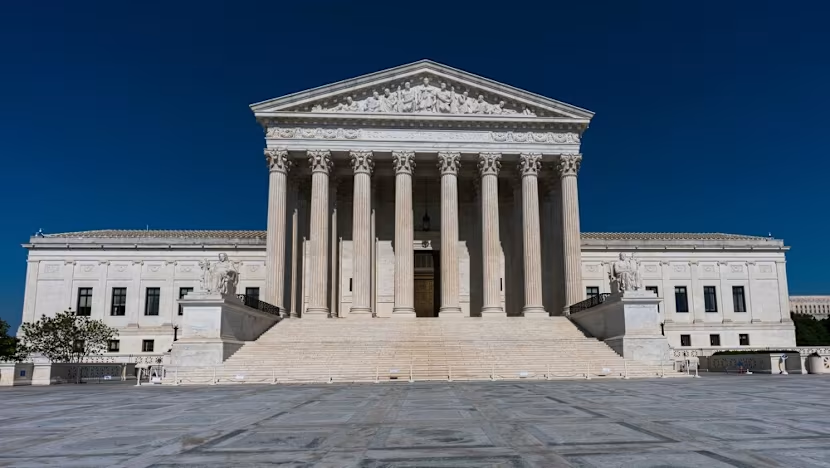
The US Supreme Court has ruled that the federal government can restrict how many asylum seekers are processed at the US-Mexico border when crossing volumes overwhelm capacity. The decision hands the Trump administration a significant legal tool to manage border intake and slow the formal processing of asylum claims during periods of high traffic.
The ruling addresses a core operational tension at the border: what happens when the volume of people seeking asylum exceeds the government's ability to screen and process them in a timely way. Courts had previously been asked to weigh individual rights to seek asylum against the government's logistical and security arguments for limiting daily intake. The Supreme Court has now sided with the government's position that overcrowding conditions can legally justify those limits.
In practical terms, the decision allows border authorities to cap daily processing numbers when facilities are strained. Asylum seekers who arrive at a port of entry when that cap is reached can be turned away or made to wait, without the government being in immediate legal violation of its asylum obligations. This is sometimes called a "metering" system, where the pace of processing is controlled rather than processing being open-ended.
The effect is that the number of people formally admitted into the asylum system on any given day becomes a managed figure rather than a right triggered solely by physical arrival at the border. People waiting outside that daily limit have no guaranteed timeline for when they will be processed.
For the Trump administration, this ruling aligns with its broader enforcement posture at the southern border. The White House has pursued multiple avenues to reduce asylum claim volumes, including stricter eligibility rules, faster removal procedures, and physical deterrence measures. A Supreme Court endorsement of capacity-based processing limits adds a durable legal foundation to that approach, one that will survive individual policy changes because it rests on a court ruling rather than an executive order alone.
For people fleeing violence or persecution and hoping to make a legal claim at the US border, the ruling narrows a key pathway. Even those who arrive at an official port of entry, the legally designated place to request asylum, may now find the door effectively closed on a given day based on headcount alone. That creates pressure to wait in Mexico, often in dangerous border cities, with no clear timeline.
Advocacy groups and immigration lawyers have long argued that metering systems cause serious harm, including exposing waiting migrants to kidnapping, extortion, and violence while they queue. The court's ruling does not resolve those humanitarian concerns; it simply establishes that the legal mechanism is permissible under federal law.
From a policy continuity standpoint, the ruling matters beyond the current administration. Future administrations, regardless of party, can now use capacity constraints as a legal basis for managing border processing rates. That makes this decision structurally significant, not just politically significant in the present moment.
Congress retains the ability to pass legislation that sets clearer rules around processing obligations, but no such legislation is currently moving. For now, the Supreme Court's decision sets the operative legal standard for how the executive branch can manage asylum intake at the southern border.
India's government plans to amend the Payment and Settlement Systems Act to restore UPI merchant discount rates, ending the zero-MDR regime in place since January 2020.
India's government has introduced the Taxation and Other Laws (Amendment) Bill, 2026, proposing changes to payments regulation, income tax, and the Finance Act to attract FDI and support Make in India. The Bill's final shape will depend on parliamentary debate and committee review.
The government's Taxation and Other Laws (Amendment) Bill, 2026, proposes to replace the blanket UPI MDR ban with a system allowing the Centre to notify which payment modes stay fee-free.
Prime Minister Narendra Modi inaugurated the Rs 5,000 crore Bhogapuram greenfield airport in Andhra Pradesh, built under a public-private partnership model. He also laid foundation stones for infrastructure projects worth nearly Rs 18,000 crore in the state, signalling a broad investment push for the region.