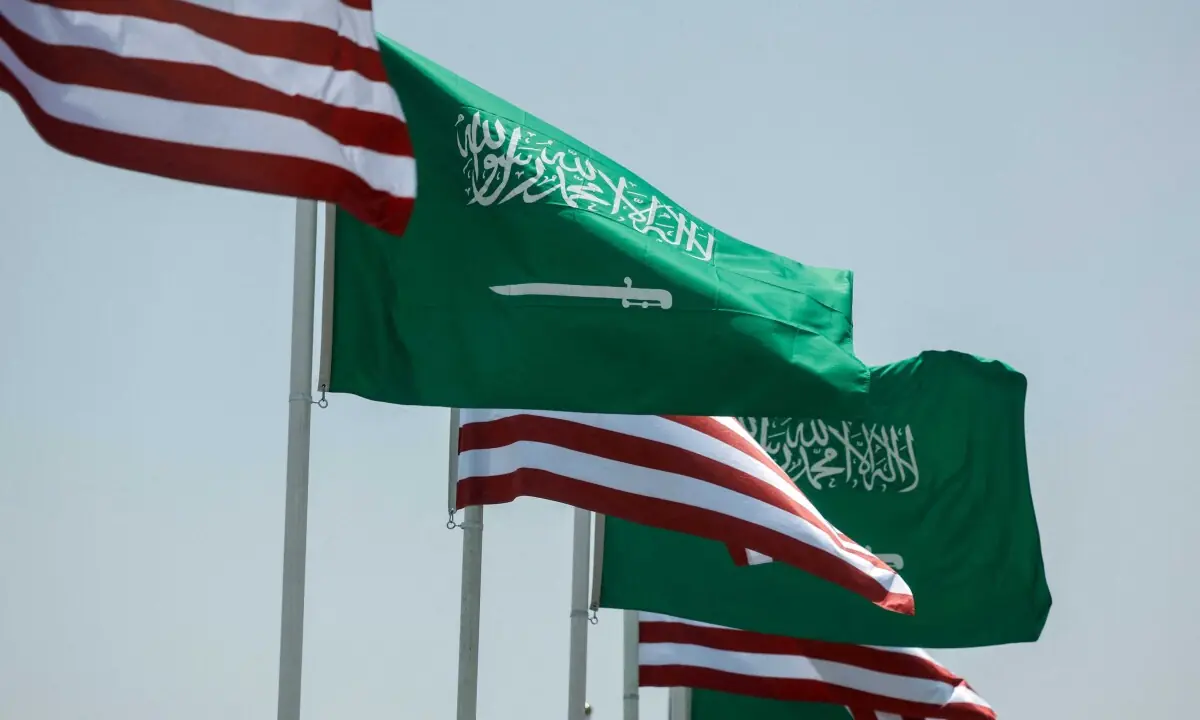
US and Saudi Arabia Sign Civilian Nuclear Deal
The US and Saudi Arabia signed two civilian nuclear cooperation agreements Wednesday, with Energy Secretary Chris Wright and Saudi counterpart Prince Abdulaziz bin Salman as signatories.
Key Takeaways
July 25, 2026 · 4 min read · By Rishabh Bhardwaj
·
AI-assisted, human-reviewed · Our editorial standards
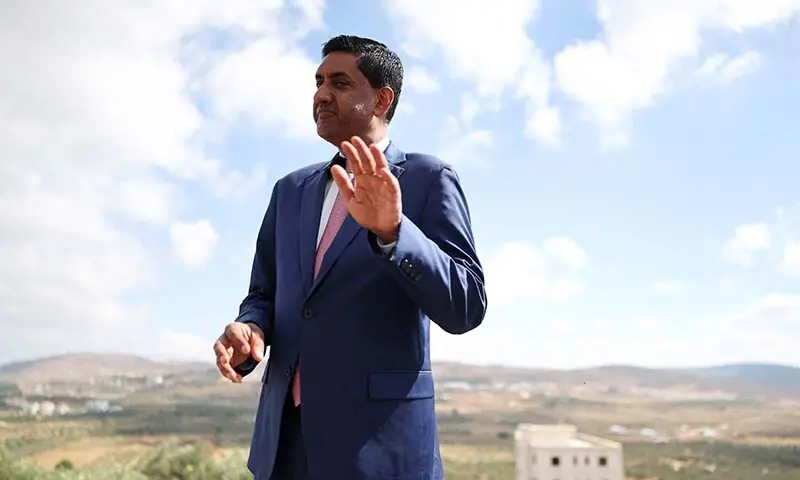
US Representative Ro Khanna, a California Democrat weighing a 2028 presidential bid, says armed Israeli settlers blocked his convoy, surrounded his vehicle, and held his group for over an hour during a West Bank visit this week. The incident has drawn fresh attention to a fault line inside the Democratic Party over US support for Israel.
Khanna described the encounter in a Palestinian village during a Reuters interview on Thursday. He said settlers carrying M4 rifles, a standard American military rifle, blocked the road while his group was examining a destroyed Palestinian village in the southern West Bank. The Israeli military confirmed that troops and police responded to a report of settlers blocking vehicles near Khirbet Zanuta, a hamlet whose residents were displaced by violent settler raids after the October 2023 Hamas attacks on Israel. The military said its forces dispersed the settlers and allowed the vehicles to proceed.
Cameron Kasky, an aide who was present, said the group was held for more than an hour and contacted the US Embassy in Jerusalem for help. The embassy did not immediately respond to a request for comment. Israeli police also did not respond.
Khanna's frustration centered not just on the settlers but on what he saw as the Israeli military's alignment with them. "The IDF is on their side, not on the side of the Americans," he said, using the abbreviation for the Israeli military. That framing carries weight: it positions this not merely as a settler violence story but as a question of where US interests stand in a territory funded partly by American taxpayers.
Israel's favorability among Democrats has collapsed. A Reuters/Ipsos poll from May 2026 put it at 22 percent, down from 59 percent in 2018. That shift is now showing up in primary results, with some incumbent Democratic lawmakers losing to left-wing challengers who accused them of backing Israel's government. Khanna's trip is a direct read on that political realignment. He called his party's establishment "clueless" about how much of a moral test Gaza, Palestine, and the broader Israel question have become for Democratic voters.
He is not alone in the region this week. Rahm Emanuel, former chief of staff to Barack Obama and himself exploring a presidential run, was in Tel Aviv on Wednesday. Emanuel said Israeli policies toward Palestinians were eroding Democratic support for the US-Israeli alliance, a notably blunt message from a figure associated with mainstream Democratic politics.
US military aid to Israel runs at $3.8 billion per year. That funding covers light weapons including M4 rifles, the same type Khanna says the settlers were carrying, as well as missile interceptors used during the Iran conflict. An increasing number of Democrats in Congress are now pushing to cut that aid. The detail that American-supplied rifles appeared in the hands of settlers detaining a US lawmaker gives that debate a concrete and uncomfortable edge.
Khanna used terms like "genocide" and "apartheid" to describe Israeli conduct in Gaza and the West Bank. Israel rejects both characterizations. The West Bank has a population of roughly 3 million Palestinians alongside around 500,000 Jewish settlers. Most countries and the United Nations consider Israeli settlements illegal under the Fourth Geneva Convention, which bars transferring a civilian population into occupied territory. Israel disputes that reading, describing the West Bank as contested land with a long Jewish historical presence. Palestinians view the West Bank, Gaza, and East Jerusalem as parts of a future Palestinian state.
Khanna said the trip strengthened his resolve to run for president. Asked directly, he said: "I'm strongly considering it, and I'm more resolved to consider it after this trip." Whether the story of armed settlers detaining a US congressman becomes a campaign moment depends on how much oxygen it gets heading into the November midterms. Given the polling collapse on Israel inside the Democratic coalition, that seems more likely than not.
Republicans continue to back Israel broadly, though some corners of the Trump coalition have also called for reducing aid. The bipartisan consensus that has governed US-Israel policy for decades is clearly under more pressure than at any recent point, and incidents like this week's detention give critics of that policy a vivid, newsworthy hook.
The US and Saudi Arabia signed two civilian nuclear cooperation agreements Wednesday, with Energy Secretary Chris Wright and Saudi counterpart Prince Abdulaziz bin Salman as signatories.
President Trump has tied a newly signed US-Saudi civilian nuclear cooperation deal to Saudi Arabia joining the Abraham Accords and normalising ties with Israel. The agreement, signed under US nuclear law, could include uranium enrichment on Saudi soil, raising proliferation concerns among lawmakers and experts.
US forces have struck targets closer to Tehran than at any point in the current conflict, while Iran has hit Kuwait and Jordan and a tanker was struck in the exchange. The geographic expansion raises immediate risks for Persian Gulf oil shipping and pulls Arab states with US military ties into the crisis.
The Trump administration plans to formally sign and announce a 30-year civilian nuclear agreement with Saudi Arabia on Wednesday, channeling billions of dollars to US nuclear firms.