
Qatar Signals Progress in US-Iran War Talks
Qatar's foreign ministry said mediators including Qatar, Pakistan, and Oman have reached "very progressive stages" in efforts to end the US-Iran war, pushing Brent crude down more than four percent.
Key Takeaways
July 8, 2026 · 3 min read · By Rishabh Bhardwaj
·
AI-assisted, human-reviewed · Our editorial standards
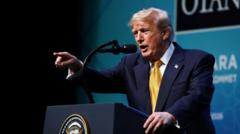
President Donald Trump said at a NATO summit that the United States will "probably" strike Iran again, while adding that any future conflict would be "over quickly." The remarks came as Tehran warned it would respond "fearlessly" to any further American military action.
Trump's comments at the NATO gathering mark a significant escalation in rhetoric following what appears to be a prior round of US strikes on Iran. The choice of venue matters: a NATO summit signals to allies, adversaries, and markets simultaneously, lending the threat a formal weight beyond a social media post or press briefing.
The Iranian government's counter-warning of a "fearless" response follows a well-established pattern from Tehran of publicly signaling resolve to deter further action. The language is calibrated to domestic and regional audiences as much as to Washington, reinforcing Iran's position that it will not absorb strikes without cost.
The combination of a US president threatening repeat military strikes and an adversary vowing retaliation creates a live risk premium across several markets. Oil prices are the most direct transmission point: Iran sits at the edge of the Strait of Hormuz, through which roughly 20 percent of the world's traded oil passes. Any credible escalation path tends to push crude prices higher, raising costs for importers and compressing margins for energy-intensive industries globally.
For India, the exposure is direct. India is one of the largest importers of crude oil, and a sustained rise in energy prices would widen its trade deficit, pressure the rupee, and feed through to inflation across fuel, transport, and manufacturing. Indian refiners who source from Gulf suppliers would face both higher input costs and potential shipping disruptions if the Strait of Hormuz came under any form of military stress.
Beyond energy, the geopolitical signal from Trump's NATO appearance is that the US is not treating its Iran strikes as a closed chapter. That shifts the risk calculus for businesses operating in or around the Gulf, for insurers pricing shipping lanes, and for governments that depend on Gulf remittance flows or export revenues.
Trump's qualifier that events would be "over quickly" is notable. It suggests the White House is framing any further action as limited and controlled rather than a prolonged campaign. That framing is designed to manage allied nerves at a NATO summit, but it also constrains what the US can credibly threaten: an "over quickly" strike is structurally different from a sustained air campaign, and Iran's strategists will read that distinction carefully.
The key variables from here are whether diplomatic back-channels remain open, how Iran responds in the short term through proxies or direct action, and whether the NATO allies meeting with Trump align publicly with the US posture or quietly push for de-escalation. European members of NATO have historically preferred sanctions and negotiation over military pressure on Iran, and Trump's remarks at their summit may sharpen that internal alliance tension.
For markets and policy watchers, the immediate focus will be on crude benchmarks, any movement in Gulf shipping insurance rates, and whether Tehran follows its warning with concrete steps. A verbal exchange of threats that does not materialize into action tends to see an initial risk-on spike followed by a partial retreat. But the underlying tension remains unresolved, and each exchange narrows the room for miscalculation to stay contained.
Qatar's foreign ministry said mediators including Qatar, Pakistan, and Oman have reached "very progressive stages" in efforts to end the US-Iran war, pushing Brent crude down more than four percent.
Qatar confirmed it is mediating between the US and Iran but said no direct talks are currently planned. The clarification follows conflicting statements from President Trump, who claimed talks are under way, and Tehran, which denied any dialogue is happening.
Saudi Aramco reported sharply higher second-quarter 2026 profits as the Iran war restricts global oil supply and pushes crude prices up. Other oil supermajors also posted outsized earnings, raising concerns about sustained fuel cost pressure for importing economies.
President Trump called current Iran negotiations the "last chance" to end five months of conflict, pushing oil prices higher. Tehran denied formal talks are taking place, raising the risk of a diplomatic breakdown with direct consequences for global energy markets.