
Qatar Signals Progress in US-Iran War Talks
Qatar's foreign ministry said mediators including Qatar, Pakistan, and Oman have reached "very progressive stages" in efforts to end the US-Iran war, pushing Brent crude down more than four percent.
Key Takeaways
May 1, 2026 · 2 min read · By Rishabh Bhardwaj
·
AI-assisted, human-reviewed · Our editorial standards
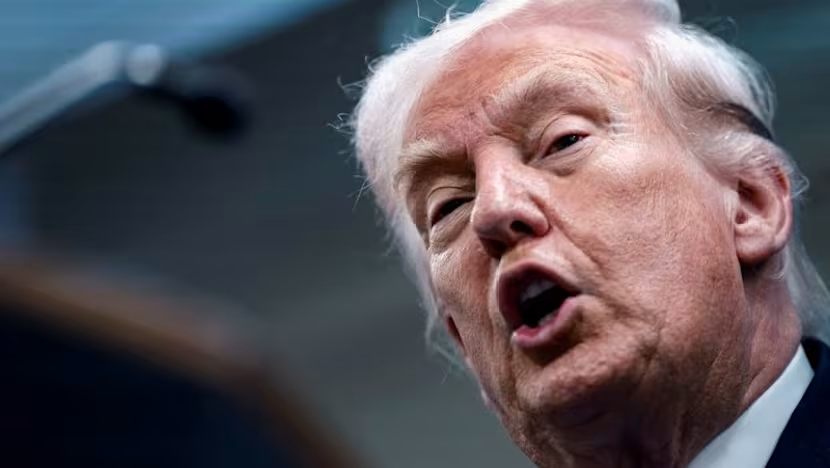
President Donald Trump said he is "not satisfied" with a new proposal from Iran, even as reports emerged that Tehran had reached out to restart nuclear negotiations. Trump warned bluntly that he could "blast them to hell" if no deal is reached, signaling that military pressure remains firmly on the table.
The statement came in response to reports that Iran had submitted a new proposal for talks, though the specific contents of that proposal have not been publicly disclosed. Trump's reaction suggests the offer fell short of what Washington considers an acceptable starting point for negotiations.
The US and Iran have been in an extended standoff over Iran's nuclear program. Previous rounds of diplomacy under multiple administrations have repeatedly stalled over the core question of how much uranium enrichment Iran is allowed to keep. Iran insists on its right to enrich; the US and its allies want strict limits backed by strong verification.
Trump's language is more aggressive than typical diplomatic signaling. Phrases like "blast them to hell" are designed to communicate that the US is willing to use force, not just sanctions, to pressure Tehran. Whether that reflects a firm military plan or a negotiating posture is not clear from the statement alone.
Escalating tension between the US and Iran tends to push oil prices higher, since Iran is a significant crude producer and the Strait of Hormuz, a narrow waterway Iran could threaten, carries roughly 20 percent of global oil trade. Any credible threat of military action in the region tends to trigger a risk premium in energy markets.
For diplomacy, Trump's public rejection of the proposal, combined with explicit military threats, narrows the space for quiet back-channel progress. Iran's leadership faces domestic pressure of its own, and a publicly humiliating negotiating environment makes it harder for either side to make concessions without political cost.
The immediate question is whether Iran responds with a revised proposal, pulls back from talks entirely, or accelerates nuclear activity as leverage. Each path carries different risks for regional stability and global energy supply.
Qatar's foreign ministry said mediators including Qatar, Pakistan, and Oman have reached "very progressive stages" in efforts to end the US-Iran war, pushing Brent crude down more than four percent.
Qatar confirmed it is mediating between the US and Iran but said no direct talks are currently planned. The clarification follows conflicting statements from President Trump, who claimed talks are under way, and Tehran, which denied any dialogue is happening.
Saudi Aramco reported sharply higher second-quarter 2026 profits as the Iran war restricts global oil supply and pushes crude prices up. Other oil supermajors also posted outsized earnings, raising concerns about sustained fuel cost pressure for importing economies.
President Trump called current Iran negotiations the "last chance" to end five months of conflict, pushing oil prices higher. Tehran denied formal talks are taking place, raising the risk of a diplomatic breakdown with direct consequences for global energy markets.