
Qatar Signals Progress in US-Iran War Talks
Qatar's foreign ministry said mediators including Qatar, Pakistan, and Oman have reached "very progressive stages" in efforts to end the US-Iran war, pushing Brent crude down more than four percent.
Key Takeaways
May 2, 2026 · 2 min read · By Rishabh Bhardwaj
·
AI-assisted, human-reviewed · Our editorial standards
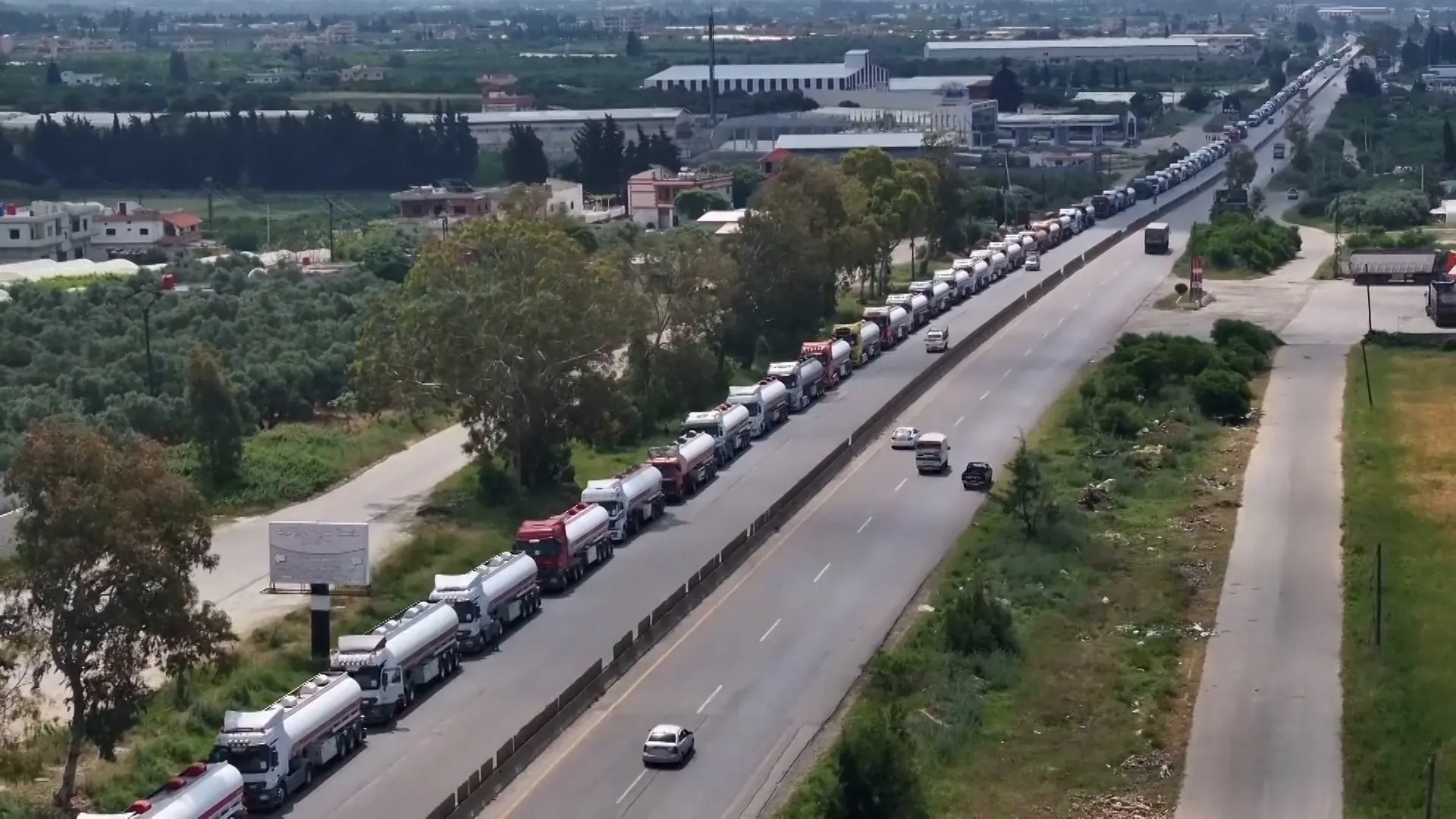
Iraq is routing hundreds of oil tanker trucks overland through Syria toward Europe, establishing a new land-based energy corridor as the Strait of Hormuz faces effective blockage.
The move marks a significant shift in how Iraqi crude reaches Western markets. Normally, Gulf oil exports travel by sea through the Strait of Hormuz, the narrow waterway between Iran and Oman that handles roughly a fifth of global oil supply. With that route disrupted, Iraq is turning to road transport across Syrian territory as a workaround.
Syria sits between Iraq and the Mediterranean coast, making it a natural land bridge for crude moving westward. Overland trucking is slower and more expensive than tanker shipping, but it bypasses the maritime chokepoint entirely. The sheer volume described, hundreds of trucks, suggests this is not a token measure but an organised logistical operation designed to maintain meaningful export flows.
For Europe, which has been working to reduce dependence on Russian energy since 2022, a functioning overland Iraqi supply route would offer an alternative source that does not pass through contested waters. Iraqi crude reaching Mediterranean ports could be loaded onto tankers there for onward delivery to European refiners.
The key unknowns are scale and sustainability. Trucking hundreds of thousands of barrels per day overland is logistically complex and costly compared with pipeline or tanker transport. Syria's infrastructure and political conditions add further variables. Whether this corridor can carry enough volume to meaningfully offset Hormuz disruption, or whether it remains a partial stopgap, will depend on how long the maritime route stays constrained and how quickly overland capacity can be expanded.
Oil markets will be watching Iraqi export data and Mediterranean port activity closely. Any sustained Hormuz blockage tends to lift global oil prices and freight rates, while alternative corridors like this one could partially dampen that upward pressure if they prove reliable at scale.
Qatar's foreign ministry said mediators including Qatar, Pakistan, and Oman have reached "very progressive stages" in efforts to end the US-Iran war, pushing Brent crude down more than four percent.
Qatar confirmed it is mediating between the US and Iran but said no direct talks are currently planned. The clarification follows conflicting statements from President Trump, who claimed talks are under way, and Tehran, which denied any dialogue is happening.
Saudi Aramco reported sharply higher second-quarter 2026 profits as the Iran war restricts global oil supply and pushes crude prices up. Other oil supermajors also posted outsized earnings, raising concerns about sustained fuel cost pressure for importing economies.
President Trump called current Iran negotiations the "last chance" to end five months of conflict, pushing oil prices higher. Tehran denied formal talks are taking place, raising the risk of a diplomatic breakdown with direct consequences for global energy markets.