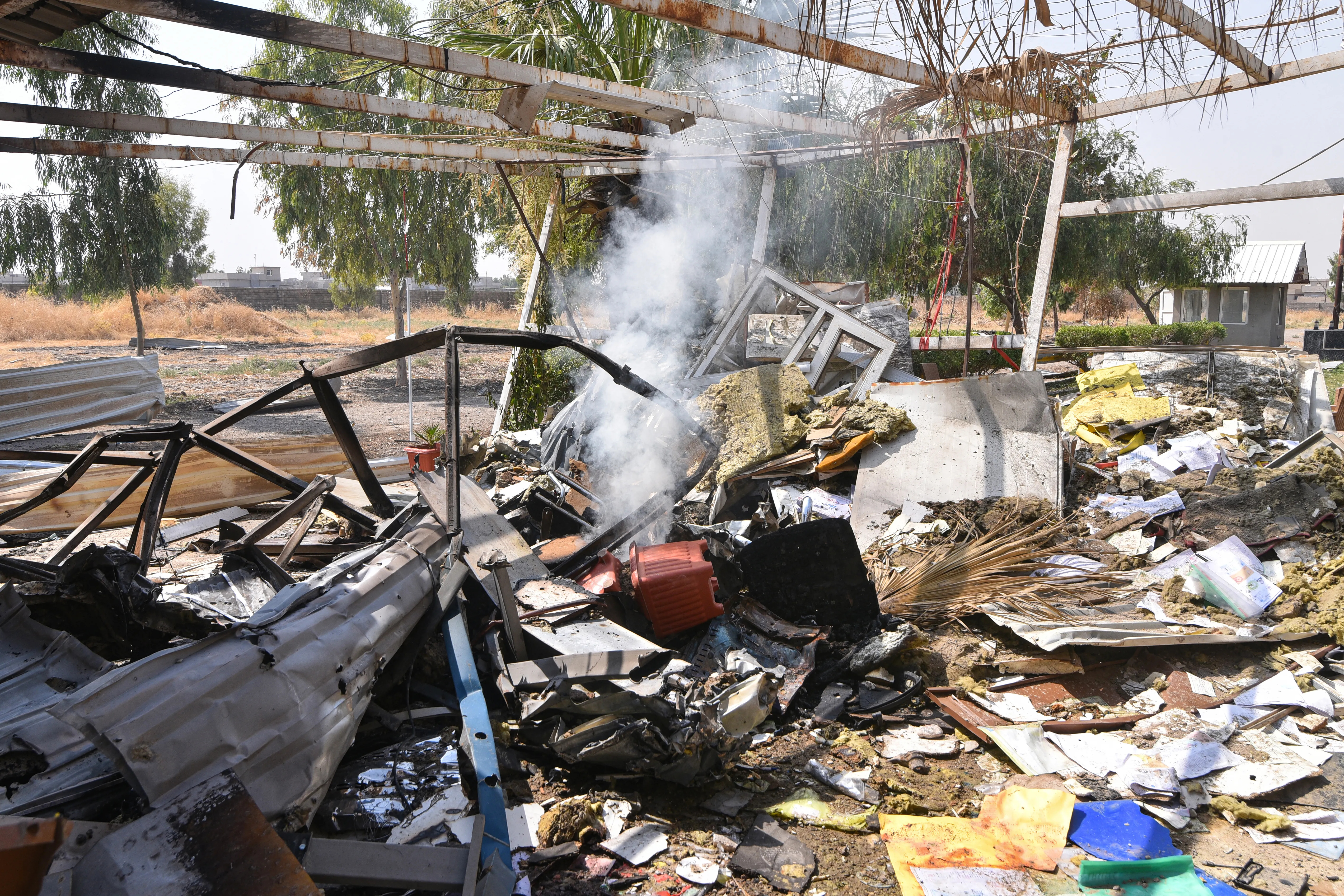
Iranian forces launched what the United States described as a surprise attack on American troops stationed in Jordan, and the US and Saudi Arabia responded with joint strikes on targets in Iraq, raising urgent questions about whether a contained conflict is becoming a broader regional war.
The sequence of events marks a sharp escalation. The US military said it intercepted the Iranian attack before it caused casualties, but the incident is one of the most direct and overt moves by Iran against American forces in the current conflict cycle. Joint US-Saudi strikes on Iraq add a second front to an already tense theater, pulling in another country and another set of armed groups into the exchange.
Why this moment is different
What makes this exchange notable is the combination of actors and geography. Iran targeting US forces in Jordan, a country that has formally stayed outside the direct line of fire, signals a willingness to extend the operational reach of the conflict. Jordan hosts significant US military infrastructure, and attacks there carry a different weight than strikes in Syria or Iraq, where clashes between Iran-backed groups and US forces have been more routine.
The US-Saudi response targeting Iraq adds another layer. Saudi Arabia's direct military involvement alongside the US signals a coalition posture rather than a unilateral American action. For Iraq, already navigating a fragile balance between its relationships with Washington and Tehran, hosting strikes creates serious domestic and diplomatic pressure on its government.
Iran's move also carries a signaling dimension. Describing it as a surprise attack, as the US did, suggests it was not preceded by the kind of back-channel warnings that have sometimes accompanied previous exchanges. That changes the calculus: it reduces the predictability that both sides have implicitly relied on to keep escalation from spinning out of control.
What to watch now
The immediate question is whether any of the parties choose to treat this as a one-off exchange or as a new baseline. If Iran views the US-Saudi strikes on Iraq as disproportionate, a further response becomes more likely. If the US interprets the Jordan attack as a deliberate crossing of a red line, pressure to respond more forcefully will build inside the administration and from regional partners.
Markets and energy traders will be watching closely. Any sustained exchange involving Saudi Arabia introduces supply-side risk into global oil markets, since the kingdom remains one of the world's largest exporters. A broader conflict involving Jordan also threatens key transit routes and adds pressure to the dollar and safe-haven assets.
For India, the stakes are direct. The Middle East is India's primary source of crude oil imports, hosts a large Indian diaspora workforce, and sits along shipping lanes critical to Indian trade. Any disruption to Gulf stability feeds through quickly into energy prices, remittances, and freight costs for Indian businesses.
The risk of a wider war has been discussed in theory for months. The events in Jordan and Iraq suggest that theory is now being tested in practice. Whether this is a peak or a stepping stone depends heavily on decisions made in Washington, Tehran, and Riyadh in the coming days, not weeks.