
Brent Crude Tops $78 on US-Iran Tensions
Brent crude jumped over 3% to above $78 a barrel and WTI hovered near $74, extending last week's 5.4% gain, as US-Iran tensions drove traders to price in a geopolitical supply risk premium.
Key Takeaways
July 14, 2026 · 3 min read · By Rishabh Bhardwaj
·
AI-assisted, human-reviewed · Our editorial standards
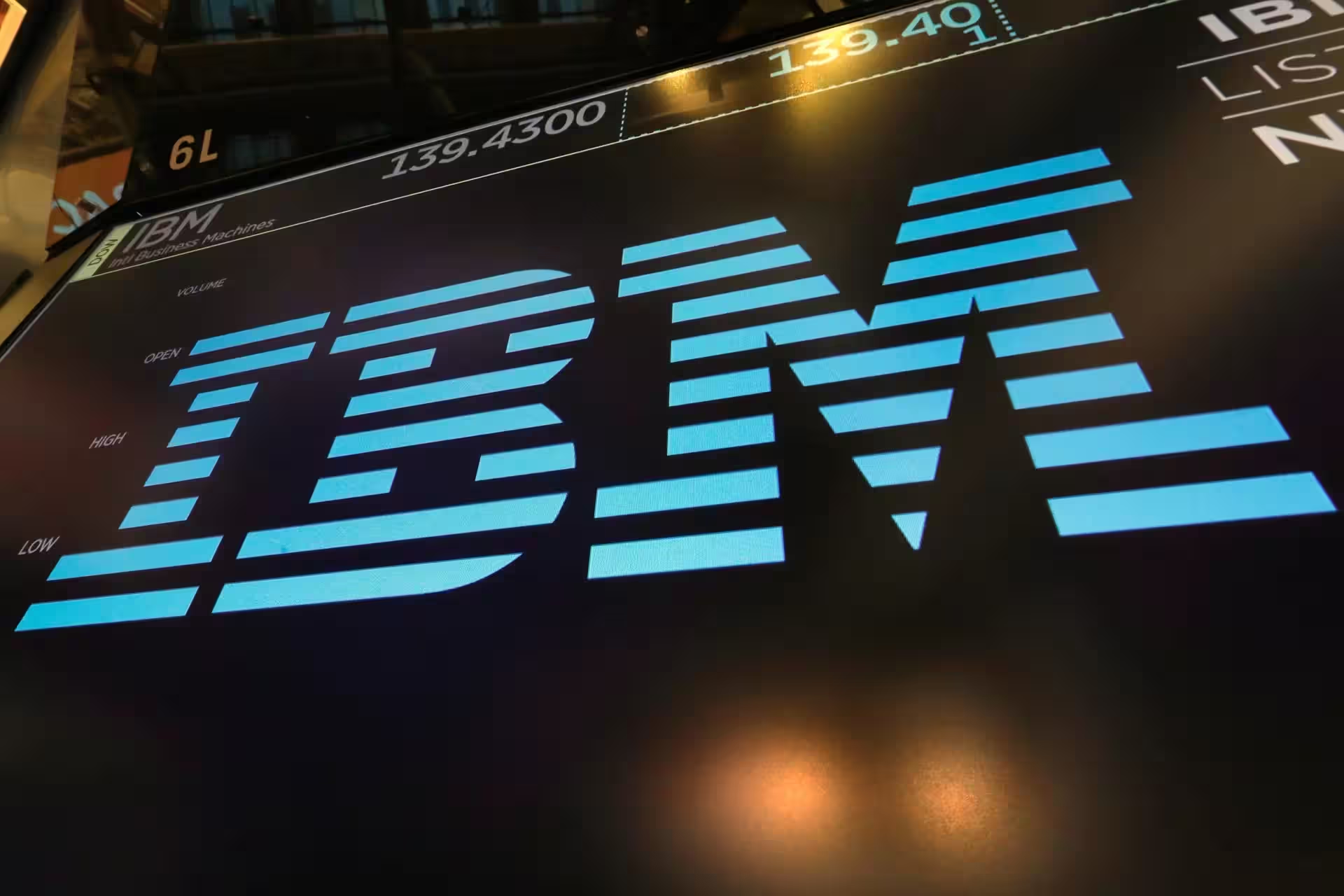
IBM shares dropped 23% in premarket trading after the company warned that its second-quarter results came in below Wall Street's expectations on both profit and revenue. The preliminary disclosure, which IBM made ahead of its official earnings release, caught investors off guard and triggered one of the steepest single-session selloffs the stock has seen in years.
Management pointed to three distinct headwinds that dragged on the quarter. First, a wave of deal closures that were expected to complete within the quarter got pushed out, meaning revenue that IBM had anticipated booking did not land in time. Second, clients accelerated their hardware purchases ahead of anticipated price increases, pulling spending forward into an earlier period and leaving a gap in the current quarter's mix. Third, cybersecurity concerns weighed on performance, though IBM did not specify whether this reflected softer client demand for security products, internal disruption, or deal hesitation tied to broader threat-environment anxiety.
For IBM, a top-line miss tied to delayed deal closures is not just a timing story. The company has spent several years repositioning itself around hybrid cloud and AI-driven consulting, businesses where large contracts are the primary growth engine. When those contracts slip, the damage compounds: revenue is deferred, but costs tied to the deals, including staffing and infrastructure, often remain. That dynamic puts immediate pressure on operating margins, and investors repriced the stock sharply to reflect both the current shortfall and uncertainty about when those delayed deals will actually close.
The hardware pull-forward is a separate, more structural signal. If enterprise clients are front-loading hardware purchases to beat price increases, it suggests that IBM or its partners are raising prices, likely in response to supply chain costs or component inflation. That can be a short-term revenue boost in the hardware segment but typically creates a demand vacuum in the following quarter. Analysts watching IBM's mainframe and infrastructure cycles will flag this as a potential drag going into the third quarter.
The immediate question for the market is whether the delayed deals represent genuine demand, just pushed to Q3, or early signs that enterprise clients are reassessing large technology commitments in a tighter budget environment. IBM's consulting and software businesses depend heavily on multi-year contract renewals and expansions. If clients are deferring rather than cancelling, the revenue should resurface. If they are renegotiating scope or size, the impact could persist across the back half of 2026.
The cybersecurity drag adds a layer of uncertainty that IBM will need to address directly on its earnings call. Cybersecurity has been one of the faster-growing segments across enterprise technology, and any signal that IBM is losing share or facing deal friction in that unit would be watched closely by investors tracking the broader sector.
A 23% single-day drop is a significant valuation reset. At that magnitude, the market is pricing in not just a one-quarter miss but some probability that the underlying growth trajectory is softer than IBM's prior guidance implied. The company will need to provide concrete evidence on its earnings call that the delayed deals are real, quantified, and have closed or are on a firm timeline. Vague reassurances are unlikely to be enough given the scale of the selloff.
For the broader technology sector, IBM's warning adds to a mixed picture for enterprise IT spending in mid-2026. Companies across cloud, consulting, and hardware have reported uneven demand as corporate buyers balance AI investment enthusiasm against cost discipline. IBM's shortfall, particularly the deal-deferral element, may prompt analysts to revisit near-term estimates for other large enterprise technology vendors with similar contract-driven revenue models.
Brent crude jumped over 3% to above $78 a barrel and WTI hovered near $74, extending last week's 5.4% gain, as US-Iran tensions drove traders to price in a geopolitical supply risk premium.
Brent crude jumped 4.38% to $79.50 a barrel and WTI rose 4.30% to $74.20 on July 13, extending a 5.5% rally from the prior week as U.S. and Iran military strikes stoked supply disruption fears. Analysts are now flagging $100 oil as a scenario worth pricing in if the Strait of Hormuz is threatened.
Pakistan's KSE-100 fell 2,314 points on Monday to close at 179,927 as US-Iran strikes near the Strait of Hormuz pushed oil prices up over three percent and triggered broad selling. The sell-off came despite stable domestic fundamentals, with refinery stocks the lone bright spot on policy upgrade expectations.
Brent crude hit $84.98 per barrel and WTI reached $79.79 on July 14, 2026, completing a 10% rally driven by the escalating US-Iran conflict. The spike raises fuel costs and inflation risks for major oil importers, including India.