
Qatar Signals Progress in US-Iran War Talks
Qatar's foreign ministry said mediators including Qatar, Pakistan, and Oman have reached "very progressive stages" in efforts to end the US-Iran war, pushing Brent crude down more than four percent.
Key Takeaways
July 13, 2026 · 4 min read · By Rishabh Bhardwaj
·
AI-assisted, human-reviewed · Our editorial standards
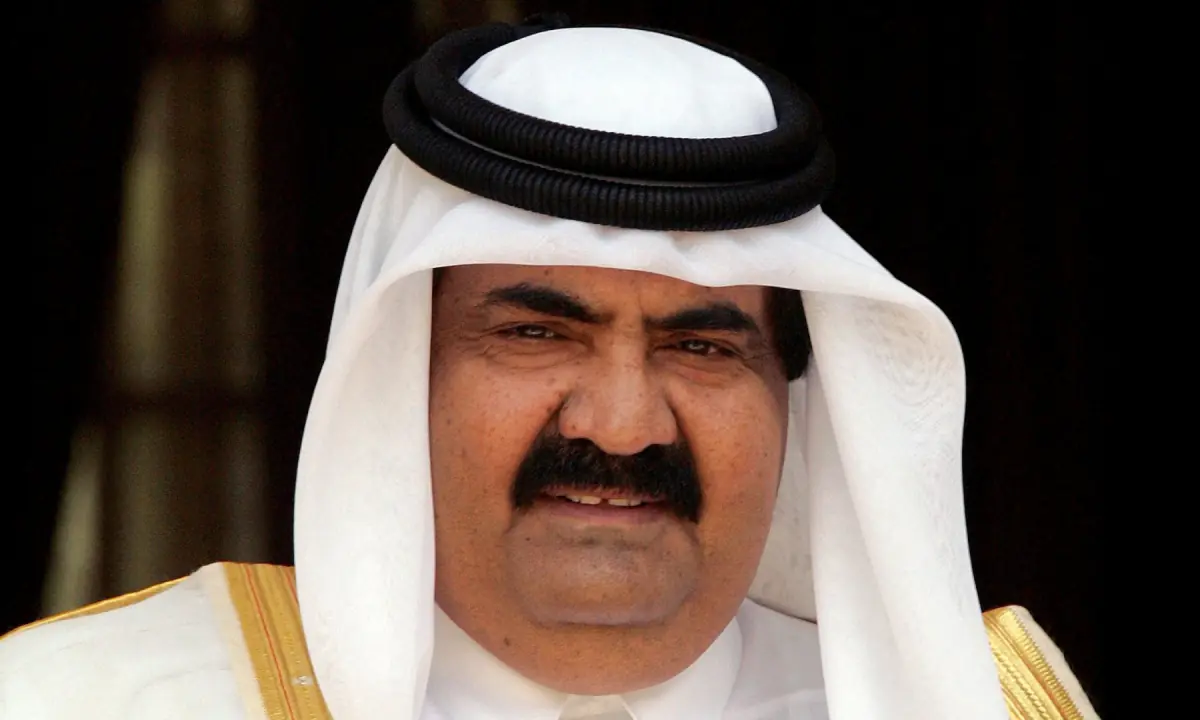
Sheikh Hamad bin Khalifa Al Thani, the former emir of Qatar who transformed a small gas-rich emirate into one of the world's wealthiest and most influential states, died on Sunday at the age of 74. Qatar's government confirmed the death in a statement from the Emir's Bureau, which described his passing as "a great loss to the nation." Funeral prayers were held Sunday evening, with several days of national mourning declared across Qatar, including closed government offices, public institutions shuttered, and flags at half-mast.
Pakistan announced a separate day of mourning for Monday, with its national flag also flying at half-mast. Prime Minister Shehbaz Sharif will travel to Doha on Monday for a day-long official visit to offer condolences to the Qatari leadership. Deputy Prime Minister and Foreign Minister Ishaq Dar and other senior officials will accompany him. PM Sharif is expected to meet the current Emir, Sheikh Tamim bin Hamad Al Thani, who is Sheikh Hamad's son.
Sheikh Hamad came to power in June 1995 by overthrowing his father in a bloodless coup while the elder was abroad. He inherited a country that was, by his own region's standards, marginal: small in size, roughly one-third the area of Belgium, with limited financial reserves and little international standing. What he left behind in 2013, when he abdicated, was a different country entirely.
Qatar sits atop one of the world's largest natural gas reserves. Under Sheikh Hamad's rule, the emirate became a leading producer and exporter of liquefied natural gas, turning that resource into sustained sovereign wealth. The Qatar Investment Authority, established during his tenure, funneled billions into high-profile international assets including German automaker Volkswagen, London's Harrods department store, and French football club Paris Saint-Germain. Qatar's GDP per capita rose to among the highest on the planet.
He also shaped Qatar's media footprint. Al Jazeera was launched in 1996 following a decree issued by Sheikh Hamad, and the broadcaster grew into one of the most influential news outlets across the Arab world and beyond. The move signaled an intention to make Qatar a voice in regional affairs, not merely a bystander.
Qatar's population during his rule was barely two million, with most residents being foreign nationals. That demographic reality, combined with rapid infrastructure development, later drew scrutiny over the treatment of migrant workers, particularly after Qatar was awarded hosting rights for the 2022 FIFA World Cup in 2010. The award itself came amid allegations of corruption, though Sheikh Hamad remained emir through that announcement.
One of the defining moments of Sheikh Hamad's rule came not at the peak of his power but at its close. In June 2013, he voluntarily abdicated in favour of his son, Sheikh Tamim, making him one of the first Arab leaders in recent history to transfer power that way. The move was widely seen as deliberate succession planning rather than political pressure.
Beyond economics, his foreign policy left a visible mark. Qatar under Sheikh Hamad began directing hundreds of millions of dollars toward the Gaza Strip, funding infrastructure including road projects along the coast. A hospital in Gaza City bears his name. These ties gave Qatar a mediating role in Middle Eastern conflicts that outlasted his own time in power.
That mediating role remains active today. Pakistan's PM Sharif is expected to raise the fresh exchange of attacks between the United States and Iran during his Doha visit. Both Pakistan and Qatar had been working as mediators in that conflict, and the renewed hostilities have set back those efforts. The bilateral meeting will carry more weight than a standard condolence call.
President Asif Ali Zardari, PM Sharif, and DPM Dar each issued separate condolence statements, with Sharif describing Sheikh Hamad as a leader whose "wisdom, foresight and dedication to public service transformed Qatar into a modern, prosperous and globally respected nation." Qatar, which was a British protectorate until 1971 and has been ruled by the Al Thani family since the mid-19th century, now enters a formal period of national mourning for the man most credited with shaping its modern identity.
Qatar's foreign ministry said mediators including Qatar, Pakistan, and Oman have reached "very progressive stages" in efforts to end the US-Iran war, pushing Brent crude down more than four percent.
Qatar confirmed it is mediating between the US and Iran but said no direct talks are currently planned. The clarification follows conflicting statements from President Trump, who claimed talks are under way, and Tehran, which denied any dialogue is happening.
Saudi Aramco reported sharply higher second-quarter 2026 profits as the Iran war restricts global oil supply and pushes crude prices up. Other oil supermajors also posted outsized earnings, raising concerns about sustained fuel cost pressure for importing economies.
President Trump called current Iran negotiations the "last chance" to end five months of conflict, pushing oil prices higher. Tehran denied formal talks are taking place, raising the risk of a diplomatic breakdown with direct consequences for global energy markets.